%20WHITE.png)

DAINASAURS’ “Archetype” Makes Modern Pop Feel Romantic Again

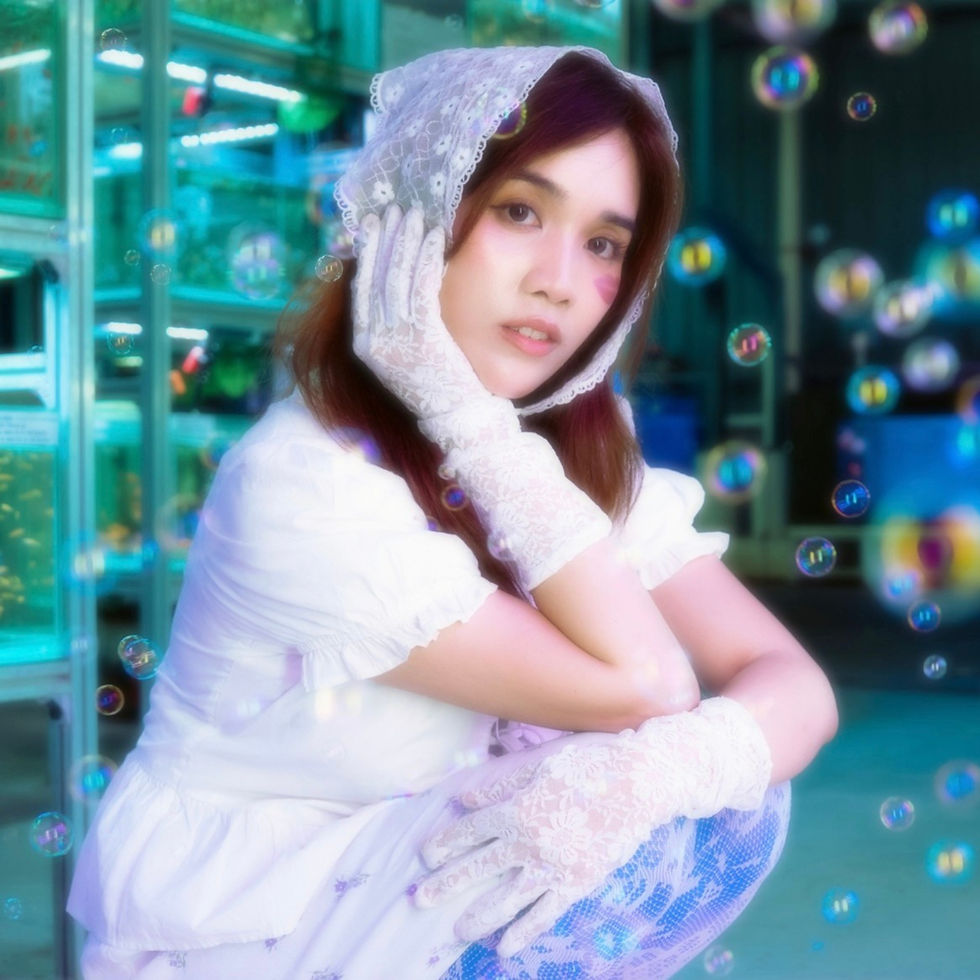
For the past few years, pop culture has been weirdly obsessed with emotional detachment. Everybody wants to look unbothered. Nobody wants to admit they actually care. Romance became “cringe,” vulnerability got filtered through irony, and sincerity started feeling almost rebellious. That’s exactly why DAINASAURS’ debut single “Archetype” feels refreshing.
Instead of hiding behind sarcasm or fake coolness, she fully leans into yearning. Real yearning. The kind that grew up on 2000s rom-coms, imagined cinematic meet-cutes, and still secretly wants love to feel magical even after reality keeps proving otherwise.
“Archetype” plays with the tension between fantasy and reality in modern relationships, but what makes the track land emotionally is that DAINASAURS never mocks her own softness. She embraces it. The song understands that people crave connection while simultaneously being terrified of disappointment, and that emotional contradiction runs through every part of the record.
Sonically, the track feels polished without sounding sterile. That makes sense, considering DAINASAURS has already built her reputation behind the scenes, writing for major K-pop and J-pop acts like TWICE SANA, ITZY, and NiziU. You can hear those elite-level pop instincts all over this release. The melodies feel intentional, the hooks stick immediately, and the production carries this dreamy cinematic glow that mirrors the song’s emotional world perfectly.
But honestly, the most interesting part of “Archetype” isn’t the polish. It’s the perspective. DAINASAURS approaches love almost academically at times, drawing on the psychological meanings of archetypes and the idea that people carry both idealized and hidden versions of themselves. That concept gives the song more depth than your average “I miss my ex” pop track. Beneath the sparkling production lies a bigger question: whether we fall in love with real people or just the roles we project onto them.
There’s also something very Gen Z about the emotional atmosphere here. It captures that strange modern loneliness where people consume endless romantic media while struggling to build genuine intimacy in real life. “Archetype” feels aware of that disconnect without becoming cynical about it.
And thankfully, DAINASAURS avoids the biggest mistake a lot of debut artists make: overperforming. She doesn’t try to prove herself through unnecessary vocal gymnastics or overly complicated production. The restraint actually makes the song feel more confident.
Bottom line: “Archetype” feels like the beginning of an artist finally stepping out from behind the curtain after years of helping shape other people’s hits. Instead of chasing trends, DAINASAURS leans into sincerity, softness, and emotional honesty; three things pop music desperately needed more of anyway.
You’ve written for major K-pop and J-pop acts before stepping into your own artist project. What’s something emotionally you were able to say on “Archetype” that you could never fully say while writing for other people?
Writing for others is so fun because I get to step into different characters or imagine myself in situations I’d never been in!
‘Archetype’, however, is fully written from my perspective and kicks off my story as a 20-something who is hopeful yet cynical about the world and modern romance.
Rather than it being a “classic” love song directed to a person, it’s a love song that romanticises the yearning, infatuation and fantasy of a love that is out of reach, which can sometimes be even more thrilling than real life itself…🤭
“Archetype” talks a lot about the fantasy version of love versus the reality of it. Do you think modern dating culture has made people more afraid of genuine connection, or just more honest about how damaged everyone actually is?
Ooh good question. I think both. Most of all, I think people are afraid. Afraid to get hurt, so they don't show up as their authentic self or avoid dating altogether. Afraid to “miss out,” so they settle or keep a roster of talking stages.
I think genuine connection brings out a vulnerable side of you that not a lot of people are comfortable showing, because it forces you to face yourself. And what if your real self, with all your flaws, isn’t lovable?
There’s this huge pressure online right now to act emotionally detached and “too cool to care.” Why do you think sincerity suddenly feels rebellious for this generation?
I think being sincere and vulnerable has always been seen as a “weakness,” even before the online world. But social media allows us to curate how we portray ourselves even more, and to some extent that’s stopped people from showing up authentically. I get it though. It’s natural to want to show your strongest or best parts. Who wouldn’t?
So when the “rules” of the world tell you to present a hard shell, going against the grain and choosing to remain soft and ultimately human is pretty damn rebellious.
Of course, this is easier said than done. I still struggle with showing vulnerability without being deathly afraid of judgement. But I’m reminding myself that genuine connection comes from overcoming that fear and owning who I am as a person. Hopefully that inspires the people around you to do the same too.
Your music feels heavily inspired by 2000s rom-com nostalgia, but there’s also sadness underneath it. Do you think people miss that era because the world genuinely felt softer back then, or because we were too young to see the cracks yet?
I don't think life was ever easy in any era. There are always going to be pros and cons to everything. That’s just the balance of life.
Nostalgia is beautiful because we tend to remember only the best parts of something. Fleeting moments you experienced but can’t get back, living in your memories forever.
We were definitely too young to see the cracks of adulthood and real life, so I hope to capture that feeling between hopeful and sad as I share my story navigating young adulthood as someone who refuses to let go of her inner child.
After years of shaping hits behind the scenes, was it scary releasing music that reflects your own identity and emotional perspective instead of hiding behind another artist’s image?
Oh yes. It’s terrifying because now I’m coming face to face with myself and hoping listeners will relate to my music and experiences.
Even now, while posting promotional content, I actively think to myself, “Is this right? Am I oversharing?” But when I see the songs and posts connecting with people, I feel relieved and happy that hopeless romantics can gather together and feel a little less alone.