%20WHITE.png)

David Hernandez Turns a Decade of Growth Into a Glittering Statement With “BEAUTIFUL 2.0” Featuring Mila Jam

A decade is a long time to sit with a song that became bigger than you expected. For David Hernandez, “Beautiful” was never just a single from 2016. It quietly grew into a lifeline track for listeners who needed language for self-worth and permission to exist out loud. With “BEAUTIFUL 2.0," Hernandez isn’t chasing nostalgia. He’s documenting evolution.
The new version feels intentional from the first note. Instead of polishing the original into something glossy and distant, the reimagining leans into clarity. Reproduced by Niko The Kid, the track trades excess for emotional precision. The arrangement breathes. Vocals sit front and center. Every lyric lands like a statement rather than a suggestion. Hernandez sounds steadier, not because the message softened, but because it’s fully owned now.
Mila Jam’s presence shifts the gravity of the song in the best way. Her verse doesn’t feel like a feature added for optics. It feels structural. Jam carries a lived perspective that widens the frame of what “Beautiful” was always trying to say. The interplay between their voices adds dimension, resilience, and a softness that never slips into fragility. It’s a duet that reads like mutual recognition.
The Valentine’s Day release date reframes the track as a manifesto for self-love instead of a romantic cliché. In a cultural moment where visibility and backlash often rise together, “BEAUTIFUL 2.0” refuses to shrink. It acknowledges the tension without surrendering joy. That balance is where the song hits hardest. It’s celebratory without ignoring reality.
The accompanying video pushes that philosophy further. Directed by Johny De, the visual swaps the guarded intimacy of the original era for unapologetic spectacle. Sequins, disco lights, performance energy, and camera-facing confidence transform the screen into a declaration of presence. Hernandez and Jam don’t hide inside the concept. They command it. The styling is bold, but the emotion stays grounded, which keeps the message from drifting into abstraction.
What makes this anniversary release matter is that it doesn’t pretend growth is tidy. Hernandez presents self-acceptance as ongoing work, not a finished product. “BEAUTIFUL 2.0” understands that empowerment isn’t a destination. It’s maintenance. For listeners navigating identity, safety, and pride in real time, that honesty lands deeper than a simple victory lap.
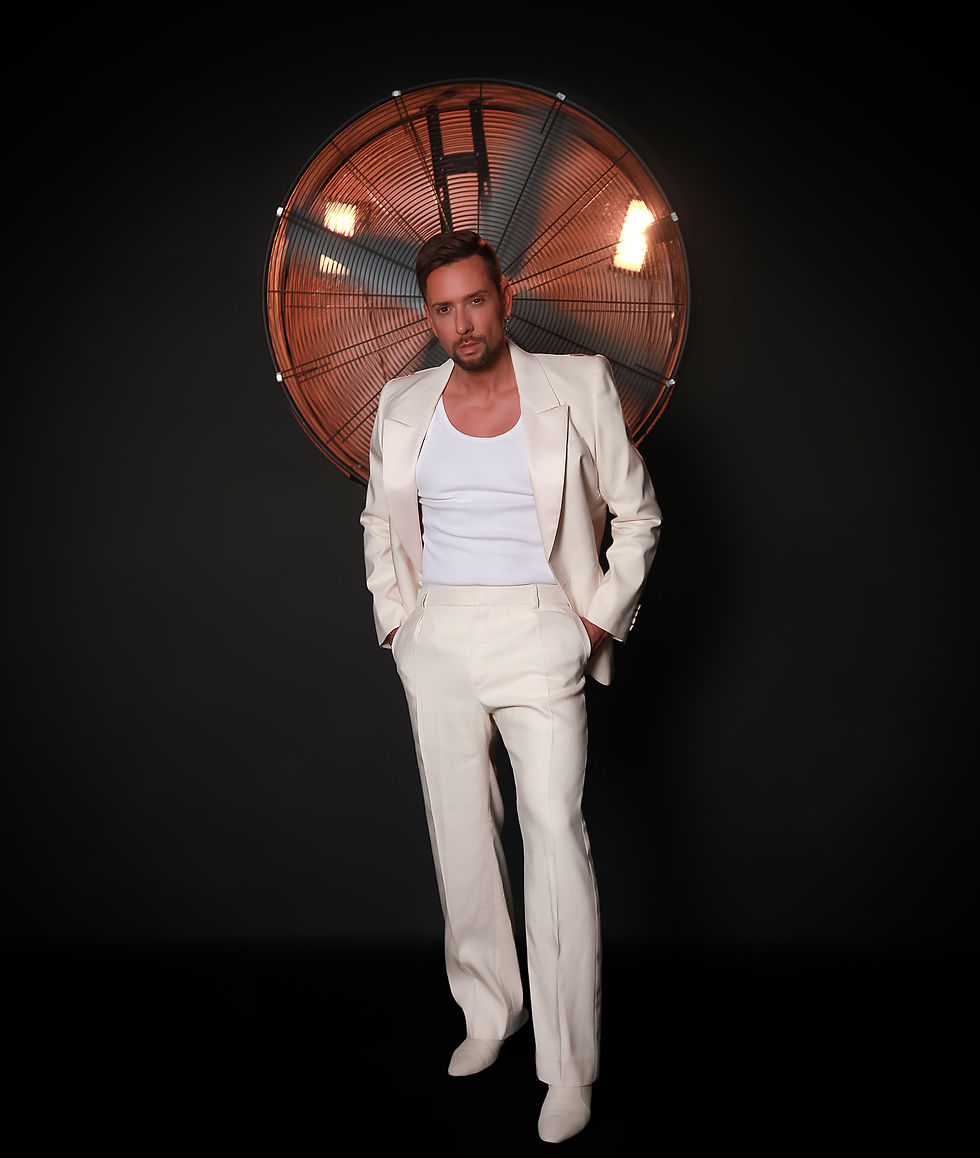
Ten years after the original release, what parts of “Beautiful” feel like a time capsule of who you were in 2016, and what parts of “BEAUTIFUL 2.0” feel like a direct reflection of who you are today?
The original “Beautiful” really feels like a snapshot of a younger version of me who was still asking permission to fully take up space. There was hope in it, but also a quiet kind of survival energy - like I was convincing myself of the message while singing it. “Beautiful 2.0” feels different. I’m not asking anymore; I’m claiming. The confidence, the joy, the sparkle - that’s where I am now. It’s still heartfelt, but it’s coming from someone who has lived more, healed more, and isn’t afraid to celebrate himself out loud.
Mila Jam’s presence changes the emotional weight of the track in a big way. What conversations did you two have behind the scenes that shaped how this version came together?
Mila and I talked a lot about legacy - what it means to revisit a song that already meant something to people and how to elevate it without losing its soul. We also talked about visibility, chosen family, and how important it was for this version to feel communal rather than individual. Mila brings this fearless authenticity to everything she touches, and that pushed me too. We both wanted the record to feel like an invitation: Come celebrate yourself with us.
The song arrives at a moment where queer visibility is expanding, but so is public resistance. How do you personally carry joy and celebration without ignoring that tension?
I think joy itself is resistance. For me, celebrating doesn’t mean pretending challenges don’t exist - it means choosing not to let them steal my light. I’ve learned that the more authentically we live, the more space we create for someone else to breathe. So I try to hold both truths at the same time: yes, there are real struggles, but there is also real beauty in who we are, and that deserves to be loud.
The new video leans into spectacle, glamour, and performance instead of vulnerability alone. What did it feel like to step in front of the camera this time without the need for protection?
Honestly, it felt freeing. Earlier in my career, I think I sometimes used performance as armor - now performance feels like celebration. I didn’t feel the need to hide behind anything this time. I got to step into the camera fully - joy, confidence, a little sass - and just have fun. And after everything the world has been through, I think people deserve a little glamour and sparkle right now.
A lot of listeners grew up with the original song and attached their own survival stories to it. What do you hope those same people hear in this new version that they might not have been ready to hear ten years ago?
I hope they hear permission - permission to move from survival into joy. Ten years ago, the song helped people hold on; now I want it to help people step forward. You don’t just deserve to make it through life - you deserve to celebrate who you are while you’re living it. If “Beautiful” was the hand on your shoulder saying you’ll be okay, “Beautiful 2.0” is the voice saying now go shine.


