%20WHITE.png)

Doyeeta Dasgupta Finds the Courage to Begin Again on “Hold”

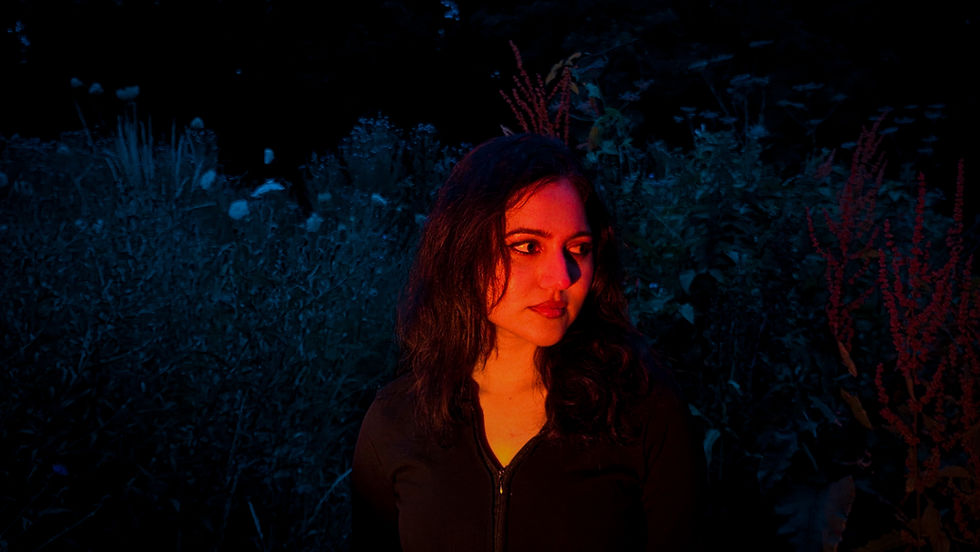
Alternative rock artist Doyeeta Dasgupta turns grief, resilience, and the difficult process of returning to creativity into something deeply personal on “Hold,” an independently recorded single that has already earned support from BBC Introducing, iHeartRadio’s Rukus Avenue Radio, Valley Free Radio’s iHeartJrock, and Australia’s Happy Mag.
Raised in a musical family in Dhaka, Bangladesh, Doyeeta Dasgupta began studying songwriting and arrangements at seven before teaching herself piano at nine. Having since lived across Bangladesh, the United Kingdom, and the United States, Doyeeta Dasgupta brings that sense of movement and searching into music shaped by memory, atmosphere, and identity.
“Hold” emerged after the sudden passing of Doyeeta Dasgupta’s grandmother, a loss that led to months away from singing, writing, playing piano, and creating altogether. Music carried an especially painful connection to the loss. Doyeeta Dasgupta’s grandmother would have relatives download songs onto a phone and listen to Doyeeta Dasgupta’s earlier releases, making it hard to confront the idea of creating music that would never reach her.
The turning point came quietly. Doyeeta Dasgupta began singing again without expectations, rediscovering a small piece of the happiness music had always provided. “Hold” grew from that moment, becoming a bridge between who Doyeeta Dasgupta was before the loss and the person emerging afterward.
Recorded independently, with vocals captured at home, “Hold” was created alongside Allan Miguel Recto (ALN), who contributed production, songwriting, backing vocals, and instrumentation, then mixed and mastered the track in the Philippines.
“I hope people take away the feeling that they are never truly alone in feeling like they are falling behind, or like they haven’t tried hard enough,” Doyeeta Dasgupta shares. With “Hold,” Doyeeta Dasgupta transforms a return to music into a reminder that starting again is still a form of moving forward.
“Hold” came after a period when you stopped creating entirely. What did returning to your voice for the first time teach you about your relationship with music?
Returning to my voice taught me that my relationship with music is much deeper than simply creating or sharing songs. I had always thought of music as something that I loved doing, but after I stopped completely, I realized that creating was also a part of how I understood myself and processed what I was feeling.
When I finally decided to sing again, I didn't try to make anything or think about whether I sounded good. I just sang. That small moment of happiness I felt reminded me that this was still a part of me, even after everything that had happened.
I think it also taught me that I don't always have to force myself to create. Sometimes I need to let myself feel things first, and sometimes the most important thing is simply starting again. “Hold” came from that realization.
Your grandmother had a unique relationship with your music, listening to songs that relatives downloaded onto her phone. How has knowing she heard your earlier work changed the meaning those songs hold for you now?
Knowing that my grandmother had actually heard my earlier music makes those songs feel incredibly personal to me now. She lived in the countryside of Bangladesh and wasn't very familiar with technology, so she would ask relatives to download songs onto her phone for her. She would listen to them while working around the house, and knowing that she made that effort to hear my music means a lot to me.
After she passed away, I found it very difficult to even look at my old music because I knew she had heard those songs. Anything new I created would be something she would never hear, and that was one of the reasons I became afraid of making music again.
Now, though, I think of those songs differently. They belong to a time when she was still here and was able to hear me create. There is sadness attached to that, but there is also something comforting about knowing that she was part of that chapter of my life. In a way, those songs are memories that I'll always carry with me.
You describe “Hold” as a bridge between your past, present, and future. What parts of the person you were before your loss do you feel you carried into the song, and what parts feel completely new?
I think the person I was before my grandmother passed away is still very present in “Hold.” I have my hopes, dreams, and the part of me that believed in creating things even when I wasn't sure where they would take me. Those parts of me didn't disappear after her death; they were buried underneath grief for a long while.
At the same time, the song contains a version of me that feels completely new. Losing her changed me emotionally, and eventually I felt like I was waking up from a state of limbo. I started to see things through a different lens instead of seeing everything through rose-colored glasses like I used to. It changed the way I see myself, my relationship with the past and future, and even what it means to keep moving forward. There is a certain awareness in the song that I don't think I had before.
That's why I see “Hold” as a bridge. The past is everything I carried into that moment, the future is the person I'm still becoming, and the present is me standing between them and trying to understand everything that happened. I don't think I'm supposed to leave either version of myself behind.
Having lived in Bangladesh, the United Kingdom, and the United States, how has moving between different places influenced your ideas of home, identity, and belonging in your songwriting?
Moving between Bangladesh, the United Kingdom, and the United States has definitely shaped the way I think about home and belonging. For a long time, I felt like I was always somewhere in between places rather than completely belonging to one. Each place gave me different memories, environments, and versions of myself, so my idea of home became less about one physical location and more about the experiences I carry with me.
I think that naturally found its way into my songwriting. I'm very drawn to memories, places, and the feeling of being somewhere that may no longer exist in exactly the same way. Even visually, I find myself thinking about different timelines, the various skylines I've seen, streets, rooms, and different kinds of light. Those things can hold so much emotion for me.
I like to describe that experience as “drifting between skylines,” and songwriting became one of the places where all of those different versions of home could exist together.
You often begin creating from an atmosphere, image, color, or memory rather than another artist’s music. What was the visual or emotional world surrounding “Hold” while you were creating it?
The emotional world surrounding “Hold” felt very quiet, blue, and reflective to me. When I first described the idea to my producer while creating the song, I imagined candlelight reflecting off raindrops on glass. I kept coming back to faded blues, soft blacks, and muted warmth mixed with something grainy, nostalgic, and slightly dreamlike.
I wanted the song to feel like a world somewhere between dream and reality, where memories of what could have been blend with the uncertainty of where you're going next. There is a feeling of becoming something new without completely leaving your past behind. The past lingers almost like perfume because it stays with you, and in many ways, it is part of what gives you the courage to move forward.
That feeling also carried into the lyric video. It moves through a deep, almost black-blue forest with small fireflies floating through the darkness. I loved the idea of the fireflies because they felt like little pieces of light existing inside something much larger and darker. To me, they represent those moments of hope that can still exist when you're going through something heavy. You don't necessarily need the whole darkness to disappear; sometimes you just need one small light to remind you that you're still moving.
I think that contrast was important because the song isn't entirely about sadness. There is grief in it, but there is also grace and hope. The darker blues and quieter imagery represent the weight of everything I was carrying, while the warmer moments represent the realization that I could still move forward. Even the vocals play with that sense of distance and closeness through the changes between reverb and a more exposed, dry sound.
Ultimately, I wanted “Hold” to feel fragile but quietly strong, kind of like standing between what has already happened and what might come next.

