%20WHITE.png)

Erik Rabasca Finds Hope in Honest Storytelling on 'New Scrolls'

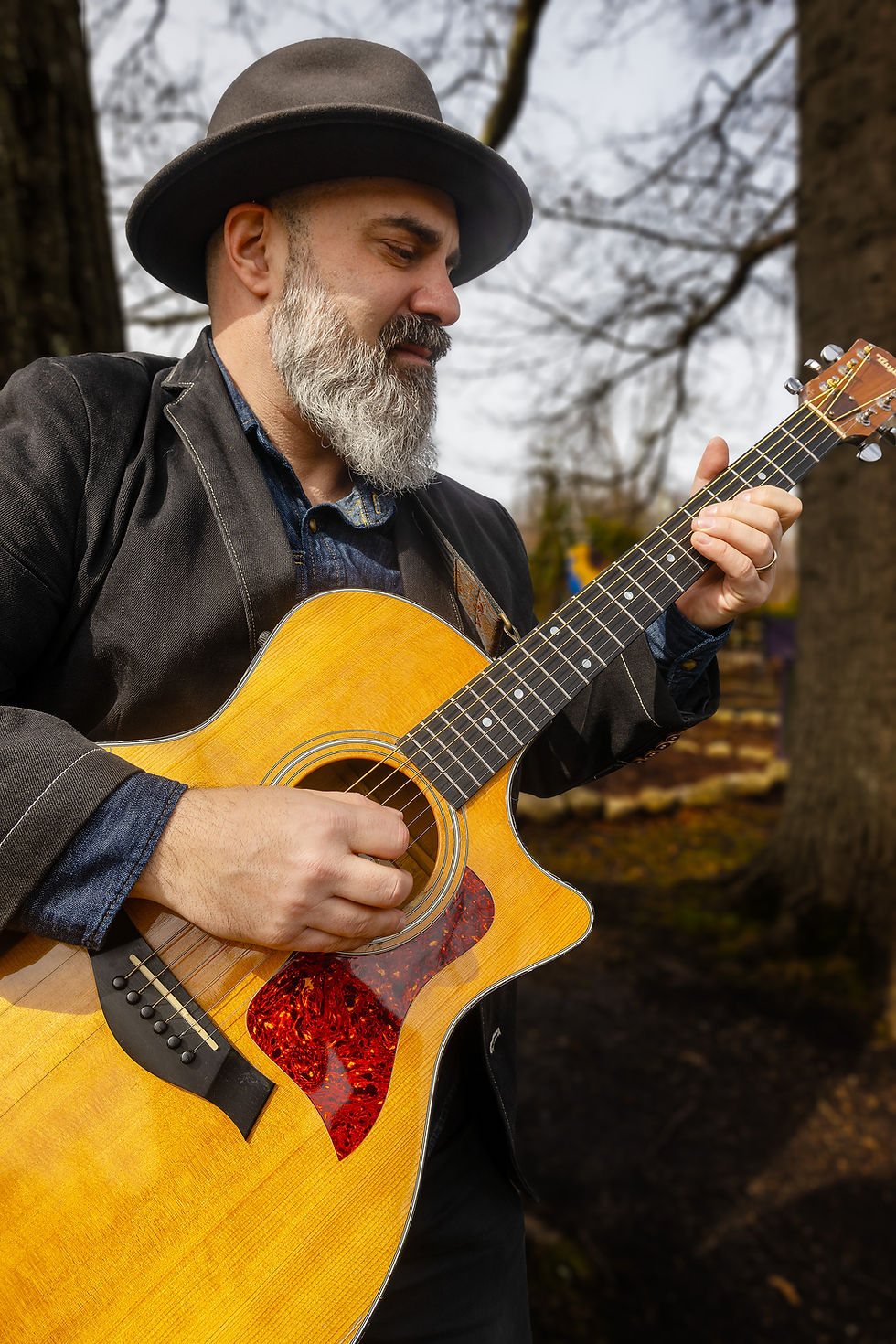
Connecticut singer-songwriter Erik Rabasca has released his latest album, New Scrolls, an eight-song collection that blends Americana, country folk, and roots music into a thoughtful record about navigating life's highs, lows, and everything in between. As the founder of Highest Frequency Records, Rabasca continues to carve his own path, delivering an album that values honest songwriting and live musicianship over polished perfection.
From the opening track, "Wise Up," it's clear that New Scrolls isn't interested in offering easy answers. Instead, Rabasca invites listeners to slow down, reflect, and pay closer attention to the world around them. His songwriting feels conversational, drawing from everyday experiences while touching on larger ideas about purpose, resilience, and human connection.
The album's strongest moments come from its balance of personal reflection and universal themes. "Foolin' Yourself" explores the pressure of unrealistic expectations, while "First Time Before" reminds listeners that love is often what gives life's unpredictable journey meaning. "Better Than What You Gave" encourages self-reflection, and the standout "Rituals, Lies & Sin" challenges listeners to think about the values shaping modern society without becoming overly preachy.

Musically, New Scrolls stays rooted in folk traditions while pulling inspiration from Americana, country, and classic singer-songwriter storytelling. Every performance feels natural, with live instrumentation giving the album warmth and personality. Rather than chasing modern production trends, Rabasca lets the songs breathe, allowing the lyrics and melodies to remain the focus.
The closing stretch leaves a lasting impression. "Love Resounds" celebrates the strength found in lasting relationships before the live version of "Try A Little Kindness" ends the record on an uplifting note that feels especially fitting.
New Scrolls is an album that rewards listeners willing to sit with its stories. Honest, grounded, and full of quiet wisdom, Erik Rabasca delivers a collection that reminds us some of the best songs aren't trying to impress; they're simply trying to tell the truth.
The title New Scrolls suggests songs can become a record of how we live. What do you hope these "new scrolls" say about this chapter of your life years from now?
A record indeed! Under both definitions!
The ancient scrolls have always been mysterious to me. They carry study, intention, and a seriousness of their day for future discovery. And songs do that too. Some hit for only a moment; others we go back to time and time again. It's not just the literal word, rhythm and melody—the surface stuff. The mystery's in the energy and intention of a track and the feeling it invokes. Songs carry intention and documents of time, but what are artists saying, and how does that translate to those who want to get under the surface? Enter new song scrolls for those open to deeper listening and reflection.
The songs on this album do contain some personal revelations, some clues on how life can be lived and seeing what's important and what's bullshit. But they're also living documents. The more I play them live, the more gets revealed. Paraphrasing Sun Ra... "music is a spiritual language. The state of the world is the state of its music." So I'm finding New Scrolls is more a reflection of the current existence than a personal chapter about me. There’s been way too much emphasis on “me” the last few decades. We need more “we” in hopefully finding a better way forward.
That leads into our next question. Many of the songs wrestle with faith, self-reflection, and the state of the world, yet the album never loses its sense of hope. How do you strike that balance between acknowledging life's hardships and offering encouragement?
Life is going to kick you in the ass… always and continually. Especially when you least expect it. What's in my control is how I respond. The bad moments will pass, but they teach us fortitude and give an opportunity for growth. And when we stop being willing to learn, that's going to cause suffering. So choosing to approach struggles with kindness and positivity, to ourselves as much as others, is vital for survival. Kindness is the ultimate strength.
You describe New Scrolls as a "no-click" album, with live performances and perfectly imperfect takes. Why was it important for you to preserve that human element instead of chasing a more polished sound?
Because life is imperfect. Emotions and energy are in constant motion. And how you express yourself when you hit record is all that matters. "Blue Sky" by the Allmans wouldn't give you that feeling of uplift as it speeds up throughout if they were playing to a click! They were playing together!!
Today, most producers are too caught up in tech and use formulas that fit into a neat, marketable product. It's rare when warmth or spirit shine through the sameness of most popular songs, regardless of genre. All the "bad" human parts get polished to lifeless perfection in a nice, sanitized, perfect digital box of Hz, instrument balance, and loudness. It's created a lot of experts for content about how music "should" be. But for me, most, not all, but most of music today just sucks. Like AI music sucks and is soulless. I'll spare you the rest of my AI tirade on...but all of it is theft first and then novelty at best.
Tracks like "Wise Up," "Rituals, Lies & Sin," and "Try A Little Kindness" encourage listeners to look inward as much as outward. Were you writing these songs for yourself first, or did you always have the audience in mind?
My process has widened over the years. There can be intention, or I can just be open to the elements. These songs came through me, and I got out of the way to let them form. It was odd to me that they all fell mostly under the Americana umbrella. I had never written in this style before. I can only write for me and hope it connects.
You've opened for Grammy-winning artists, led different musical projects, and now you're fully embracing your identity as a solo Americana artist. What does New Scrolls represent in your evolution, and how does it capture who Erik Rabasca is today?
I think it captures growth, comfort, and maturity. I'm definitely older and more gray... (laughs). The album is mature, summarizing everything I've done before from writing to producing and recording. It feels like a book ending and starting a new one at the same time. I'm wide open from here. I'm finding that the better music I make is because I'm working at being a better person. Is that adulting? (laughs)


