%20WHITE.png)

Jaqomo Turns a Giveaway Into a Glow-Up With “The Egg”

Electronic music loves to talk about vibes. Jaqomo actually builds worlds. “The Egg” is the quiet flex inside Jaqomo’s two-project drop, and easily the most revealing moment of her catalog. This is the only track where she steps out from behind the synths and lets her own voice lead. Not filtered into oblivion. Not chopped into a texture. Fully present. In Farsi. That choice alone separates this from the endless algorithm-friendly electronic sludge clogging playlists right now.
“The Egg” feels like a rebirth without announcing itself as one. The production moves patiently, with soft tension baked into the low end and a sense of restraint that most producers would not survive. The beat never begs for attention. It just breathes. Processed elements hover instead of being hit. The groove is subtle but intentional, the kind that sneaks up on you three listens deep when you realize you have not skipped once.
Vocally, Jaqomo sounds intimate in a way that feels almost invasive, as if you are overhearing a memory rather than consuming a song. Even if you do not understand the language, the emotion is unmissable. That is the point. It is not about translation. It is about presence. The track trusts the listener to feel first and analyze later, which is a dying art in electronic music.
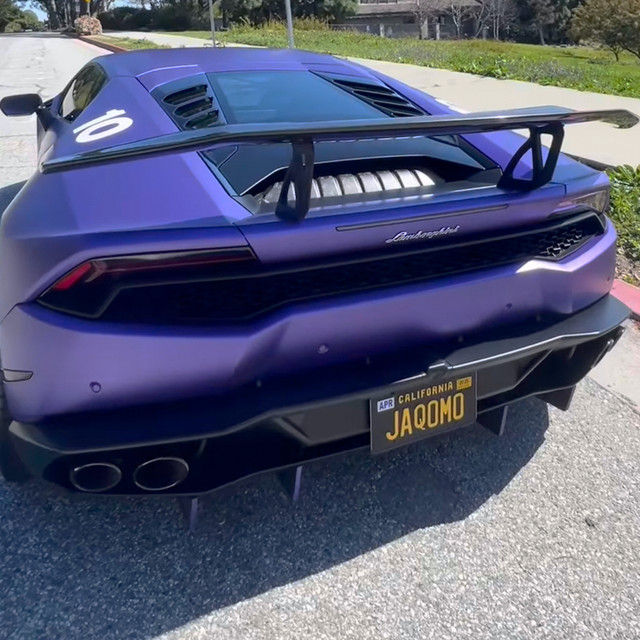
Context matters here. Jaqomo is not some new producer fishing for a breakout moment. She already did the grind. She already hit her goal of 20 albums. She already walked away. Then life handed her a Lamborghini, and instead of turning that into pure flex culture, she turned inward. “The Egg” honors where she started, not where she is parked.
This track matters right now because it refuses to perform for the internet. It is anti-clout, anti-noise, and anti-rush. If you are burned out on electronic music that sounds impressive but feels empty, this is your reset. “The Egg” is not chasing virality. It is building longevity.
Replay value is high if you have patience. If you do not, that is on you.
You waited years to release your first recorded vocals. What made now the right moment to let people hear your real voice?
As “The Egg” was the first song I ever recorded, I felt timid about my vocal ability, and I particularly preferred the spoken word style over a singing vocal style. I didn’t feel confident in my vocal range to add it to my music, and I feel a lot of the trending music of today’s generation is distracting from the actual music. After I released more albums in my instrumental style, many artists requested to collaborate their vocals over my tracks, and it helped me to gain the confidence to finally release my first recorded track with my own vocals.
Now felt like the right moment to release this track because after producing twenty albums, I wanted to go back to the beginning and honor my roots, and the meaning of the words in my track are more relevant today where I have gained a deeper understanding of how I want to express myself and to feel more confident with my voice being heard, whereas before I wanted to strictly focus on honing my music production skills and to have my tracks just be about the music itself.
It has alot to do with the first cd I ever owned as a young girl and played on my boombox being a Yanni cd that was all instrumental and the way that music moved me as an artist to really feel the music instead of focusing on vocals and repetitive lyrics, it allows the listener to feel it differently than adding a singing voice over the track.
“The Egg” feels intentionally restrained. What did you have to unlearn as a producer to let this song stay minimal?
I actually made this song in university as part of a class assignment for sound engineering, where my school provided the right equipment to record sounds. Many of my peers had recorded arbitrary noises in a way that wasn’t coherent, and my final product was well-received and highly praised by my teacher, which was actually the definitive moment that I realized I had a skill that I could actually do professionally and not just as a student. Producing more developed tracks in my future albums, I realize that for my first track, I had to unlearn the way that each layer makes my songs, where I have a bass layer, a drum layer, and a melodic layer. All of my tracks have consistently been recorded in one take with absolutely no editing, and so they are all live recordings and especially for my first track I hadn’t learned yet that having layers in the track are really what sets the tempo and rhythm to make it a uniform sound, so the minimal sound has a lot to do with the exclusion of a bass and a drum layer.
How does releasing music in Farsi change the way you think about your audience and who this work is actually for
Releasing this song in Farsi was from a poem my grandma taught me when I was a child, where the meaning of the lyrics is about a golden chick being trapped in a tight space with walls of stone enclosed with no windows and doors, and shaking the body to soon emerge into a brighter world. It changed the way I thought about my audience because it was always my dream to revive traditional poems and songs of my culture in a modern way. Many songs of today’s generation are oriented just to be trendy and catchy and I wanted to make music that had a deeper meaning. It was for a country that we all lost a part of being part of the Iranian diaspora, where our musicians were persecuted and no longer allowed to make music. Making this track for all of our shared pain and trauma and the sense of nostalgia for a home that no longer exists, this song was so deeply moving for me that I knew if I ever had my own vocals on any track, they would have to be in Farsi to resurrect everything that was taken from our culture where no other vocals were even meaningful enough for me to want to record.
You completed your career goal and stepped away. Did coming back with a new identity make music feel riskier or freer?
Completing my career goal of 20 albums by 2020 was a project that took me four years, starting in 2016, when I was so inspired by other artists that it influenced me to make my own style. The last song of the collection was called “Stop Awhile,” where I felt complete and finished and had the freedom to create 300 tracks and to do so independently where many other artists are restricted and exploited by the demands of a label, so much so that it takes away from the actual music and makes it an obligation instead of it being about passion. Coming back with a new identity completely liberated me as I had already done the hard part of making the music, and I could finally promote it in a way that did it justice and enjoy listening to it and sharing it with others, and that my humble goal from the start was just about having my music heard, and not so much about the artist, where i deliberately withheld my own vocals to have a sense of anonymity where it didn’t require an artist presence and was purely about the passion of the actual music.
Seeing your car become part of your art is wild. Where do you draw the line between symbolism and spectacle?
Having my car become part of my art felt meant to be , where there is an existing element of having a Lamborghini and music coexist together so well that they complement one another as a pair. I always value the symbolic nature of license plates and having a foundation where I was brought up playing with little toy cars, to put my artist name on such an exquisite vehicle, it felt like I was doing so much justice for the work that I created and the dreams I had as a child. I always value humility over ostentatious behavior, so I tried to do so in a way that wasn’t a spectacle but rather symbolic of everything that I represent and am passionate about.


