%20WHITE.png)

Landyn Zane Expands His Cinematic Vision With 'Coming Attractions'

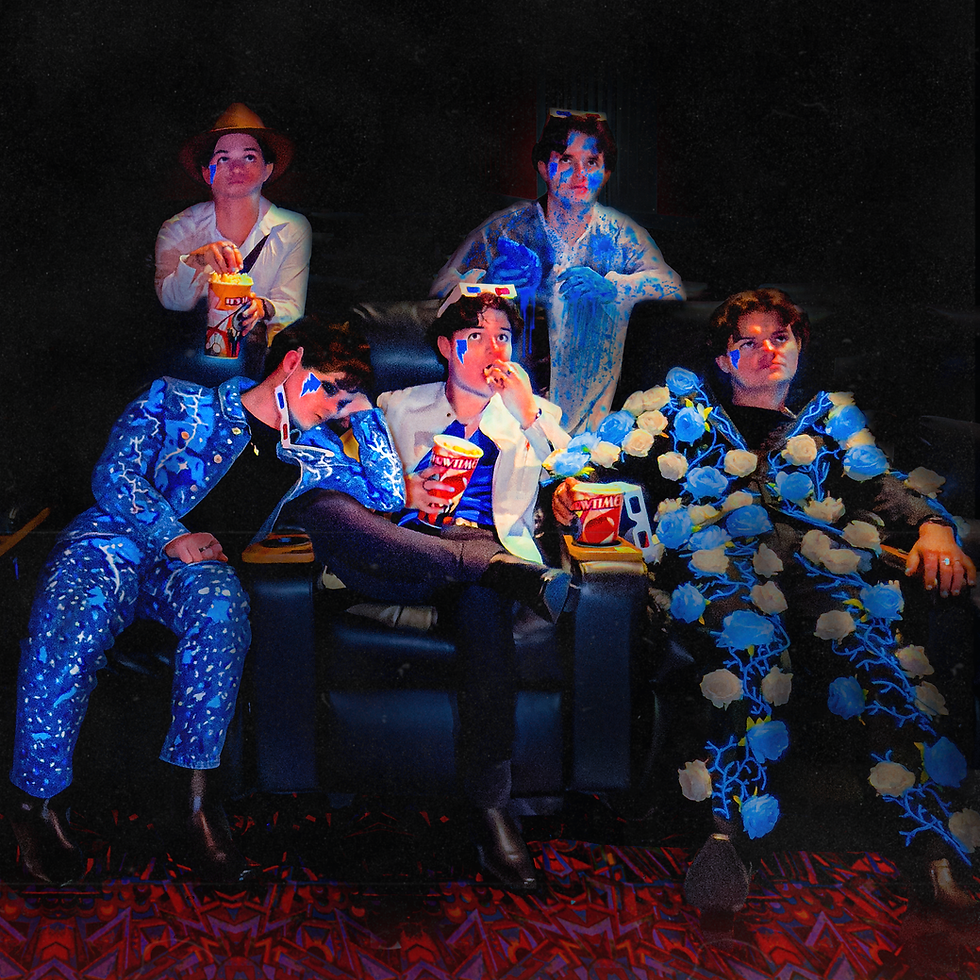
In an era where music releases often begin and end with a playlist placement, Landyn Zane is thinking much bigger. On his fifth EP, Coming Attractions, the Iowa-based DIY artist delivers six tracks that blur the line between pop record and cinematic experience, pairing theatrical songwriting with ambitious world-building that extends far beyond the music itself.
The concept is immediately compelling. Borrowing its title from the familiar phrase shown before a film begins, Coming Attractions explores the uncertainty of waiting for life's next chapter, whether that's love, purpose, stability, or simply the feeling that something better is still ahead. Each song acts as its own "movie trailer," offering a different emotional perspective while contributing to the EP's larger narrative.
Musically, Zane confidently blends synth-pop, funk, soft rock, indie pop, and vintage '70s and '80s influences into a polished, theatrical sound. Tracks like "Died on the Vine" wrestle with the fear of dreams slipping away before they ever arrive, while "How Much For Your Love?" transforms emotional desperation into an irresistibly catchy pop anthem. Elsewhere, "Talking to the Dead" reflects on modern isolation, and "Sleep in the Backyard" closes the project with a nostalgic look back at childhood and imagined futures that never came to be.
What makes Coming Attractions especially impressive is the scale of Zane's independent vision. Every aspect of the project was created in-house, from the songwriting, production, and instrumentation to the artwork, styling, photography, and creative direction. Each single even received its own fictional movie poster, original character, handmade costume, and collectible memorabilia, reinforcing the EP's immersive concept.
Rather than chasing trends, Landyn Zane has created a fully realized artistic world that rewards listeners willing to step inside it. Coming Attractions proves that independent pop can still feel grand, imaginative, and deeply personal, making it his most complete and compelling release to date.
You've built Coming Attractions around the idea of movie trailers and imagined futures. When did that concept first click, and how did it shape the way you wrote the EP?
The full concept for Coming Attractions came with the title. I knew this was going to be my final EP before I made and released my debut album, so I wanted the name to allude to the fact that it was its own full project while also leading into something larger.
For a while, the title was Amuse Bouche, but that title never fully grabbed me. Once I thought of Coming Attractions, it all came together very quickly. It felt like the perfect way to suggest that even more was coming after it, while also allowing me to show how much of a cinephile I am. I spent most of my adolescence thinking I was going to be a screenwriter, actor, and director before I found music. Framing the EP as a collection of fictional movies allowed me to blend everything I'd learned before into the release.
Knowing the title while I was writing also made me think more visually and theatrically. I leaned into storytelling and tried creating fully realized worlds you could live in with each song. I wanted the song titles to immediately spark an image in someone's mind, and I used that to inspire the movie posters, outfits, and visuals surrounding each release.
The title also reflects the mood of the EP. Much of it is about waiting for life to change and hoping for things like love, happiness, success, stability, and peace while wrestling with the fear that they may never arrive. The concept didn't change the themes of the songs, but it helped me understand how they all fit together and pushed me to make this my most cinematic and cohesive project yet.
You're a completely DIY artist, handling everything from songwriting and production to styling, artwork, and visuals. Which part of the creative process challenged you the most on this project, and why?
There wasn't one specific creative task that stood out above the others. The biggest challenge was carrying the weight of every responsibility myself.
I wrote, recorded, produced, mixed, and mastered the EP in my apartment. I also built the visual worlds, designed the artwork, planned and executed the photo shoots, styled every character, customized the outfits, handled the release strategy, managed distribution, contacted press, stayed active on social media, and organized the entire postcard campaign.
The most demanding parts were probably creating the visuals and mailing the postcards.
The hand-painted jean outfit for "Strange Love" took hours of designing and painting, while the suit for "Sleep in the Backyard" required attaching dozens of individually painted roses by hand. I also personally signed, numbered, stamped, and mailed more than 3,000 ticket-stub postcards, even handwriting names and addresses on many of them before finally switching to labels after developing carpal tunnel.
Looking back, those challenges became the most rewarding part of the project. Every creative and financial risk came directly from me, and seeing those decisions pay off after years of dedication has been incredibly fulfilling.
Each song has its own fictional movie poster, character, and visual identity. How important is world-building to your artistry, and what do those visuals allow you to express that the music alone can't?
World-building is essential to everything I create.
The artists who inspired me didn't just make great songs. They created characters, mythology, imagery, performances, and entire worlds that people could immerse themselves in. That's always been what draws me to art.
I also think world-building extends far beyond music. Countries, brands, religions, and communities all use symbols, traditions, and storytelling to create shared identities. It's one of the most fundamental ways people connect with each other.
That's why I don't just make music. I want to give people visuals, characters, outfits, and experiences that deepen their connection to the songs. The movie posters for Coming Attractions gave each track another layer of meaning, from the adventurous spirit of "Died on the Vine" to the neon nostalgia of "Strange Love" and the romantic dreamscape of "Sleep in the Backyard."
To me, world-building is how artists become part of history. It's what turns music into memories, communities, and cultural moments that people carry with them for years.
The EP explores themes of love, loneliness, uncertainty, and growing older. Looking back, what did creating Coming Attractions teach you about yourself both as an artist and as a person?
I didn't fully realize it while making the EP, but I've come to understand that almost everything I've created has been driven by a search for understanding and hope.
Writing has always been my way of processing life. At the same time, I've spent much of my life overthinking every possible outcome, which often left me feeling anxious and melancholic. Even though that mindset has caused me pain, it has also fueled my imagination and my belief that life could eventually become something better.
When I moved to Los Angeles in 2024, I thought being close to the music industry would accelerate my career. Instead, I experienced intense isolation, financial hardship, and times when I couldn't consistently afford food. Even then, I held onto the belief that things could improve if I kept working. After eventually moving back to Iowa, I continued chasing that hope, and a year later I've achieved things I once only dreamed about.
Making Coming Attractions helped me realize that every song asks the same question: How do you hold onto hope when you have no guarantee that what you're hoping for will ever happen? I didn't know I'd been asking myself that question my entire life until I finished this project.
You've already released more than 40 original songs while building a dedicated fan community through the Zaniac Fan Club. As Coming Attractions marks another major milestone, what do you hope listeners take with them into the next chapter of your journey?
More than anything, I hope people feel less alone in the uncertainty of their own lives.
This EP is about wanting love, happiness, stability, success, and a better future without any guarantee that those things are coming. I hope people realize they aren't alone in those feelings, and that the best path forward is to hold onto hope while continuing to make difficult decisions that move them toward the life they want.
I also hope Coming Attractions reminds people that pop music can still be theatrical, personal, and deeply human. It can be more than a short clip on social media. It can have characters, handcrafted details, visual worlds, memories, and genuine relationships between artists and fans.
That's the reason I created the postcard campaign and the Zaniac Fan Club. After mailing more than 3,000 postcards, I realized people are craving meaningful connections beyond social media. I want fans to feel like they aren't simply watching my journey from a distance, but that they're helping build it alongside me.

