%20WHITE.png)

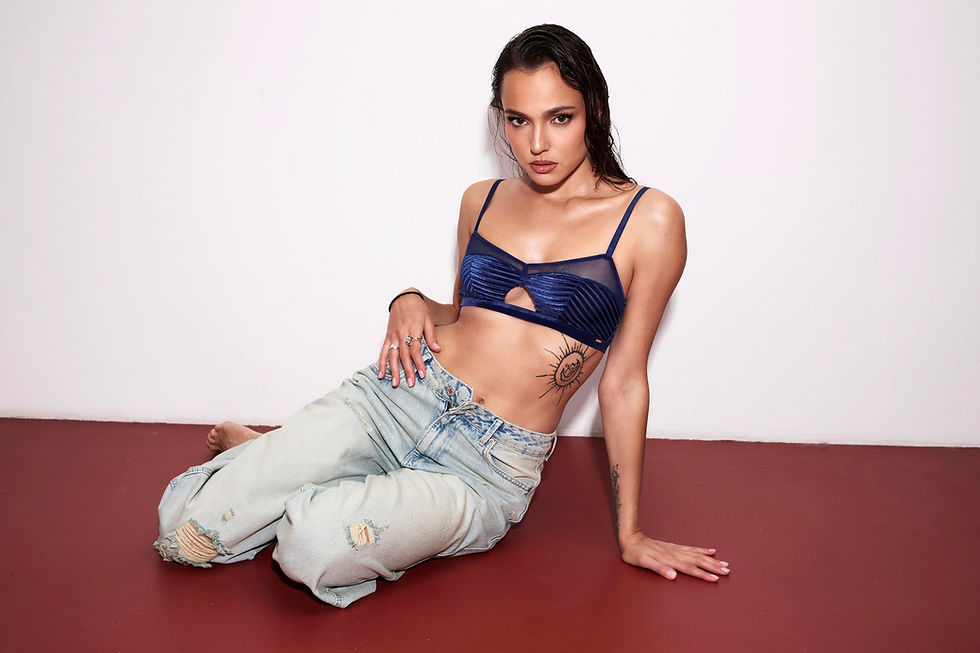
Malsi Turns Heartbreak Into Healing on “Year of the Ocean”


Some artists write breakup songs. Malsi writes emotional ecosystems. Her latest single, “Year of the Ocean,” drifts through alternative R&B, soul, jazz, and atmospheric electronic textures in a way that feels both intimate and cinematic. It is the kind of track that does not rush to impress you. Instead, it slowly pulls you under the surface.
Malsi describes the song as a reflection on a relationship that started thrilling but eventually felt dangerous. The emotional push and pull mirrors the unpredictable nature of the ocean itself. One moment calm and beautiful, the next moment turbulent and overwhelming.
That mood carries directly into the production.
Built around airy keys, deep bass currents, and layered vocal textures, the track floats somewhere between experimental R&B and what Malsi calls her own lane: electrosoul. The sound design feels fluid and immersive, like waves slowly rolling in and out. Nothing is rushed. Everything breathes. Then there are the vocals.
Malsi’s voice moves through the production with a quiet confidence that feels hypnotic. Her vocal layering is particularly striking. Harmonies shimmer in the background like distant echoes, creating a dreamy sonic space that feels both soothing and emotionally charged.
Lyrically, the track carries more weight than the mellow sound initially suggests.
“Year of the Ocean” explores themes of autonomy, emotional safety, and spiritual clarity after walking away from a relationship that began to feel dangerous. The message is clear without being preachy. Recognizing your worth is not just empowering. It is survival.
Malsi also expands the conversation beyond the relationship itself, touching on the lack of mental health education for men and how that absence can ripple through relationships and communities. It is heavy subject matter, but the song never feels hopeless. Instead, it feels like a release.
That emotional resonance is already connecting with listeners. Since its release, “Year of the Ocean” has climbed the Hypeddit Top 100 R&B chart, jumping from 99 to 55 in just a few weeks. For an artist already known for crafting her own sonic universe, the track feels like another step deeper into that world. And honestly, it is a place worth getting lost in.
You describe your sound as “electrosoul.” At what point did you realize the music you were making didn’t really fit inside traditional genre boxes anymore?
While I was creating my first album, Hades, I realized that what "felt right" to me instinctually at that time didn't really fit any traditional genre. As I continued to produce music in the following years, and my sound fell more into the electropop and electro-rnb categories (I felt like I needed to fit more into a commercial box during that time), my signature "Malsi" sound still remained embedded in those songs. As I've grown as an artist, I've finally fully embraced that I have a different style and sound in general, and I'm completely okay with that.
“Year of the Ocean” uses water and lunar imagery to describe emotional cycles. When you write, do metaphors like that come naturally, or are they something you intentionally build into the storytelling?
I find that metaphors tend to come to me naturally; I've always loved writing, and my English classes were probably my strongest back in high school. However, these days I tend to approach a new song with the idea or metaphor in mind, and then I build the world of the song around that concept, although I still allow my instincts to guide me the majority of the way through.
The song touches on autonomy, emotional safety, and the lack of mental health education for men. Were you ever worried about how openly addressing those themes might be received?
I definitely was. Not by my closest friends or family, but I'm more worried about listeners out there who may feel triggered. As someone who cares about the wellness of my listeners, I really try to promote healing energy through my music, and this was important to me. However, my observations of men in relationships (whether it was a few of my own, or of loved ones, or even of acquaintances) over time have led me to attempt to discuss these problems that directly impact women through my music. And I am curious to hear if you've observed this too: the increase in articles and people speaking up across social media platforms has become a more public discussion, which also encouraged me to more openly discuss the need for mental health education for men as well.
You produce and shape your own sound from the ground up. How does controlling the production process change the way you express vulnerability in your music?
Making music is something that's an incredibly vulnerable experience for me. Vulnerability feeds my sound. Plus, I've worked with various producers at this point, which has helped me get more comfortable with expressing myself fully and try new things with my voice, lyrics, and general musical style (jazz, rnb, etc). The Year of the Ocean itself was produced by one of my friends, Simpatico. I'm so grateful I was able to run with it in a way that translated my own sound through our musical enmeshment.
Your background spans sociology, visual arts, and learning design. How do those disciplines influence the way you approach songwriting and building your sonic world?
Sociology because I've always been curious about how groups of people work, and I have a deep appreciation for different cultures (I'm Bangladeshi myself). Visual and Dramatic Arts because I was a shy kid, and theatre helped me get out of my shell. Learning design because I believe education is the equalizer, regardless of race, gender, and class, and accessibility to education is what determines that (so strong, accessible learning design = access, in my opinion). These are all common themes in my music, whether I talk about my teaching background (and education in general), my Bangladeshi culture, or race/gender/class divides.