%20WHITE.png)

NOVABLOOD’s “I Used To Live In A House” Feels Like a Band Finding Its Voice


NOVABLOOD hail from Carlisle in the north of England. They’ve released music before. This is the first track that made us lean in.
“I Used To Live In A House” sits in a space that feels classic without sounding borrowed. There’s a clear new-wave pulse to it, the kind you’d link to bands like Talking Heads, but it doesn’t feel retro. It feels current.
The bass loops and keeps the track moving. The drums stay locked in. The guitars cut across the rhythm instead of smoothing it out. Nothing here is trying to be pretty. It’s about momentum.
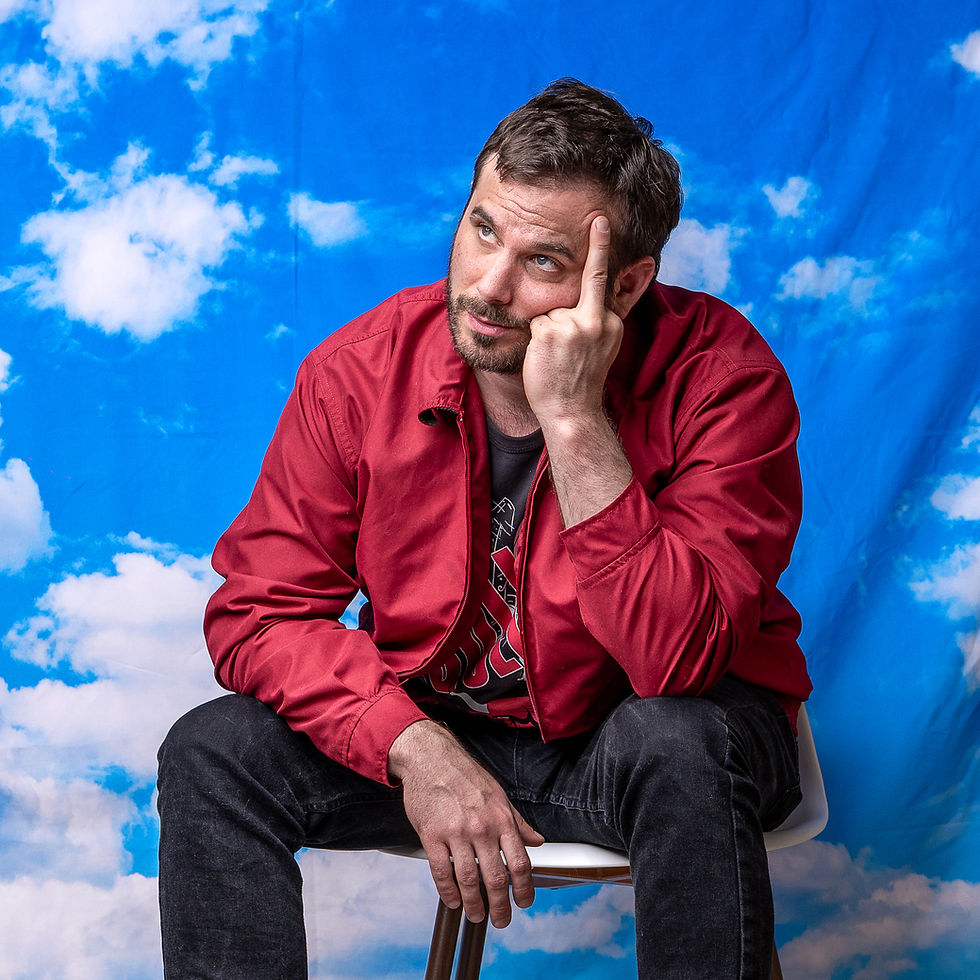
That sense of rhythm isn’t an accident. Mark Zowie, the band’s singer and producer, comes out of club culture, with years spent making and playing electronic and house music before turning his focus to NOVABLOOD. You can hear that DJ brain in how the song locks into a groove and refuses to let go. His vocal pushes against the beat, half spoken, half driven, giving the track real frontman energy.
The song feels natural. Not stacked. Not overworked. It sounds like a band in a room locking into something and letting it run. You can hear the air around the instruments.
Lyrically, it lives between memory and unease. It looks back at a life that once felt solid and finds the cracks in it. When he sings about having “a roof over my head,” it doesn’t sound safe. It sounds thin.
Their new album, You’re New To This Aren’t You?, is out in March via Mint 400 Records. After 2024’s Destroy The Magic and a heavy run of touring and club shows across the UK and Europe, this feels like a band tightening its focus.
A lot of new music comes and goes. This doesn’t. NOVABLOOD feel like they’re stepping into something sharper, and this track is a great example.
We caught up with Matt Zowie to chat more about the record, how it came together, and where NOVABLOOD are headed next. You can read that conversation below.
Hey Mark, thanks for taking the time. With the new album You’re New To This Aren’t You? coming out and marking a new chapter for the band, how are you all feeling about where things have landed right now?
There’s been a lot of hard work and dedication to put this album together. Each and every contribution to the final recordings can’t be over looked as they all interact in a way to tell the full story. The icing on the cake is we’re now signed to Mint400, a label that really seems to understand the directional flow and appreciates us a band. Their overall enthusiasm for the music we send them inspired us to drive deeper into everything we feel we want to explore.
You seem to play a sizable creative role in shaping the music, even though it’s clearly a shared effort. When you zoom out from the details, what does this record represent to you personally, and where do you feel it came from?
My contribution to the band is both in the initial song writing and production. I’ve produced many forms of electronica over the years and this album is simply a directive turn to a form of music close to my heart. My love of post-punk, new-wave and electronic music has simply spilled into these compositions. It’s just an expression of sound and arrangement that has been built up over time and an extreme desire to avoid current commercial dance music sensibilities.
The first single, “I Used To Live In A House,” has a nostalgic pull that brings to mind that era of smart, slightly off-kilter pop from the 80s, but it still feels very current. Was that connection something you were conscious of, or did it only become clear once the track was finished?
The production is what gathers its current feel and the writing is the inspiration and direction. It was with complete intent but a need for it to make me feel all the feels that the music I listened to did, in my teens. There’s a sensation of rule breaking and energy I wanted to capture within the music.
There’s a strong physical drive running through the songs that feels controlled rather than overbuilt. How do you know when a track has done enough on its own without needing more layered onto it?
The term, ‘less is more’ was used a lot on this album. Rather than coat the underlying tracks with deep keys and chord structuring as I’ve almost relied upon before, it was about little patterns and odd juxtapositions within the instrumentation to do the work. I work within certain realms of house music production allowing the tracks to be calm and drop to allow an energetic flow within the songs. You instinctively know when a track is finished. I didn’t allow clutter, but conversations between synths and guitar. Paul managed to bounce off a lot of the songs and not clutter. Searching for gaps and discordant guitars to bring an almost anarchic feel.
You guys seem very comfortable letting things feel a little uneasy or unresolved, in a way that feels intentional. As a band, how do you decide when that tension is doing the work versus when something needs more definition?
It’s about timing and not over exposing the listener to extreme repetition. Enough has to take place to maintain interest and that’s where nice compositions in key change and bridges allow the tracks to breathe enforcing groove and hypnotic slants from either basslines / guitars or a melody.
Across the album, ideas seem to come through repetition and movement rather than big, obvious statements. Is that something you notice while you’re making the songs, or only later when you can listen back with some distance?
I think that’s where my House Music background comes into play. Repetition is good. That is the groove. It’s the head nod. The foot tap. Dynamics in arrangement and appropriate layering must then come into play. The statements are the melodie’s, whether they are the main top line or bubbling underneath to capture the listener. James Murphy in LCD soundsystem is a master at this, The multiple layering from Talking heads also pull you in. A Certain Ratio, New Order and Brian Eno also brought this style to my ears from a very early age.
The way the parts interact often feels reactive, almost like a conversation happening inside each song. How important is that sense of response between elements when you’re shaping a track?
it’s totally crucial. It fills space and emphasises each note. They bounce off each other in a heavy reactive way to pronounce melody and syncopation. One instrument playing a melody can be quite dull. Having 3 or 4 different sounds or instruments to create 1 body is both exciting and exhilarating. Again, Paul did this perfectly bouncing guitars of other guitars or synths to make it complete.
Compared to earlier releases, this album feels more focused and locked into its own identity. At what point did you realize this was going to be a more concentrated statement?
I wanted it to reflect and respond to music I have either listened to or inspired by. I wanted it to feel cohesive and complete and the only way to do that was not sit on the periphery of a genre but consume it!
When people hear NOVABLOOD for the first time through this release, what do you hope they walk away understanding or feeling about the band?
I want them to realise they can’t expect us to follow a singular path. Even within a solid genre they’ll know we bring other elements and make them a part of the composition. We genuinely feel this album is a complete body of sound, energy, drive and statement. We literally feel we can take the sound anywhere we want.
For more info head to NOVABLOOD's Linktree!