%20WHITE.png)

Patrick Budd Turns Growing Up Into Something Quietly Devastating on 'Suburban Bench Swing'

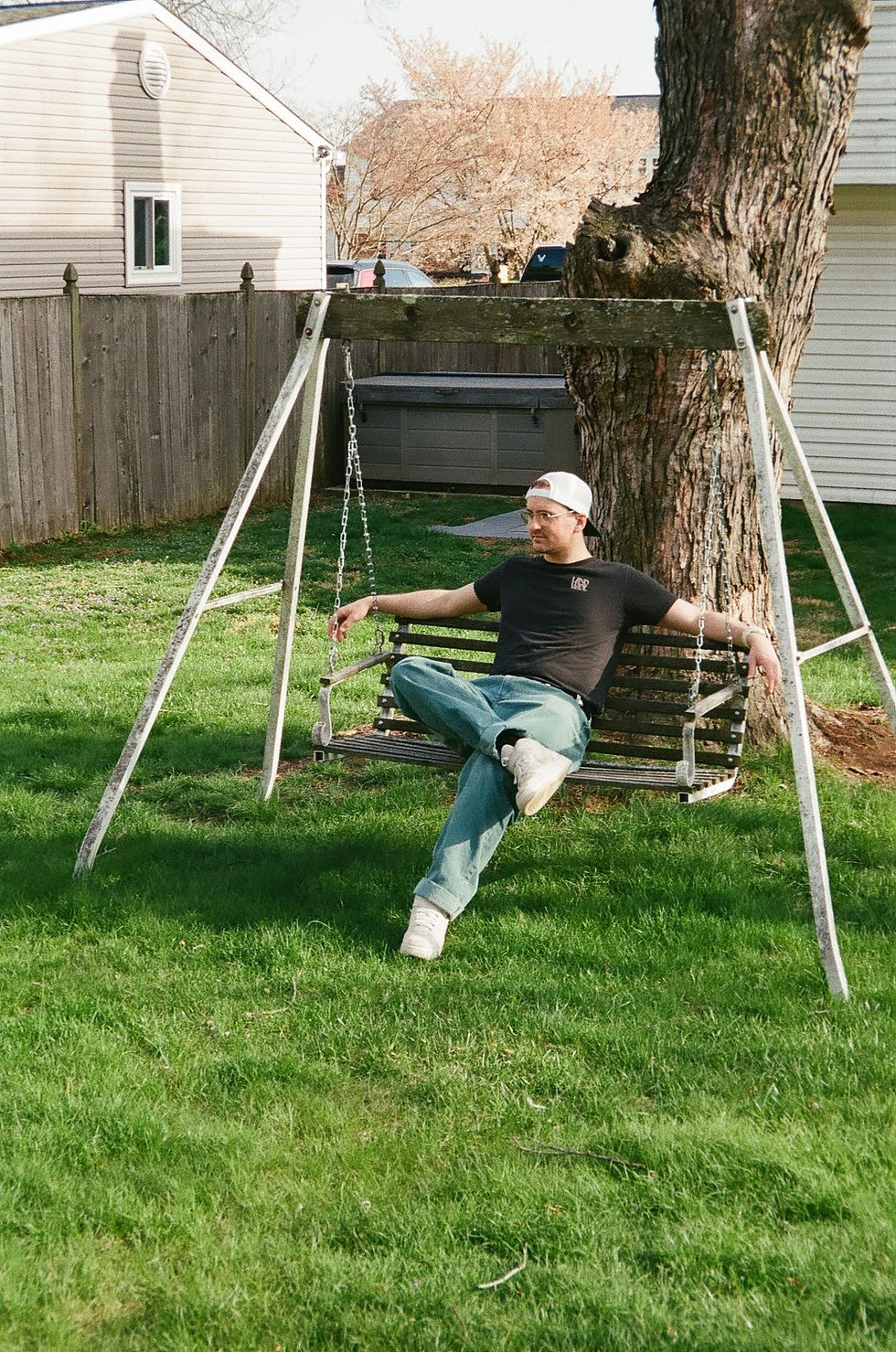
There’s a specific kind of sadness that hits when you realize life is moving whether you’re ready for it or not. Not a dramatic movie heartbreak. Not some giant public collapse. Just the slow, uncomfortable realization that people around you are growing up, moving away, getting married, building lives, while you’re still sitting in your hometown, wondering why everything feels stuck. Patrick Budd captures that feeling with painful accuracy on Suburban Bench Swing.
The Maryland-based folk/Americana artist doesn’t try to romanticize uncertainty here. If anything, the album feels like someone sitting in the middle of it, trying to process adulthood in real time. Across tracks like “23,” “Cigarettes,” and “I’ll Say I’m Fine,” Budd leans into themes of comparison, regret, isolation, and the quiet panic that comes with feeling left behind while everyone else seems to have life figured out.
A lot of artists writing in this lane chase the same rustic nostalgia Noah Kahan helped push back into the mainstream, but what separates Suburban Bench Swing is how grounded it feels in lived experience. Poolesville, Maryland, isn’t just background scenery here; it becomes part of the emotional architecture of the record itself. The album constantly circles around disappearing hometown culture, changing landscapes, fading familiarity, and the weird grief that comes with watching places you love slowly stop feeling like home.
Tracks like “My Dad’s Guitar” and “Suburban Bench Swing” hit especially hard because Budd avoids overcomplicating the writing. There’s no attempt to sound overly poetic or profound. The details are simple, specific, and human, which makes them land harder. You believe him because it sounds like he’s actually lived it.
Sonically, the project stays rooted in stripped-back folk, Americana, and country textures without feeling overly polished. The production gives the songs room to breathe, letting the emotional weight sit front and center instead of hiding behind massive arrangements or forced cinematic moments.
What makes the album resonate most is its honesty about failure and uncertainty. Budd isn’t pretending to have answers. He’s documenting the emotional reality of being in your twenties and realizing adulthood doesn’t arrive with clarity the way people promised it would.
Suburban Bench Swing feels less like a debut album and more like someone opening a journal they were never fully sure anyone else would read. That vulnerability is exactly what makes it work.
You focus on the feeling of falling behind. At what point did that shift from pressure into something you could actually write about?
Funny enough, I don’t think it ever actually shifted away from pressure. I still feel it very much. However, in the case of these songs, a lot of them were written out of brief moments of succumbing to that pressure. A real “we live on a floating rock, and nothing matters, so you might as well say what’s on your mind” kind of experience. Allowing myself to “give up” on the steep expectations I have for myself, especially when it comes to how I view myself in the music and creative space, freed me up to write about things that were really just for me. I think the more personal you are in your music, the more likely you are to strike a nerve with someone else who you might not have known was going through the same experience.
The album is rooted in a specific place. How did Poolesville shape the emotional tone of the project?
There are a lot of people who sort of crap on their hometown, who want to get as far away from it as possible, and in a lot of ways, I don’t even blame them for never wanting to talk about it again. In that regard, I discovered how much there was to talk about within the discomfort, within the high school heartbreaks, within the fights we had with our parents when we were teenagers. Things that I just thought of generally as mundane and another part of life became really meaningful subjects for a lot of these songs. It’s how I discovered that everything I could ever write about has been right under my nose this entire time.
There’s a strong theme of comparison throughout. How do you personally separate your reality from what you see online?
It’s actually still incredibly difficult to navigate, and rarely do I find success in doing so. Having gone away to school for one semester just to boomerang back home, still living here into my late 20s, can feel really deflating at times. Especially when you see all of your friends that you went to high school with starting their new lives with their big jobs, their new houses, their new marriages, and even their new families that they’re starting, while I’m still living under my parents’ roof, trying to be a musician. I would be lying if I said that I hadn’t thought about giving up on dozens of occasions, but before I knew it, I looked back and realized I was still waking up the next day and giving it my next best shot. The way that people say that they wish they could realize they were living in the good old days before they became the good old days is how I decided to start looking at my music career, and that the road to success, being particularly tough and uncomfortable, is all just a part of the journey.
Your delivery feels conversational rather than performative. Is that something you consciously worked toward?
I think it is because I used to write songs about the moon, flying away, and otherwise meaningless ideas that didn’t fulfill me in any way. When I began writing these songs, I made a conscious effort to write like no one else was ever going to hear these, almost like journal entries. It became a way for me to reflect on a lot of thoughts and emotions that I realized I had yet to unpack, and in a way, it was amusing to hear what it was I was thinking about out loud. Even “Call Me When You’re Home” might feel so directive that it points to someone in particular, so much so that when I wrote it, I was actually nervous that people would think that was the case, but the minute I thought to myself, “you can’t say that,” is the exact moment I decided “but that’s why you have to.” I knew that the stories I was creating about my own little world I was living in could be shared with many others.
If someone listens to this album while feeling stuck in their own life, what do you hope it changes for them?
I hope people know that simply by being alive, you’ve already lived all of the worst days of your life. That by waking up the next day, you’ve already given yourself the chance to chip away at your dreams once again, and when you look back, you’ll be shocked at how much ground you’ve covered without even realizing it.


