%20WHITE.png)

Seán Griffin’s “People Are Mad” Turns Social Chaos Into Celtic Rock Gold
- Victoria Pfeifer

- Aug 8, 2025
- 3 min read
Updated: Aug 22, 2025
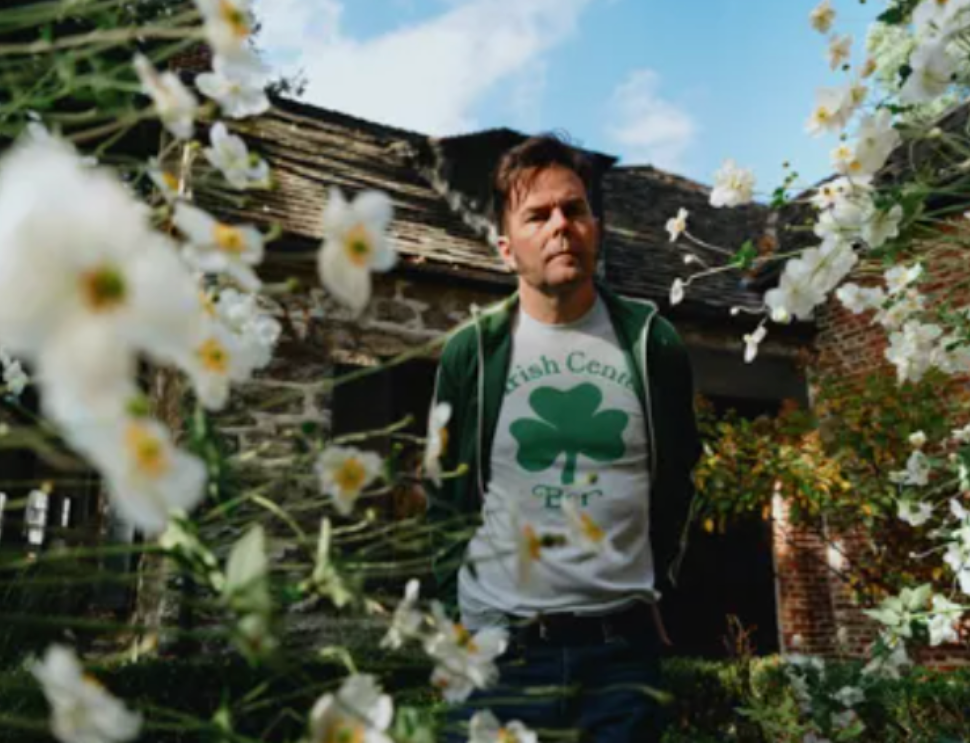
Seán Griffin kicks off his debut solo project with "People Are Mad," a hilariously honest and oddly comforting Celtic rock anthem for anyone trying to survive today's collective chaos. Known for fronting Irish punk staples The Ruffians, Griffin brings years of grit, soul, and stagecraft into a solo track that is just as wise as it is weird .
Built around a shuffling rhythm and a bouncing banjo melody, "People Are Mad" is immediately infectious. The lyrics lean into absurdity with sharp wit, turning a phrase we've all mumbled into a kind of rallying cry. From birth to grave, Griffin suggests, people have always been a bit off, and there's something liberating in that idea.
Griffin's voice is warm and familiar, grounded in storytelling tradition but laced with punk edge. The song doesn't try to save the world. Instead, it gives listeners a moment to laugh at it. And that might be even better. The production, shaped by Grammy winner Kenny Siegel and mixed by Paul Kolderie (Radiohead, Pixies), brings a polished yet playful energy to the track, while mastering from Greg Calbi ensures every detail lands just right.
The accompanying music video effectively conveys the message. It's whimsical, weird, and delightfully self-aware. Filmed in Griffin's hometown of Kingston, New York, the video features him wandering through a Victorian cemetery, dancing during protests, and navigating the chaos on a shopping cart. His daughter's final gesture, offering daisies to the audience, feels like a wink to the inevitable: we're all pushing up daisies eventually, so why not enjoy the ride?
"People Are Mad" proves that Griffin still has plenty to say, and he's saying it in a way only he can. The song is clever, catchy, and just irreverent enough to stick. It's not just a standout opener, it's an anthem for our wonderfully unhinged times.
What sparked the idea for “People Are Mad,” and did you always know it would be the lead single?
The idea came out of a conversation with a bandmate. We were texting, and I was telling him about a song I had just written that day, and in the context of that conversation, I said, “People Are Mad.” He said, “What a great title for a song.” I wrote it later that day. It was a phrase I was prone to muttering to myself at that time. I wasn’t sure it would be the lead single until the album was done, and everyone involved gravitated toward it being the opener.
How did your years with The Ruffians influence your approach to this solo project?
I was used to collaborating with people, so that felt fairly familiar. It was just with new people, which was a leap of faith. It worked out really well in the end. I couldn’t be more excited about this record. I try to trust the people I work with. I have ideas, but ultimately, I have always found people often bring something special to the table when they can listen and react as they see fit, without interfering too much. This has been my experience thus far, and it has worked.
The video is playful and surreal. How did the visual concept come together?
My life feels playful and surreal at times, so that makes sense—haha. I was trying to tie in with the idea of birth till death, and getting a bunch of daisies and going to the cemetery just fit the bill. I liked the idea of protestors holding signs saying, “We’re doomed,” and the shopping cart—well, that was by the park that day, so it just seemed right. We shot it all in a day, and it was very fun figuring it out as we went along.
What was it like collaborating with legends like Kenny Siegel, Paul Kolderie, and Greg Calbi?
It was an absolute pleasure. I had waited to do a solo record for so long that it was amazing to get to work with people whose work I admired and loved. There is a reason they are all so successful.
If people take away one message from this song, what do you hope it is?
That people are mad—haha—and that we are all in it together


