%20WHITE.png)

Snake and the Rabbit Turn a Cold Shoulder Into a Battle Cry on “Small Town Blues”

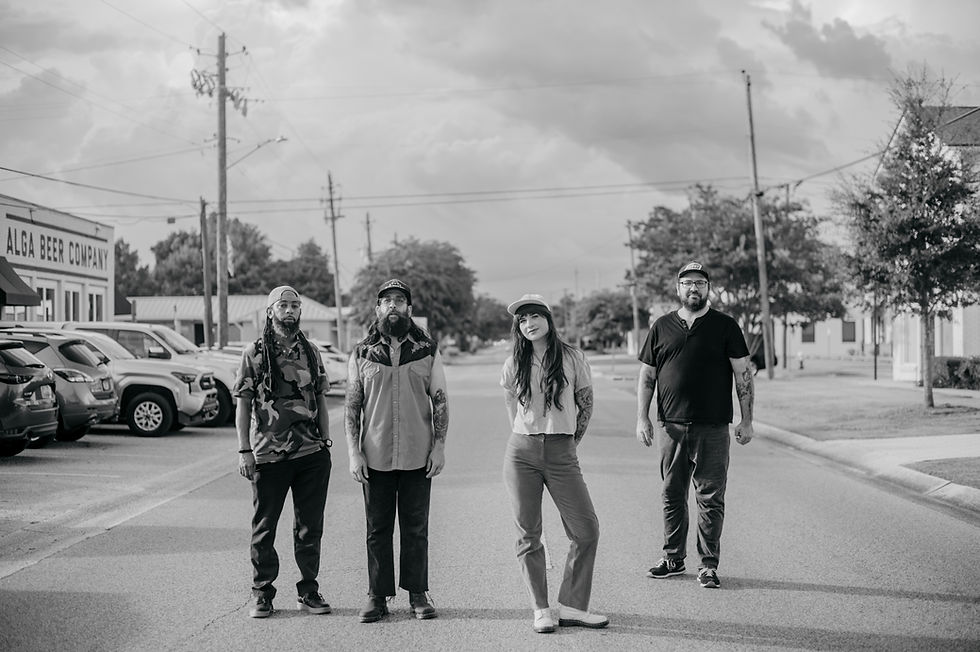
There’s a specific kind of anger that doesn’t scream. It simmers. It watches. It waits.
That’s the energy Snake and the Rabbit channel on “Small Town Blues,” a track that feels less like a song and more like a line drawn in the dirt.
Blending Americana, psych-folk, and lo-fi grit, the husband-and-wife duo’s self-described Cowgirl Surf sound feels lived-in, not styled. Nothing here is chasing trends. This is road-worn music made by people who have actually been burned by the system and decided to keep moving anyway.
The story behind the song is unfortunately familiar. A promised opening slot. Fans who bought tickets. Gear still in the car. Then a dismissive “you aren’t playing” from a local sound guy, with zero explanation and zero accountability. No apology. No respect. Just a reminder of how small-town gatekeeping still works, especially when you’re not part of the boys’ club.
“Small Town Blues” takes that moment and flips it. Instead of wallowing, the track turns frustration into fuel. Lee Patterson’s vocals sit front and center, steady but sharp, carrying the weight of being talked down to, overlooked, and underestimated in a male-dominated industry that still loves to hand out unsolicited advice. Her delivery isn’t theatrical. It’s grounded, and that’s what makes it hit.
Musically, the song leans into restraint. The production leaves space to breathe, letting the bluesy undercurrent and psychedelic textures do their thing without overpolish. It feels intimate, like something written in the quiet aftermath of disappointment, when the adrenaline wears off, and the truth settles in.
What really lands is the song’s refusal to beg for validation. This isn’t about proving anything to the people who shut the door. It’s about knowing you deserve more, even when you’re stuck in a place that refuses to see it. It’s about staying true when the industry tries to shrink you.
As the band puts it, “No matter the circumstances, keep going. Don’t let anyone tell you what to do. Stay true to yourself.”
“Small Town Blues” lives that message instead of just saying it. If this song is any indication, Snake and the Rabbit aren’t slowing down. They’re just getting louder, smarter, and harder to ignore. And honestly? That’s exactly how it should be.
That moment of being pulled from the show is brutal and weirdly common in indie scenes. At what point did you realize it wasn’t just a bad night, but something you needed to document and turn into a song?
It was definitely a rough night, and I needed to get through it somehow. I've always used songwriting to get my feelings out. I started writing the song that night, as soon as I got home, because I needed to process what had just happened.
“Small Town Blues” feels less like revenge and more like reclaiming power. When you were writing it, were you trying to process the incident emotionally, or were you consciously building a statement for other artists who’ve been shut out the same way?
At first, I was just trying to process the incident and write out my feelings. As I started writing, the song's focus shifted to venting my frustration with the venue and the band that skipped us.
Lee’s vocal delivery is controlled, almost calm, which makes the anger land harder. How intentional was that restraint, and what conversations did you have about tone while shaping the track?
This version of “Small Town Blues” actually took multiple recording sessions to get right. The first recording of the track was about 10 BPM slower and multi-tracked rather than recorded live. We thought slowing the song would lean into its melancholy feel, but it really lost energy when we slowed it down.
Instead, we opted to record the song live at its regular tempo and overdub new vocals on top of the live recording. Because Lee was singing over the recording instead of the full band, she could sing more easily and with more control. The controlled, overdubbed vocals really added to the feeling of sadness and frustration we wanted to capture for this song.
You describe your sound as Cowgirl Surf, which already pushes against neat genre boxes. Do you think resistance from gatekeepers is partly about that refusal to fit, and has that tension shaped your identity as a duo?
We've never fit into a specific genre. There are certainly genres we don't play, but that doesn't mean we don't listen to or get influenced by them. I think we ultimately fall somewhere in the realm of “Americana” music, but even that doesn't quite work.
We aren't a country band, but we've played with some of the best country artists out there (Emily Nenni, Taylor Hunnicutt, Teddy and the Rough Riders, Ellis Bullard). We aren't a shoegaze band, but we've played with amazing shoegaze bands (Lunar Vacation, Hannah Cole). We aren't a pop band, but we've played with great pop bands (Rocket Summer, HelloGoodBye).
Ultimately, it doesn't matter if we call it “Cowgirl Surf,” “Countrygaze,” or “Lofi Laurel Canyon.” We just like writing songs and playing live music with our friends.
If a younger artist heard this song after their own version of that experience, what do you hope they take from it: comfort, defiance, strategy, or something else entirely?
Don't let anything or anyone get you down. Even when the odds are stacked against you, just keep going. As a DIY artist, you really have to trust YOURSELF. Trust your instincts and rely on your intuition because that's where your power comes from.


