

Sophee Jean Turns Romantic Disillusionment Into Cinematic Pop Drama on “B&W”

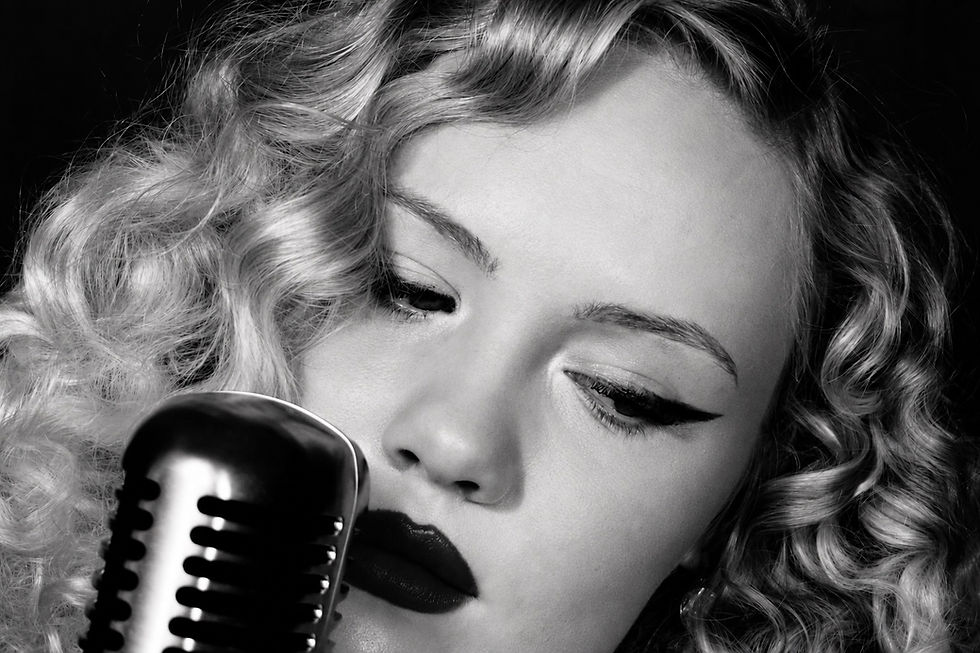
Australian singer-songwriter Sophee Jean is preparing to introduce her distinctive approach to orchestral pop with the release of her debut single, “B&W.”
Combining theatrical vocal performances, sweeping melodies, and emotionally detailed storytelling, the emerging artist examines the painful clarity that follows romantic disillusionment, transforming a deeply personal realization into an ambitious musical statement.
Conceived as the emotional opposite of La Vie en Rose, “B&W” explores what happens when the romanticized version of a relationship finally collapses. The rose-colored perspective that once made everything appear beautiful gradually disappears, exposing uncomfortable truths that were previously overlooked or deliberately ignored.
Sophee Jean approaches this revelation through visual imagery, drawing upon painting, photography, and the contrast between color and monochrome to illustrate the difference between perception and reality. It's an effective songwriting concept, particularly because the emotional consequences extend beyond disappointment in another person to frustration with one's own judgment.
The composition's emotional progression is equally compelling. Anger initially dominates the narrative, reflecting the resentment that accompanies recognizing someone's true character. However, as the song approaches its conclusion, that frustration gives way to heartbreak and self-doubt, a transition Sophee Jean emphasizes through her expressive vocal delivery.
Inspired by the grandeur of theatrical ballads and classic cinematic storytelling, Sophee Jean embraces melodrama without apology. Interestingly, despite contemplating the title for years, she completed the song in approximately twenty minutes, with its opening imagery drawing inspiration from Bread's “If.”
With a limited seven-inch vinyl edition accompanying the release, “B&W” also reflects her appreciation for music as a tangible artistic experience.
As an introduction, “B&W” establishes Sophee Jean as a songwriter interested in emotional complexity rather than easy resolutions, demonstrating how powerful heartbreak can become when presented with conviction, imagination, and theatrical ambition.
You've described “B&W” as the antithesis of La Vie en Rose, which is an interesting way to approach romantic disillusionment. What made you want to explore the moment when someone's idealized image of a relationship finally falls apart?
As almost all of my songs do, B&W began with a title, and for a long while, that was really all I had. Sometimes when I write, I don’t entirely know what I’m trying to say until I’m halfway through saying it. I just knew that whatever story I was going to tell, I wanted to bring it to life through the language of color. Once I eventually sat down at the piano, it all came together surprisingly quickly.
I think the words came easily because the idea of an idealized image falling apart is something very familiar to me. I idealize just about everything in my life. I’m a very glass-half-full person, which I think is a lovely way to approach the world, but it also means I inevitably find myself hurt when things don’t turn out as I imagined them. I have a tendency to see things as I wish they were rather than as they are.
I think that’s such a universal experience, one that extends beyond romantic relationships. We do it with friendships, places, opportunities, and even the lives we imagine for ourselves. I suppose that’s what I wanted to explore with this song.
You had the title “B&W” in mind for years before writing the song in approximately twenty minutes. What finally brought the concept together, and did the finished composition resemble what you originally imagined?
For all the years I had the title, I genuinely had no idea what direction the song would take or what it would become, which is actually quite unusual for me. Most of the time, I have a fairly clear idea of the concept or story I want to tell, and it’s simply a matter of sitting down and writing it. But with “B&W,” there was nothing.
I don’t actually remember a great deal about the process of writing my songs. At the risk of sounding pretentious, they seem to arrive on their own more often than not. After I’ve finished a song, sometimes I listen back and think, “I don’t know if I could write that again; I’m not sure I’m capable of it.” Haha!
I think finally what brought this song together was me realizing how effectively I could use color to communicate something that’s otherwise hard to articulate. Sometimes our ordinary vocabulary just doesn’t feel like enough to explain the depth or complexity of a feeling, so metaphor becomes a valuable tool. I loved the idea of almost personifying this feeling through color and allowing imagery to say what maybe a literal explanation couldn’t.
Once I had the first line, the song seemed to write itself. The finished composition is exactly what I wanted it to be. Musically, I wanted to keep things relatively simple, with my voice at the center of everything. I never wanted the arrangement to compete with the vocal or distract from the story. It begins with intimacy, but it becomes much larger emotionally without losing the simplicity underneath. The arrangement grows because my feeling does, and that’s exactly how I wished for it to be.
There's a noticeable emotional distinction between the anger driving much of the song and the vulnerability that emerges toward its conclusion. How did you approach that transition vocally, and what did you want listeners to understand about the relationship between heartbreak and self-blame?
I really tried to make that contradiction stand out. For much of the song, I’m angry, loud, and there’s almost an accusatory tone to the performance. In those final few lines, I really pull back and allow myself to be hurt by it all.
I think that’s actually how a lot of us feel heartbreak. Anger is an easier emotion to carry, and there’s a protection in it. Because yes, this person or this situation has hurt me, but what’s more hurtful is the realization that I’ve sort of betrayed my own intellect. I consider myself an intelligent person, so how could I not have recognized something that was standing in front of me the whole time? I think the loss of trust in your own judgment is even more painful than the heartbreak itself.
I don’t remember consciously deciding to make that transition when I wrote the song. Vocally, I just found myself going there. It felt like the natural progression for the song.
I suppose what I’d like listeners to recognize is that heartbreak isn’t always about mourning another person. Sometimes it’s mourning your own judgment or a version of yourself. We all like to think we know better, that we’d never be so foolish, but we are all capable of being terribly foolish when we want something badly enough. And it’s very human to admit that.
Your music draws inspiration from theatrical performances, classic cinema, and grand vocal storytelling. Which artists or performances have had the greatest influence on your creative identity, and how do you incorporate that sense of drama without losing emotional authenticity?
I think before I was influenced by a particular artist, I was influenced by movies and scores. I remember as a kid being so moved by what I was watching and hearing and thinking how amazing it would be to create something that could make someone else feel what I was feeling in that moment.
Theatre has always had the same effect on me: big productions like Phantom of the Opera, Sweet Charity, Evita — the ability to take a relatively ordinary feeling and turn it into something enormous is inspiring to me. Something that’s hard to confess in an ordinary conversation suddenly becomes possible when you can step into a character, or into a version of yourself that’s a little bigger than who you are in everyday life. And I don’t think that makes the feeling any less sincere. If anything, it can make it more truthful.
I think ultimately, songwriting is the art of giving ordinary feelings a scale that reflects how they actually exist to us, and I think music gives us permission to express that in a monumental way. If I were to deliberately tone down the drama in my music, I think it would feel disingenuous because I really do feel that deeply. The grandeur isn’t something I add to embellish; it’s just how the emotion feels to me.
You're releasing a limited seven-inch vinyl edition of “B&W,” which feels particularly fitting for an artist influenced by timeless musical traditions. What does physical music mean to you, and how does the visual and tangible presentation of your work contribute to the world you're building as Sophee Jean?
I just love something tangible. Something I can hold. I love that when somebody buys a record, they actually own it. They’re not subscribing to it or opting in and out of a service. It can be theirs for a lifetime.
I’ve collected vinyl for a long time, and I’ve always felt that listening to a record is an experience in itself. It’s almost ritualistic. You have to care for it and give it a little of your attention. I think it’s an intentional way of experiencing music that we don’t often partake in anymore.
It’s also one of the best ways to directly support an independent artist. When somebody purchases my record, they’re not only supporting the music I’ve made, but they’re helping me to continue making it, and that means an enormous amount to me, particularly at this very early stage in my career.
I’m also an incredibly visual person, and I’ve always wanted the spaces I’m in and the way I present myself to tell you something about who I am. I feel exactly the same way about my music. The visual world surrounding it is just another part of the storytelling. Ultimately, I want the music and everything around it to speak on my behalf, to tell you something without me having to explain it.


