%20WHITE.png)

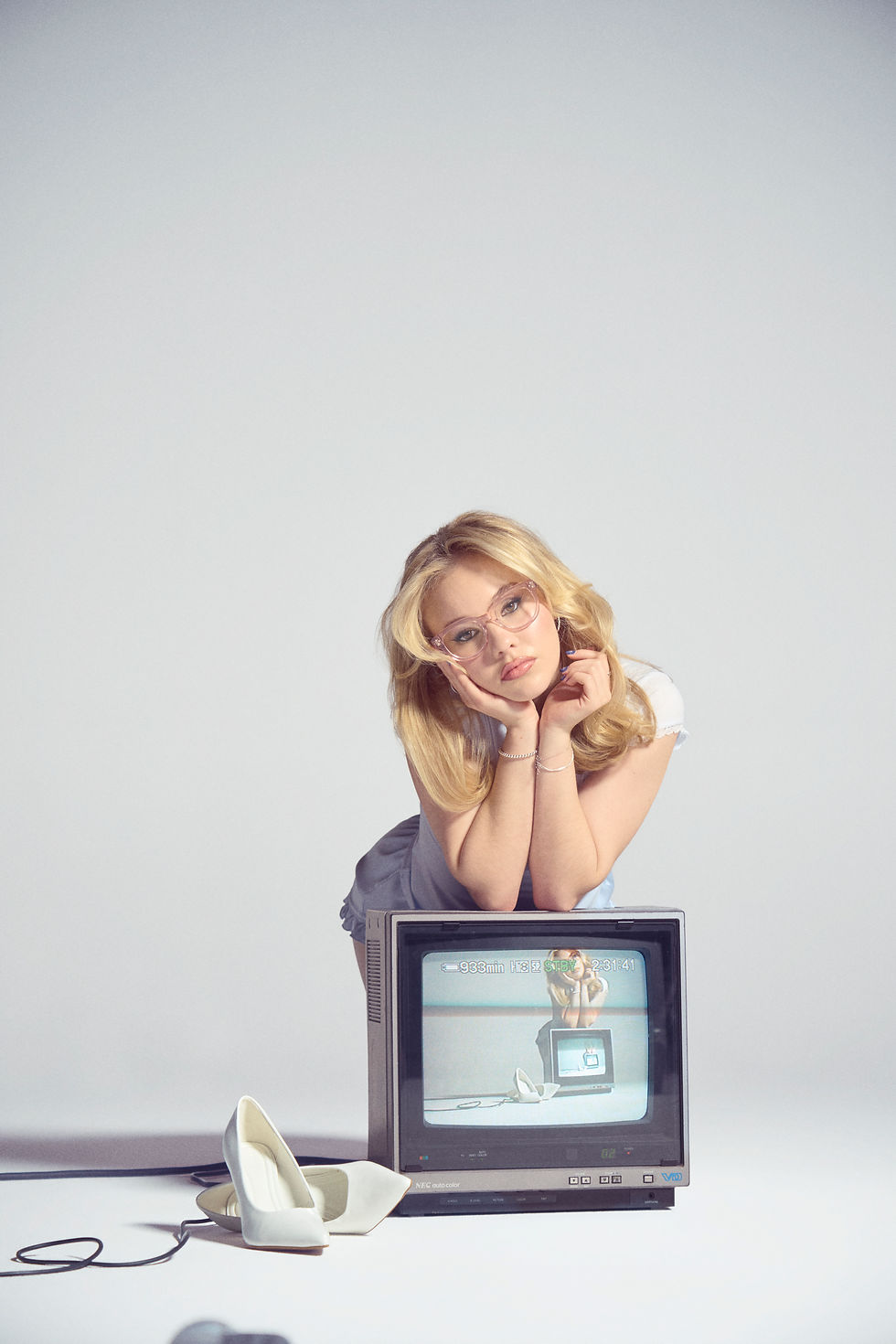
Stella Prince Revisits a Timeless Message on "For What It's Worth"


Some songs are tied to a moment in history. Others seem destined to keep finding new meaning with every generation. Buffalo Springfield's "For What It's Worth" belongs firmly in the latter category, and Stella Prince's latest interpretation proves exactly why.
The 21-year-old folk artist, who has quickly emerged as one of the most compelling young voices in the genre, approaches the 1966 classic with restraint, conviction, and a sense of purpose that feels remarkably timely. Rather than attempting to reinvent the song, Prince allows its message to speak for itself, delivering a version that feels both faithful to its roots and strikingly relevant to the present day.
Recorded in Laurel Canyon nearly six decades after the song's original release, Prince's rendition carries an added layer of symbolism. Originally inspired by the Sunset Strip riots of the 1960s, "For What It's Worth" has long served as a reflection of social unrest, uncertainty, and generational tension. Prince recognizes those parallels and channels them through an intimate vocal performance that feels less like a cover and more like a conversation between eras.
What makes the recording particularly effective is its simplicity. Prince resists the temptation to modernize the song through heavy production or dramatic reinterpretation. Instead, her crystalline vocals remain front and center, bringing a quiet urgency to lyrics that continue to resonate decades later. The result is a performance that feels deeply personal while retaining the universal qualities that made the original endure.
The release arrives during a period of growing momentum for Prince. Drawing comparisons to folk legends like Joni Mitchell and Joan Baez while incorporating a contemporary indie sensibility, she has steadily built a reputation as one of the genre's most promising emerging artists. Recent appearances at SXSW, an upcoming performance at The Long Road Festival alongside artists including Maren Morris and Emmylou Harris, and a forthcoming debut album recorded in Iceland all point toward a significant next chapter.
In doing so, Stella Prince accomplishes something many covers fail to achieve. She reminds listeners not only why "For What It's Worth" mattered then, but why it still matters now.
You called "For What It's Worth" the most timely song for 2026. What specific parallels do you see between the world Stephen Stills was writing about in 1966 and the world Gen Z is navigating today?
That everything is changing. Everything is transforming and rebuilding. It truly seems like it is a time of massive change and a total shift in the world- not just in the music industry- but in every aspect- and I think this song reflects that. Specifically for my generation.
Covering a song as iconic as "For What It's Worth" takes a certain amount of courage. How did you approach honoring the original while still making it feel yours authentically?
I really wanted to record it in Laurel Canyon, first of all. There is something beyond magical about passing Joni Mitchell’s house on the way to the studio and walking around the hills of the canyon. That alone shaped the song. Production-wise, I felt it was important to blend the classic sounds from the original recording with new ideas and hooks. It was definitely a challenge.
You've been compared to artists like Joni Mitchell and Joan Baez, who used folk music to reflect the times they were living in. Do you feel a responsibility to continue that tradition through your own music?
I call my music Gen Z Folk because of exactly that reason… I want to carry on that tradition of storytelling and folk music with my age group. It’s like updated folk music- what folk music would be like in 2026- while also bringing the classic aspects of Joni, Joan, and Judy into the production.
This song speaks to uncertainty, division, and social unrest. What conversations do you hope listeners are having with themselves after hearing your version?
I’d want them to think, “What the heck is going on in the world right now?”
As a 21-year-old artist preparing to release your debut album, what do you hope your generation's voice adds to the next chapter of folk music?
Authenticity. Just raw, real, down-to-earth music. That’s what the world needs more than ever right now.