%20WHITE.png)

Search this site
13583 results found with an empty search
- Atta Boy Embrace Growth, Experimentation, and Connection on New Album 'Silt'
After 15 years of creating music together, Los Angeles indie rock quartet Atta Boy is entering a new chapter with the release of their fourth studio album, Silt. Arriving June 26, the record finds Eden Brolin, Lewis Pullman, Freddy Reish, and Dashel Thompson pushing their creative boundaries through experimentation, patience, and a deeper commitment to collaboration. Written and recorded over several years at Reish's Los Angeles studio, Silt explores themes of connection, distance, and artistic evolution while introducing new textures, sounds, and influences. Ahead of the album's release and upcoming headlining tour, Atta Boy reflects on the journey behind their most ambitious project yet. You've been making music together for over 15 years. How has your creative relationship evolved from your high school days to the making of Silt? The comfort, ease, and trust between the band has become more accessible over time–not that we didn’t have it before. I think for a lot of us there were some confidence issues that needed time and trust to grow out of. In doing so, it made room for more risk-taking and open communication about vulnerability, which have become necessary for effective creative exchange. The album explores ideas of connection and distance, particularly through remote collaboration. How did those experiences shape both the sound and themes of the record? We weren’t in our usual studio setup and did a lot more extra recording at different points in the process, so we had more time to explore the songs a bit. That space really allowed us to embrace an attitude of throwing ideas at the wall and seeing what sticks, rather than feeling like we were in a pressure cooker when we’re all in the room together. We could have an idea and then, a week later, sort of shape it slightly more. I think being at a distance sometimes gave us an advantage when building the songs, because we can all be a bit nervous as people and musicians, and trying out or recording ideas alone before bringing them to the band felt more accessible when we’re states apart. It creates a different feel to build out songs over the phone, and a lot of this record was that. Silt feels more adventurous sonically, with new instruments, textures, and recording approaches throughout. What gave you the confidence to push beyond your established sound this time around? At the end of our 2024 tour (at a Denny’s in Ohio immediately after playing the last show), we talked a lot about what we wanted to do next. The thing that came up for all of us was a desire to make a record in a new way: instead of writing and recording in a very short, intense burst, we would take time to iterate and explore new sounds. That adventurousness was baked into the process from the start, and we intentionally set out to do it. There were definitely moments when the confidence wavered, but being able to rely on each other in those moments was a big relief. Having access to The Pink Feather studio allowed you to write, test, revise, and record without traditional time pressures. How did that freedom change the way the album developed? Having my own studio this time around really gave us the opportunity to try any and everything out for a song. That time and access allowed each song to develop into something we had never really done before. Every time a new part was added, we had a few days to sit down and decide whether something was missing or the song had been overproduced. I also think the freedom of not feeling like we were annoying a producer by asking to delete something or to do another take was a weight lifted off of our shoulders. Looking back on the process, what do you think Silt says about Atta Boy as a band today compared to where you were during Crab Park? It’s a reflection of our maturity, and our desire/willingness to get out of our comfort zone to explore new sounds. Our experience of playing shows together for the first time was also a turning point - we never really played together in such an intense, concentrated way except when making records, and it feels like the extra time spent together on the road is a great petri dish for ideas. We’ve been so much more entrenched in music over the last two years, in a way we haven't been before, which has made a really big difference.
- Rockaway Releases "About Last Night," A Yacht Rock Refined for a New Generation
Larry Rifkin, the songwriter and creative force behind the music project Rockaway, has announced a new single, “About Last Night,” the latest release from his album Wrong Side of Love. From the first notes, the track settles into the kind of unhurried yet melodically assured pocket that adult contemporary and yacht rock built its reputation on in the 1970s, now filtered with a production sensibility that feels current. It’s warm without being sentimental and lyrically sharp. "I had lyrics for a song called 'About Last Night' sitting in my phone for years. The title felt right, but I never really felt I had the right attitude for it,” explained Rifkin. However, the premise is familiar: a night that got away from you, a morning full of unanswered questions, but Rockaway plays it cool rather than confessional, landing somewhere between a Steely Dan groove and a Kenny Loggins hook. Rifkin grew up on both artists, and the influence shows, though the song is entirely his own. "I wanted something that captured a night you might want to forget or at least can't quite remember. I've barely been in a bar in my life, but sometimes the best songs come from exactly where you've never been," shared Rifkin. The polished, layered sound of "About Last Night" is the product of a creative process Rifkin has refined across three albums with his collaborator Alasdair MacKenzie, a Boston-based multi-instrumentalist, singer, audio engineer, and member of the acclaimed indie rock outfit Hush Club. The two have developed an intuitive workflow: Rifkin records keyboard and vocal demos, which MacKenzie transforms into fully realized arrangements, playing every instrument himself and using entirely organic, non-synthesized sounds. "He’s a wonderful collaborator. He can hear the bass line I'm looking for, the rhythmic attitude I'm going for, and where the song needs to go. We typically go back and forth until we get it the way we both want it," enthused Rifkin. For Rifkin, songwriting occupies a category entirely its own, and the path that led him here is as unconventional as the music itself. Best known as the television executive who brought Barney the Dinosaur to PBS, his career spans television, radio, podcasting, and authorship. In his mid-60s, after leaving radio, he turned his attention to piano, teaching himself through online courses and self-directed study until the songs he'd been carrying in his head finally had somewhere to go. The turning point came when his daughter and son-in-law, wanting to surprise him, commissioned MacKenzie to produce one of Rifkin's demos as a birthday gift. That moment sparked a collaboration that has since yielded forty-three songs across three albums, bridging generations as much as it does genres, MacKenzie is 28, and Rifkin turns 74 the day before the release. "I've been a TV executive, an author, a radio talk show host, and a podcaster. They all have their own intricacies, but songwriting, I don't think people realize what goes into taking an idea from your head and sculpting it into something that lands lyrically and melodically. If I'm proud of anything, I'm proud that I’m taking the time to continue to hone this craft," beamed Rifkin. "About Last Night" sets the tone for an album that marks a meaningful creative pivot for Rockaway. Where their first two albums, It's Not My Circus (2024) and Southern Border (2025), leaned heavily into political commentary, Wrong Side of Love redirects almost entirely toward love, its textures, complications, and quiet endurance. Songs like "Are You Still with Me, Carmelita?", written about Rifkin's wife of 48 years, sit alongside "Movin' On," a Curtis Mayfield-inflected empowerment anthem, and "For the Others," an ode to the miners of the 1986 Chernobyl disaster. Even "Sleeping with the Enemy," which completes a song previewed as a demo on Southern Border, finds its place here. "Every morning, you can wake up on the wrong side of love, but like the album cover shows, a window with light coming through it, the sun might shine again," said Rifkin. Accompanying the single is Rockaway's first-ever music video, put together by Matt Terribile, of Ace Tone Productions, along with a second teaser for "The Last American Housewife," a social commentary on traditional gender expectations. On the live front, album listening parties are being planned in Connecticut, while Rifkin is also considering open mic appearances where he performs the bare keyboard demo of a song before the fully produced version, offering audiences an intimate look at the journey from first instinct to finished record. And while Larry and Alasdair trade lead vocals throughout the album, Danny Rivera lends his silky voice to the soul-infused lead on "Ring Shout," and Nancy Walecki offers up a female lead to complement Alasdair on the call and response tune "I Was Out There Looking for You." "About Last Night" by Rockaway releases June 9 and will be available on all major streaming platforms with promotional support from Starlight PR. Stay connected with Rockaway across social media for updates on the full album Wrong Side of Love, music videos, and new music. Linktree | Facebook | Instagram | YouTube | TikTok | Apple Music | Spotify
- Jena Begins a New Chapter With "battleground"
After several years away from releasing original music, Boston-based singer-songwriter Jena is stepping into a new era with "battleground," a soulful and deeply personal single that marks the beginning of her next creative chapter. Blending R&B, neo-soul, and contemporary singer-songwriter influences, the release introduces an artist returning with greater clarity, perspective, and purpose. Originally written during a season of uncertainty and completed years later, "battleground" captures the evolution of Jena's own worldview. What began as a song about overcoming life's obstacles has transformed into a meditation on acceptance, faith, and the understanding that not every struggle is meant to be conquered. Instead, some of life's greatest lessons come through learning when to let go. That emotional maturity defines the record. Jena delivers an understated yet captivating vocal performance, allowing every lyric to breathe against warm, soulful production. Rather than relying on dramatic moments, the song finds its strength in honesty, creating an intimate listening experience that lingers long after it ends. The story behind the release makes it even more compelling. Produced by Jena's husband, musician and producer Feri Bong, "battleground" was one of the first songs Jessica Nathania shared with him when they first met. Years later, the couple completed the track together after building a life, family, and home studio, giving the song an emotional continuity that feels genuine rather than manufactured. As the first release under the name Jena, "battleground" doesn't chase trends or instant gratification. Instead, it offers something timeless: a thoughtful reminder that growth isn't always found in fighting harder. Sometimes, it begins with surrender. If this single is any indication of what's to come, Jena's return is one worth paying attention to. "battleground" was written years before it was released. When you compare the person who first wrote the song to the person finishing it today, what do you think each version of yourself would want to say to the other? I think the younger version of me would ask, "Does it ever get easier?" She was carrying a lot of uncertainty, trying to figure out where she belonged and believing she had to fight every obstacle on her own. The person I am today would tell her that not every battle is meant to be won by pushing harder. Some are transformed by letting go, trusting the process, and allowing yourself to grow through the things you can't control. I'd also tell her that this song eventually finds its way into the world, just not on the timeline she imagined. Looking back, I'm grateful it didn't, because I don't think I could have finished it with the perspective I have now. You describe the song as moving from a mindset of fighting every battle to learning the power of surrender. Was there a specific moment or experience that completely changed your perspective on what strength actually looks like? It wasn't one defining moment so much as a series of experiences that slowly reshaped me. Marriage, becoming a mother, stepping away from releasing music for a season, and simply living life taught me that strength isn't always loud. Sometimes it's choosing peace over proving yourself, accepting what you can't control, and trusting that not every unanswered question needs an immediate solution. What's interesting is that when I wrote battleground, I don't think I had fully lived that truth yet. The lyrics were almost like a prayer- a longing for the kind of surrender I hoped was possible, even if I didn't completely understand it at the time. It wasn't until years later, after living through those different seasons of life, that those words became real to me. Looking back, it's almost as if the song was ahead of me. I wrote it before I fully understood it, and finishing it now feels like finally catching up to the message it had been trying to teach me all along. Your husband, Feri Bong, produced the single, and this was one of the first songs you shared with him when you met. What was it like revisiting such a personal piece of your history together, and did the production process deepen its meaning? Yes, it was definitely a full-circle moment. In many ways, it felt like reopening an old love letter. This was one of the very first songs I ever shared with Feri, long before we were married or had children. Coming back to it years later felt incredibly special because we weren't the same people anymore. We'd lived through so much together, celebrated incredible joys, faced difficult seasons, and grown both individually and as partners. I think all of that found its way into the music. There was a trust and chemistry between us that simply didn't exist back then. Everything seemed to click naturally, and together we were able to finish something we couldn't have finished all those years ago. You spent years performing live before returning to original music. What gave you the confidence to finally reintroduce yourself as Jena, and how does this chapter better represent the artist you've become? Performing live gave me confidence in my voice, but writing and releasing original music requires a different kind of vulnerability. For a long time, I kept telling myself I needed to be more ready, more established, or have everything figured out before sharing this part of myself. Eventually I realized that "ready" isn't a feeling; it's a decision. Reintroducing myself as Jena represents choosing authenticity over perfection. This project feels more honest than anything I've created before because it reflects who I am today, shaped by every chapter that came before it. "battleground" feels like the beginning of a larger story rather than a standalone release. As listeners follow this next chapter, what themes or conversations do you hope they'll experience as your music continues to unfold? I hope people find songs that make them feel a little less alone. I'll be writing about identity, relationships, healing, motherhood, change, and all the quiet moments that shape who we become. I'm less interested in having all the answers than I am in creating space for honest conversations. If battleground is about learning to let go, then the songs that follow explore what becomes possible after that. More than anything, I'm excited for listeners to get to know me through my music, but I also hope that in doing so, they discover something about themselves. If these songs can help someone put words to a feeling they've never been able to explain, then they've done exactly what I hoped they would.
- Lon3! Reconnects With His Roots on 'SUBCULTUR3D'
After stepping away from a record deal and navigating a period of creative uncertainty, Southern California artist, producer, and entrepreneur Lon3! found inspiration in an unlikely place: nostalgia. What began as a casual dive into Y2K culture, Power Rangers, Digimon, and childhood memories ultimately became the foundation for SUBCULTUR3D, a seven-track project that transforms personal influences into a vibrant alternative experience. From the opening moments of "IDFK," Lon3! establishes a world that feels both futuristic and familiar. His signature genre-defying approach remains intact, blending alternative, hyperpop, electronic, and melodic rap influences into a sound that's difficult to place inside a single category. Rather than chasing trends, SUBCULTUR3D feels like an artist rediscovering the things that made him fall in love with creativity in the first place. The project's standout moment arrives with "Red Turbo Ranger," the song that became the blueprint for the entire album. Drawing directly from the childhood imagery that inspired the project, the track captures the playful energy that runs throughout the release while still feeling emotionally grounded. It's a reminder that nostalgia isn't simply about revisiting the past; it's about understanding how those experiences continue to shape who we become. Elsewhere, tracks like "PRAY4ME," "H3ADSPIN," and "Phantom Ranger" continue building the album's unique universe. Lon3! balances catchy melodies with introspective lyricism, creating songs that feel deeply personal without becoming inaccessible. Even when the production leans experimental, his vocals remain the anchor that ties everything together. What makes SUBCULTUR3D particularly compelling is its sense of freedom. The project feels completely unfiltered, driven by curiosity rather than commercial expectations. Every song contributes to a larger narrative about identity, influence, and reconnecting with the worlds that helped define an artist's imagination. As both a musician and the founder of CULTPOP Media, Lon3! has consistently challenged traditional ideas about what an independent artist can build. That entrepreneurial mindset carries over into SUBCULTUR3D, a project that embraces individuality at every turn. SUBCULTUR3D isn't simply a nostalgic album. It's a celebration of the subcultures, stories, and childhood obsessions that continue to shape us long after we've grown up. For Lon3!, looking back became the perfect way to move forward. After stepping away from a record deal and returning to independence, what did creating SUBCULTUR3D teach you about yourself as both an artist and a person? SUBCULTUR3D allowed me to find inspiration from unexpected and unusual places. This project wasn’t necessarily a teaching moment, but more so vindication. You drew inspiration from Y2K culture, Power Rangers, Digimon, and other childhood influences for this project. Why do you think those memories resurfaced at this particular moment in your career? The initial spark resurfaced from nostalgia. Power Rangers, Digimon, etc. were the soundtracks of my early childhood. I would consider that time the beginning of my musical palette. However, the project itself began to evolve through not only the sounds of my childhood, but the sounds of my life, spanning Michael Jackson to Mickey Avalon. Sonically, it’s not immediately recognizable, and that’s the point. "Red Turbo Ranger" became the blueprint for the album. What was it about that song that unlocked the creative direction for everything that followed? I had always sought inspiration from obscurity, but for the first time in my career I was channeling Power Rangers. On the surface, it sounds quite unorthodox, but the reality is that music remains universal whether it’s packaged for something entirely different. Inspiration isn’t limited by the medium it comes from. Once I successfully implemented elements of Power Rangers into my production, it reinforced my belief in following inspiration wherever it leads. Throughout SUBCULTUR3D, there's a strong sense of individuality and self-expression. How important was it for this project to feel free from industry expectations or outside opinions? My sound is inherently contemporary, but despite that, I have always expressed myself freely regardless of convention. Industry norms and/or outside opinions have never truly mattered. You’ve built a reputation as both an artist and an entrepreneur through CULTPOP Media. How do those two sides of your identity influence one another when you're creating a project like SUBCULTUR3D? CULTPOP is not barred by traditional standards. We intertwine when expression is prioritized. SUBCULTUR3D captures the essence of CULTPOP’s ethos while CULTPOP solidifies the foundation.
- SIXPOINTS Turn Reflection Into Atmosphere on “For Black Star”
Some songs demand attention. Others quietly pull you into their orbit. SIXPOINTS' "For Black Star" belongs firmly in the latter category, unfolding like a meditation on mortality, mystery, and the invisible threads connecting the physical and spiritual worlds. Inspired by David Bowie's final masterpiece Blackstar, and particularly the haunting resonance of "Lazarus," the track serves as both tribute and transformation. Rather than attempting to imitate Bowie, West Coast Canadian duo SIXPOINTS channel the fearless artistic spirit that defined his work, using it as a foundation for their own sonic exploration. Built around sparse instrumentation, hypnotic melodies, and carefully layered textures, "For Black Star" thrives on restraint. Composer and producer Shaun Day Woods, alongside poet and bassist Jimy Dawn, understand that not every song requires complexity to create impact. The result is a piece that feels expansive despite its minimalism, allowing every note and lyric room to breathe. What makes the track particularly compelling is its sense of atmosphere. There is a dreamlike quality woven throughout the production, one that blurs the line between meditation and performance art. The lyrics invite listeners to embrace uncertainty rather than resist it, suggesting that life's unanswered questions may be just as important as the answers themselves. That theme is reinforced by the song's organic creation process. After multiple takes during sessions for the duo's debut album Negative Space, the final version emerged only after the band stripped the arrangement back to its essentials. The decision paid off. The simplicity gives the song its emotional weight, allowing its message to resonate long after it ends. With "For Black Star," SIXPOINTS prove that powerful music doesn't need to shout. Sometimes the most profound moments arrive in a whisper. It's a thoughtful, immersive piece that rewards patience and reflection, offering listeners a rare opportunity to slow down and sit with something larger than themselves. "For Black Star" was inspired by David Bowie's Blackstar. Beyond the music itself, what lessons from Bowie's artistic approach have had the biggest influence on your own creative process? Bowie was a renegade who wasn’t afraid to take risks. He was a very beautiful and giving soul, and we’re all very fortunate that he was willing and able to share himself in such a musical and creative way. We must take risks and share our work selflessly, which is the importance of art in the first place. The song explores the intersection of the physical, spiritual, and emotional worlds. How do those themes show up in your everyday lives outside of music? We operate in the 3rd dimension (physical and emotional) and the 5th dimension (spiritual) simultaneously. Everything that we do has a spiritual element to it. We are supported in whatever choices we make; thus, it’s very important we choose our pathways wisely. Hopefully, we can be a positive influence. You mentioned that simplifying the arrangement during the final recording session ultimately made the song stronger. What did that experience teach you about knowing when to add more and when to take things away? I’m constantly reminding myself that less is more. I tend to be a minimalist by nature so it makes sense that approach can prove to be successful both while composing tunes and in the recording studio. SIXPOINTS often operates in the space between genres, blending poetry, atmosphere, and experimental sound design. How important is it for the project to remain difficult to categorize? I don’t think we intentionally try to make music that is hard to categorize. It’s just naturally who we are. Our influences are so wide-ranging, from other experimental musical forms to contemporary dance to other cutting-edge artists, poets, and writers to any folks who are living in alternative ways. Everyone is capable of operating both inside and outside of the matrix. The clearer we are about this duality, the idea of music (or whatever art form) falling into any specific categories or genres actually becomes irrelevant and useless. Our music is and will be whatever it needs to be. If listeners walk away from "For Black Star" with just one feeling, thought, or question lingering in their minds, what do you hope it is? That our physical lives are finite while our spirits are infinite. That we’re safe and loved and that the veil between the finite and infinite is remarkably thin and transparent. That there is much more to our day-to-day routines than only what the 7 senses can ascribe to.
- Atticus Sorrell Finds Beauty in Heartbreak on 'Ram and the Bull'
Some albums are built around a collection of songs. Others unfold like a story. On Ram and the Bull, singer-songwriter Atticus Sorrell delivers the latter, crafting a deeply personal record that traces the emotional arc of love, loss, and ultimately acceptance. Rooted in an eclectic blend of soul, folk rock, jazz, and psychedelia inspired by the golden era of 1970s songwriting, the album feels both timeless and unmistakably contemporary. Across nine thoughtfully sequenced tracks, from the uplifting optimism of "Stand Tall" to the quiet reflection of "Grain of Sand," Sorrell invites listeners into an intimate emotional landscape. The title track serves as the album's emotional centerpiece, while songs like "Paper Crane" linger on the difficulty of letting go, exploring how memories and physical reminders can keep old wounds alive long after a relationship has ended. What makes Ram and the Bull so compelling is its refusal to let heartbreak become bitterness. Instead, Sorrell approaches grief with compassion, presenting it as an inevitable companion to love rather than its opposite. His songwriting acknowledges that profound relationships leave permanent marks on who we become, but those impressions can shape us without defining us. The album's warm, organic production only strengthens its emotional impact. Recorded live to tape before being expanded with lush arrangements featuring vibraphone, synthesizers, tape delay, and layered instrumentation, the record balances vintage textures with modern sensitivity. The result is a sound that recalls the spirit of classic singer-songwriters while remaining uniquely Sorrell's own. Rather than offering simple answers, Ram and the Bull encourages listeners to remain open-hearted despite loss. It is an album about preserving tenderness in difficult moments and embracing the idea that to love deeply is also to risk grief. In that honesty, Atticus Sorrell has created a record that resonates long after its final note fades. Ram and the Bull follows a clear emotional journey from love to loss to acceptance. At what point did you realize these songs belonged together as a complete album rather than individual releases? When I started piecing together songs for what would become Ram and the Bull, it looked very different. I had a lot of other songs that I initially wanted to put on the album. I went through a real creative spurt in the spring/summer of 2022 and wrote "Stand Tall", "Ram and the Bull", "Satellites", and "Many Reasons" within a few weeks of each other. After that, however, the album took a back seat. I was finishing up some recordings with The Be Colony, touring around with them, and then life got in the way. All of a sudden it was the fall of 2023, and I had fallen into a deep depression after the fallout of a relationship. Eventually, being in that state of mind inspired me to write "Paper Crane", "Not Quite", and "Gracie". It was after writing those songs that I realized I needed to rethink the album. I decided to cut nearly all of the other songs off the record. There was a clear theme of love and loss with these new songs, and I wanted to capitalize on that. They just sounded like they belonged together. You describe the record as a reminder not to let grief harden your heart. Was there a specific moment in your own life that shifted your perspective on love and healing while writing this album? Yeah, there was a specific moment, and it was getting dumped! I was totally gutted by the breakup. I really thought they were my person, and when it didn't work out, it devastated me. I was already at a stressful point in my life when things ended, and I think it just compounded things. It wasn't until I found this Ram Dass speech, "How To Keep Your Heart Open in Hell," that I made a turning point. Ram Dass talks about using grief as a vehicle for grace and compassion, and I found that really comforting and inspiring. That speech prompted the song, "The Way of Things". I had to learn some lessons about love and about myself so that I could become a better person. I was desperately clinging to my suffering. When I finally realized it was holding me back, I was able to see the pain as a teacher, and it completely changed my life for the better. Your music draws inspiration from classic '70s artists while still feeling fresh and personal. How do you balance honoring those influences without losing your own artistic identity? I grew up on 60s and 70s music. I was always drawn to it as a kid. It became the building blocks for my musical upbringing. Initially, it was hard for me to relate to modern music because the music from the 60s and 70s felt so much more impactful and meaningful. As a kid, those artists were "new" to me. I would do deep dives on entire discographies of artists through that era. Each musical discovery led to another. Since I was immersed in that era, it always felt fresh and modern. The best part is that there's still another old record or artist to check out. It wasn't until college that I really got into more contemporary artists. In a way, my artistic identity has always been intertwined with 60s and 70s music ever since I was a little boy. It was never about paying tribute, really. Those sounds are just what comes to me naturally. However, my modern influences are definitely very important to me as well. I like to hear what my peers and contemporaries are doing. And I love to see how they filter and meld their influences and inspirations through themselves. While it's really rewarding to look back in the past, I've learned that it's equally as inspiring to see how new artists push the boundaries of music. Bands like Hiatus Kaiyote, Brainstory, Skinshape, Kate Bollinger, Jonah Yano, Big Thief, DJ Harrison, Improvement Movement, and Billie Marten were really inspiring during the making of this album. Songs like "Paper Crane" explore the emotional attachment we place on memories and physical objects after relationships end. Was writing about those experiences therapeutic, or did it force you to revisit emotions you weren't ready to confront? Writing these songs helped me process my grief and sort out my emotions. It was the way to turn the sadness into something meaningful. The music was a creative outlet that I used to get back to myself again. Overall, it was a cathartic experience. However, due to how long it has taken to release this music, I am excited to move on. I'm really proud of this album, and it is some of the best music I've ever made. However, I am really ready to record new music and step away from these themes. I want to get back to my roots and make a true rock'n ' roll album. I just have to give Ram and the Bull a proper send-off first. After listeners reach the final track, "Grain of Sand," what do you hope stays with them long after the album is over? I think after "Grain of Sand", I hope that listeners take away that sometimes relationships don't work out and that's okay. It doesn't mean that the love you shared with someone was in vain or for nothing. The ones we love shape the way we navigate through life; they leave permanent impressions in our souls. We carry moments with everyone we've ever loved in our hearts forever, and that is a beautiful thing. Those I believe are the things we take with us when we pass on. I hope that people can take away that loss and grief play an integral part in life. They teach us to be gracious for the life we've been given. That we are blessed to give and receive love and compassion. And finally, most of our problems are so small and meaningless in the grand scheme of things. I think that should be a comforting notion. Our grief doesn't have to carry so much weight. Life is precious and short. Don't let grief and sadness take you away from the dance of life for too long. They're supposed to help you grow wise and love abundantly. Everything's gonna work out one way or another.
- Patah's "Care For Me" Is an Ethereal Anthem for Choosing Yourself
Few songs capture emotional exhaustion as honestly as Patah’s latest single, “Care For Me.” The New Jersey alternative artist doesn’t rely on oversized production or dramatic crescendos to make her point. Instead, she strips everything back, allowing fragile vocals, intimate songwriting, and raw emotion to do the heavy lifting. Lifted from her February 2026 EP Eyeshadow, “Care For Me” is a quiet but devastating meditation on longing for genuine love, respect, and compassion. Inspired directly by Patah’s own experiences, the song was reportedly so emotionally taxing that recording the vocals often left her on the verge of tears. That vulnerability is impossible to fake, and it becomes the song’s greatest strength. Self-produced, mixed, and mastered by the artist herself, the minimalist production never overshadows the lyrics. Every airy vocal and empty space serves the story, creating an atmosphere that feels suspended between hope and heartbreak. It’s an impressive showcase of Patah’s growing confidence behind the boards, particularly in an industry where women remain underrepresented in engineering and production. The accompanying visual continues the dreamlike world Patah has been carefully building throughout Eyeshadow. Filmed inside her mother’s living room while secretly pursuing her music career, the angelcore-inspired video reimagines The Princess and the Pea through a deeply personal lens. An angel unable to sleep because her wings have disappeared becomes a powerful metaphor for emotional neglect, suggesting that care itself can lift us or leave us grounded. Across Eyeshadow, recurring references to sight, perception, and perspective connect deeply personal stories into a larger narrative about healing and self-discovery. “Care For Me” stands as one of its emotional centerpieces, reminding listeners that while we all deserve care from others, learning to extend that same compassion to ourselves can be the most transformative act of all. With every self-produced release, Patah continues proving she’s crafting far more than songs. She’s building an immersive artistic universe that feels increasingly impossible to ignore.
- Moody Joody Open the Door to Their Most Ambitious Era Yet with Debut Album Plain Jane and New Single “Suburbia”
After months of building momentum through a string of standout releases, Moody Joody have officially unveiled their debut album, Plain Jane, arriving October 30 via Photo Finish Records. The announcement arrives alongside the release of the band's latest single, “Suburbia,” a synth-driven reflection on ambition, identity, and the tension between creative dreams and conventional expectations. Years in the making, Plain Jane explores themes of self-discovery, nostalgia, personal growth, and the courage required to embrace one's authentic self. Having already amassed more than 21 million global streams and earned support from major playlists, SiriusXM Alt Nation, and outlets including Rolling Stone and MTV, Moody Joody are entering a defining chapter. Fans will also get an early taste of the new era when the trio headlines New York City's Nightclub 101 on July 8. Plain Jane has been part of the band's vision since 2020. How has the album evolved from its original concept into the project fans will hear this October? Kayla: The concept for the album was actually in place before a lot of the songs were written. Everything about it has been approached with a lot of intention: the titles, the tracklist, the songwriting, and the visuals. The Plain Jane concept was born of a longing to take up space unapologetically as a woman in the world, and we wanted an album that reflects that experience. We got to spend a lot of time building and dreaming up this world over the last few years. Andrew: What I love about how long it took is that it kind of became this mythical thing. Plain Jane started as just the album title and an idea for a song, and over the years we collected more pieces of the puzzle and slowly built the world and concept out in our heads before we got to execute any of it. When it finally came time to really lock in and make the album, there was no question or confusion about what we were striving for. "Suburbia" explores the idea of trading creative ambition for societal expectations. What inspired the song, and why did it feel like the right track to introduce listeners to the world of Plain Jane? Kaitie: The song was largely inspired by how I never quite felt like I fit in in my hometown, in the traditional ways and journeys everyone else was taking, but still felt the pressure to fit in. I spent my early 20s conforming, talking about marriage, kids, the big house, etc. But I couldn't fight the feeling that I needed to move to Nashville, start over, and find my own path. As I've reflected on my decision to move over the last 10 years, I've been met with moments of panic and confusion, wondering, "Did I do the right thing?" This song feels like a good reminder to myself that I wouldn't have been happy conforming. I would have always wondered what could have been. Kayla: "Suburbia" feels almost like a turning point on the record. It actually sort of turned from a love song into this note to self about what would happen if we ourselves never left the suburbs and never chased this dream. Where would we be? Would we live with regret? It feels right to introduce listeners with "Suburbia" because it conceptually reflects the environment around Plain Jane's experience, and a lot of our own experiences of growing up and coming of age in the suburbs. Throughout the album, themes of self-acceptance, reinvention, and personal growth take center stage. What were some of the biggest lessons you learned about yourselves while creating this record? Kaitie: I've really had to learn to let go of people's expectations and how I am perceived. I realized I have spent most of my life people-pleasing and hiding important parts of myself from others out of fear of judgment or disappointment. Writing this album has been so therapeutic and somewhat of an exposure therapy experiment. Finally owning who I am, my womanhood, my sexuality, my choices, and the road I've taken to chase my dreams. It feels like Plain Jane is my way of finally stepping into myself publicly and saying, "I don't care what anyone thinks. I trust myself." Kayla: In a way, we've been working on this album and toward this album since the start of the band in 2020. In the six years we've been a band, so much has happened. Entering my thirties has genuinely been the best time of my life. That said, my twenties involved a lottttt of lessons, as your twenties typically do. I think I've just gotten more comfortable with myself in general, more confident, and more capable of speaking my truth. In the time it took us to write and put this album out, I went through several breakups, moved a bunch of times, lost my grandparents, came out as bi, and even had a credit card sent to collections. Oops! Embracing life as it comes and allowing myself to be human has also been really healing for my inner child, reminding myself to do it for her, the girl who got cut from show choir, and to keep showing up even when it's hard. The album has been described as equal parts grit and glimmer, sugar and spice. How did you approach balancing the emotional highs and lows while maintaining a cohesive listening experience? Kaitie: I think we just wanted to be really honest on this album, so those mood swings came naturally. A large part of owning our humanness is also owning the fun, sensual, energetic versions of ourselves with no shame, while also leaning into the heartbreak, confusion, and self-doubt we've experienced. We mostly just let the writing flow naturally and let whatever songs came out of us find life. Kayla: Our band ethos from the start has involved owning your humanness. It's always felt like a north star when it comes to how we approach writing about the human experience in our art. That includes the good, the bad, the ugly, the highs, and the lows. Plain Jane, as a character, embodies the experience of burning it all down in the pursuit of showing up authentically with reckless abandon. We had the concept of Plain Jane before a lot of the songs existed, so we were really able to build this listening experience around a full array of emotions, both thematically and sonically. Andrew: We always joke that each of our songs falls into one of two categories: "Moody" or "Joody." The sequencing of a record is something that's really important to us. It's a bit of a roller coaster of emotions, but we were really intentional about the arc and storyline, not just conceptually but sonically as well. There are definitely pockets of the record where we let you sit in the moodiness for a little while, but we got really into deciding where those moments are and how to get out of them. Even when mastering the album, we got super particular about the number of seconds of silence between each song. After years of building toward this moment, what do you hope listeners feel when they experience Plain Jane from beginning to end for the first time? Kaitie: I would love for listeners to feel encouraged to live the life most authentic to them and find the strength to do so. It's really hard to go against the grain, to let people down, and to not live up to expectations, but it's even harder to live a life that's inauthentic to you and always have a sense of yearning in the back of your mind. If even just one person listened and decided to go after whatever it is they can't stop thinking about, that would make me so happy. I hope the album becomes a source of comfort, as my favorite albums have been for me. Kayla: I hope listeners feel inspired to live their life as their authentic self, whatever that might mean to them, even if it means burning it all down to get there. Plain Jane is about showing up in your truth in both the mundane and exciting parts of life and getting to live life as you see fit. We hope it makes people feel seen and understood. Andrew: It's honestly a dream to have anyone connect emotionally with our music at all. At the end of the day, it's essentially an album about being your authentic self. There are a lot of different feelings and perspectives throughout the record, so whichever you relate to, I just hope it makes you feel seen.
- Arman Milan Makes a Strong First Impression With Debut Summer Anthem "S.O.S."
Breaking through as a new artist is never easy, but Arman Milan arrives with the kind of confidence and relatability that immediately grabs attention. On his debut single, "S.O.S.," the 17-year-old pop artist delivers an infectious introduction that captures both the excitement of young love and the empowerment that comes with knowing when to walk away. Built around bright melodies, polished pop production, and an undeniable sense of momentum, "S.O.S." feels tailor-made for summer. Whether it's blasting through car speakers on a late-night drive or serving as the soundtrack to a fresh start, the song carries an uplifting energy that is difficult to ignore. Beneath its catchy exterior, however, lies a message many listeners will connect with: recognizing your worth and leaving behind situations that no longer serve you. What makes the single particularly effective is Milan's ability to balance youthful optimism with emotional honesty. Rather than dwelling on heartbreak, "S.O.S." focuses on self-respect and growth, turning a difficult realization into something liberating. It's a perspective that feels refreshing and relatable, especially for younger listeners navigating relationships and self-discovery. Originally from Ellicott City, Maryland, Milan first began building an audience through social media covers posted from his bedroom. That authenticity remains a defining part of his appeal. Even as he transitions into original music, there's a sincerity to his songwriting that makes listeners feel connected to the person behind the song. As a self-taught musician, Milan also demonstrates impressive artistic instincts for someone making his official debut. The production is polished, the hooks are memorable, and the message is clear. With social media momentum already building and more music on the way, "S.O.S." serves as an exciting first chapter for an artist with significant potential. If this debut is any indication, Arman Milan is a name pop fans should keep an eye on. What personal experiences or emotions inspired "S.O.S."? A lot of my friends are girls, and they tell me stories about relationships where they're not being treated right. I always end up saying, "You deserve so much better than that," but it's hard when someone doesn't see their own worth. That's really where "S.O.S." came from. I wanted to write a song that reminds people of their value and not to settle for less than they deserve. You've built an audience online through covers and social media content. What has the transition from covering songs to releasing your own music been like? Honestly, I was a nervous wreck when my mom pushed me to post my first original teaser. There's a different kind of vulnerability that comes with releasing your own music because you're basically letting people into your thoughts and experiences. For three or four years, covers were kind of my safety blanket while I built up the courage to become my own artist. I was also terrified that the people I wrote these songs about would immediately recognize them, because all my songs come from real experiences and emotions. But my favorite part of this whole journey has been reading and replying to comments on my original songs. Some of them are honestly funnier than an Adam Sandler movie. I believe creativity is contagious. People share their stories, thoughts, and interpretations of my songs, which keeps my wheels spinning and gives me new inspiration all the time. The funniest part to me is that my followers have connected even more with my original music than my covers. That was probably the biggest surprise of all. At just 17 years old, you're already making a strong impression as a songwriter. How would you describe your growth as an artist over the last few years? I've grown a lot just by being curious and trying things on my own. I taught myself how to play guitar, started keeping random song titles and ideas in my phone, and slowly turned those little concepts into songs. The first time I went into a recording studio, I realized how much goes into making a song, and since then, I've started paying attention to all the little things in production I never noticed before. Now, every detail matters to me, whether it's a lyric, a guitar part, or a tiny sound in the background. I've also gone from performing in school talent shows to opening sold-out shows for thousands of people, which is honestly crazy to think about. The coolest part is that everything I've done has been built from scratch, one step at a time, and even now I feel like I'm just scratching the surface. The song has a strong summer anthem feel while still carrying an empowering message. What was your vision when creating the sound of "S.O.S."? I wanted to give people the same feeling I had when I was six years old listening to my favorite One Direction songs. I wanted "S.O.S." to feel like summer, like being at the beach with your friends, and like the song somehow belongs to you. Almost like you're the main character for three minutes. I don't think I'd felt that kind of excitement from a song since I was a kid, so I wanted to take everything I loved about the summer of 2016, bottle it up, and pour it into this record. The first time I heard the finished version, I got that feeling again, and I knew this had to be my debut single. This is your debut release, but you've already generated buzz online. What do you hope listeners learn about you after hearing "S.O.S." for the first time? I hope people see me as someone they can put in their AirPods when they need encouragement, inspiration, or just a reminder that they're not alone. Growing up comes with a lot of highs and lows, and I'm figuring those things out too. If my music can make someone feel understood or help them through something, that's the coolest thing I could ask for as an artist.
- michi Steps Into Her Performer Era With Choreography-Driven “body language” Visual
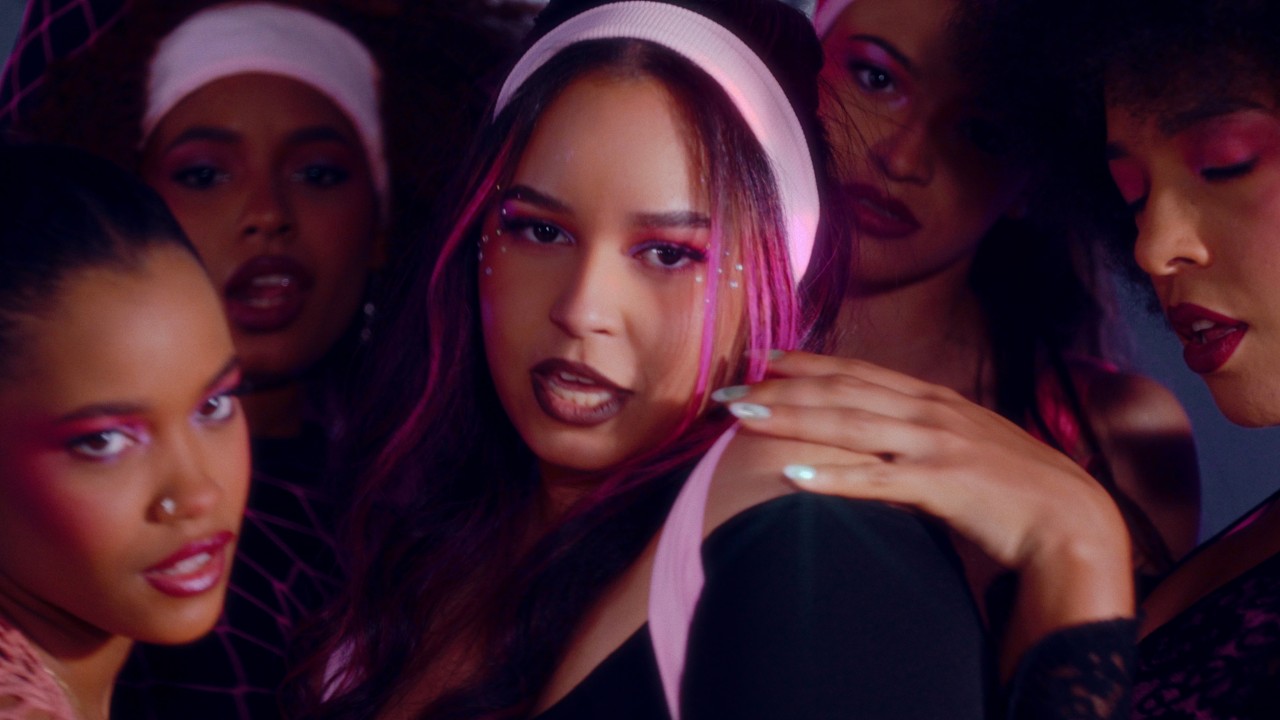
There’s a certain confidence required to step into the spotlight as a performer, and with the release of her new “body language” music video, michi embraces that challenge head-on. The Dominican-American singer-songwriter and producer has already proven herself as a multifaceted creative, but this latest visual reveals a new dimension of her artistry: the performer she’s always aspired to become. Originally featured on her debut project sellout, “body language” thrives on Y2K-inspired production that recalls the sleek, infectious soundscapes crafted by The Neptunes. Drawing inspiration from early 2000s pop and R&B while layering playful Spanglish lyrics throughout, michi strikes a balance between nostalgia and modernity that feels entirely her own. Directed by michi herself and filmed at Santiago Dance Center in the Dominican Republic, the video places choreography at its core. Working alongside choreographer Marcos VIP, known for his work with Natti Natasha, michi transforms the track into a visual celebration of movement, chemistry, and self-expression. Influences from Beyoncé, Janet Jackson, Jennifer Lopez, and even Jane Fonda’s iconic workout tapes can be felt throughout the video’s vibrant aesthetic. What makes “body language” particularly compelling is its sense of artistic evolution. While sellout explored themes of ambition and authenticity, this visual feels like the next logical step in michi’s creative journey. It’s less about reinvention and more about revelation, allowing audiences to witness the full-package pop artist she has long envisioned becoming. With “body language,” michi isn’t simply releasing another music video. She’s opening the door to an exciting new chapter, one where performance stands alongside songwriting and production as central pillars of her artistry.