%20WHITE.png)

7 Things to Look for When Buying a Tenor Banjo

The tenor banjo is deeply embedded in Irish traditional music. However, with so many different options available, buying one can be confusing. Whether you are a beginner tenor banjo player or an experienced one, the blog post below will help you understand how to choose the right tenor banjo.
1. Choose the Right Scale Length
Usually, tenor banjos are available in two different lengths: 17-fret standard tenor and 19-fret Irish tenor. The one you choose will depend on the type of music you play. Jazz players with smaller hands usually go with shorter scales, whereas those looking to play Irish traditional music choose the larger one for better reach and tone.
2. Consider the Head Size and Material
The material of the tenor banjo head has a direct impact on the tone it produces. Plastic heads are extremely durable and ideal for beginners. However, natural skin heads produce warmer tones, which are closer to the vintage sound of a tenor banjo, but these require maintenance as well.
3. Evaluate the Pot and Resonator
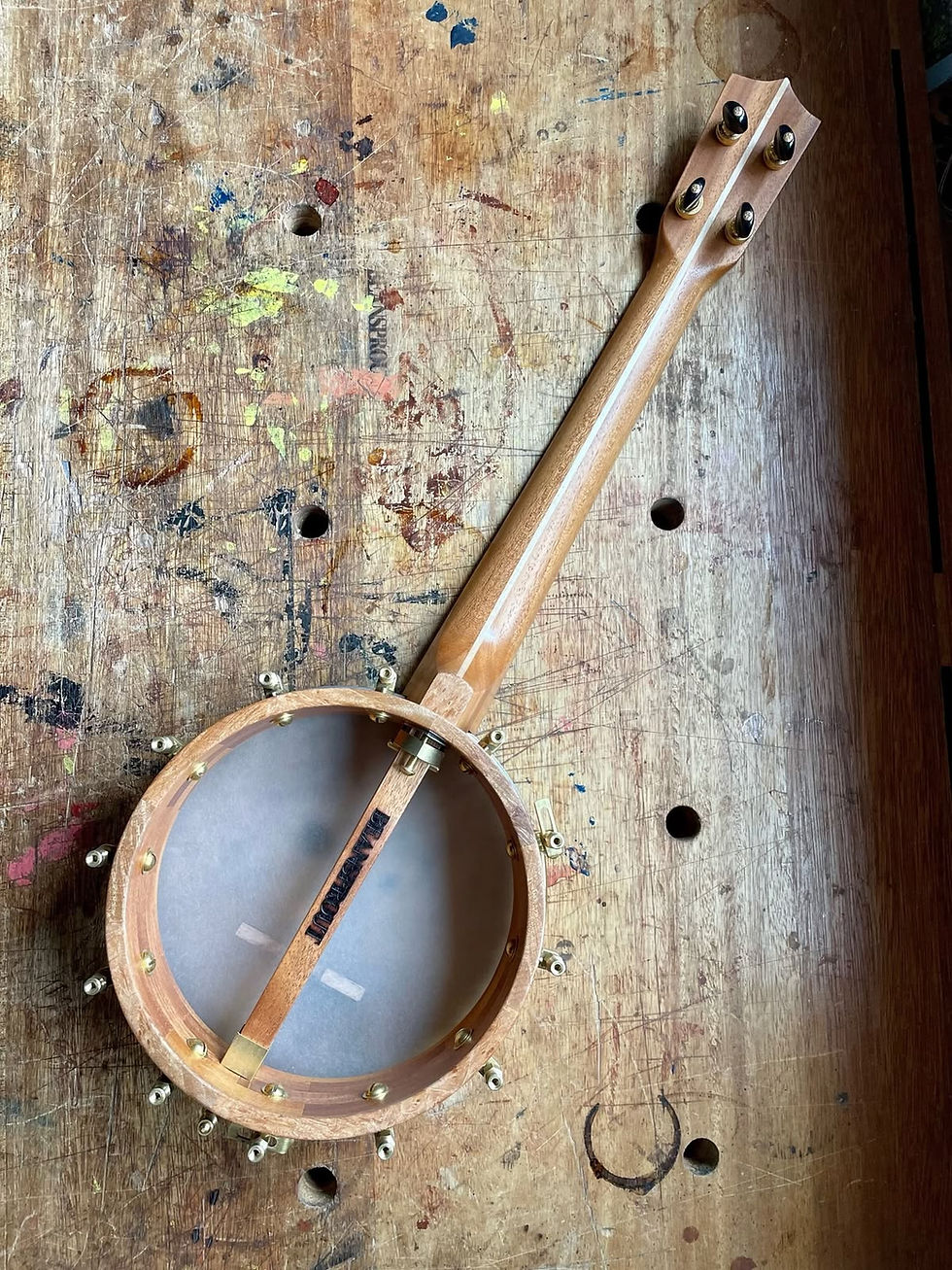
The circular body of the tenor banjo is known as the pot. Full pots offer softer and mellower tones, which are more aligned with folk and Irish music. Resonator banjos project a higher volume and a more punchy sound, which makes them suitable for jazz.
4. Inspect the Neck Profile and Fretboard
Tenor banjos with smaller necks are suitable for players with smaller hands. On the other hand, thicker necks should be preferred if you are looking for more stability and better grip. Of course, the material matters as well. Those made from rosewood and ebony are easy to hold and play.
5. Check the Tuning Pegs and Hardware
Without the right tuning and controls, it is really difficult to learn the tenor banjo. That is why you need to always look at the tuning pegs and hardware that come along with it. The best option is to go with one that has planetary tuners, as these provide precise tuning. However, if you are a beginner, you can choose a manual banjo with friction tuners as well, since they are easier to operate.
Additionally, you need to look at the hardware that is included, like the tailpiece, bracket, hooks, and coordinator. The more hardware that's included, the easier it is to play and maintain it.
6. Set Your Budget and Know Your Brands
In addition to the parameters discussed above, it is also important to decide on a budget and the brands that are available in that budget. Entry-level tenor banjos are usually priced between $200 and $400, whereas mid-range banjos will cost you anywhere from $400 to $900. If you need professional-grade quality, be prepared to spend upwards of $1,000. The most trusted brands that sell tenor banjos include Goldtone, Deering, Recording King, and Tenor.
7. Match the Banjo to Your Music Style
Lastly, choose the tenor banjo that aligns with the type of music you want to produce. For example, that means jazz players can go with the resonator banjo, whereas Irish traditional players can prefer the open-back 19-fret model that produces a warm tone.
Final Thoughts
So, if you are looking to buy a nano band, compare the different options on the seven parameters and choose the one that will be easier for you.