%20WHITE.png)

The Emotional Power of Music and the Memories It Creates

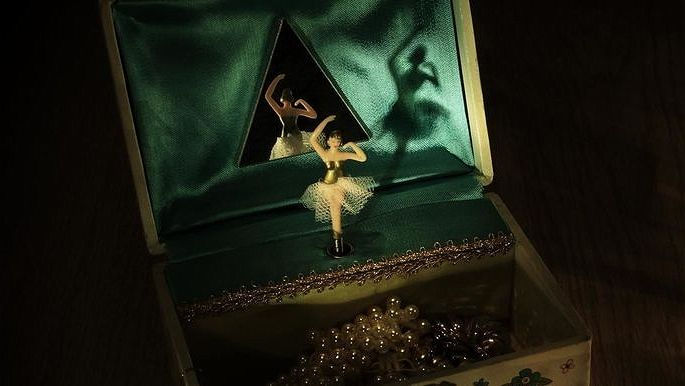
You already know that music can move you. You've felt it: a song comes on and suddenly you're somewhere else entirely, years ago, someone else's kitchen, a back seat, a garden in summer. What's harder to explain is why a few simple notes from an Only One Music Box piano music box can feel even more powerful than the full recorded version of the same song. Quieter, slower, stripped back to almost nothing, and yet somehow more affecting.
This piece explores exactly that. Why do music-box melodies carry such emotional weight? How do songs become permanently tied to the moments in which we heard them? And, most practically, how could a custom music box become part of your own story, something you wind and open to return to a memory that matters?
Why music and music-box melodies feel so deeply emotional
Music takes a shortcut to feeling. A melody connects directly to the parts of the brain that handle both emotion and long-term memory, which is why a song can produce a surge of feeling almost before you've consciously recognized it. There's no analysis first; the emotion arrives first.
Music-box tunes work particularly well as emotional triggers because of their simplicity and repetition. A melody stripped to its bare bones, played the same way every time, is easy for the mind to latch onto. Hear it enough times in the right context, and it becomes a reliable key to a particular emotional state, almost like a signal your brain has been trained to respond to.
The physical sound of a music box adds its own quality to this. The tiny tines of the comb produce bright, bell-like notes that decay quickly; the tempo shifts slightly as the spring winds down, and there's a soft mechanical whirr beneath the melody. These small imperfections give the sound a fragile, handmade quality that a digitally perfect recording simply cannot replicate. It sounds mortal, somehow, which makes it feel tender rather than polished.
Then there's the matter of childhood. Many people first encounter music boxes as very young children, and that early association doesn't disappear. For a lot of adults, the sound of a music box carries a trace of something dreamlike and safe, even if they couldn't name why. The mechanism doesn't just play a song; it faintly echoes a time before memory was complicated.
How songs and sounds become tied to life moments
A melody becomes meaningful not because of what it is, but because of what was happening when you heard it. Strong emotion acts like a stamp: if you're feeling something intensely and music is playing, the brain links the two together, and from that point on the music and the memory are stored as a pair, so that hearing one reliably recalls the other.
Think of how many of these pairings already exist in your life. A parent humming the same lullaby every night until it became the sound of being safe. A television theme playing every Sunday evening, the whole family together on the sofa without anyone having to agree to be. A song drifting out of a car radio on a long holiday drive. The track that was playing the last evening you spent with someone before they moved away, or before they were gone.
Both joy and grief find their way into music. The songs attached to weddings and birthdays sit in memory alongside the ones that were playing during break-ups and bereavements. Music doesn't discriminate between the occasions it marks; it simply shows up and stays.
What's striking is how little of the full melody you need to be transported. Even a few bars are enough, especially when the arrangement is spare. A stripped-back version, a slowed-down version, a music-box version of a song that once meant everything can bring the whole memory rushing forward with a force that the original, cluttered with production, sometimes cannot match.
Why a music-box version can feel more tender and bittersweet

When a song is reduced to a music-box melody, something interesting happens. Everything that surrounded the tune- the drums, the bass, the vocal, the full harmonic texture- falls away, leaving just the bare shape of the melody. The listener suddenly has space to feel it rather than being carried along by it. The music slows down, and so does the listener.
The timbre of a music box deepens this effect. Those bright, bell-like notes fade almost immediately after they sound, giving every phrase a slightly wistful quality; the notes are there, and then they are gone, which is itself a kind of metaphor. Even an upbeat melody, played this way, can take on a delicate, bittersweet edge, as though it might disappear at any moment.
Combine that with the childhood associations described earlier, and something layered happens. A song you loved as a teenager or a young adult, played on a music box, can blend the adult memory with an earlier, simpler sense of safety, so that the sharpness of grown-up experience and the softness of something from long before arrive together.
There is also this: because a music box cannot reproduce the full complexity of the original arrangement, the listener's mind fills in the gaps from their own memory of the song. They hear the melody and, silently, complete it themselves. That act of completion makes the experience more personal, more private, more theirs than simply pressing play on a recording ever could.
A music box as a memory anchor you can hold
Some objects have the ability to call up a specific memory or feeling reliably, simply by being seen, touched, or heard. These are sometimes called memory anchors: physical things that hold a story in place so you can return to it. A music box is unusually good at this, because it engages several senses at once. You see the box, you feel the weight and texture of it in your hands, you wind the mechanism, the lid opens, and the melody begins.
That small ritual, the winding, the waiting, the opening, creates a moment of intention. You are choosing to return to a memory rather than stumbling into it, and there is something quieting about that. An Only One Music Box sitting on a bedside table or a bookshelf does this every time: the same action, the same melody, the same feeling called up reliably and gently.
A music box also does something that a playlist on a phone cannot. It can be placed in another person's hands, and when you do that, you are giving them not just a tune but the story attached to it. They feel the weight of it, they wind it themselves, they hear the same notes. The memory becomes portable in a way that a streaming link never quite manages, because the physical object carries its own quiet insistence: this matters, hold on to it. And, unlike a digital file, it can be passed on, kept on a shelf for decades, handed to someone who comes after.
Turning your own memories into a custom Only One Music Box
The starting point is almost always a song. Ask yourself: which melody do I already associate with the moment I want to hold onto? A first dance, with all the self-consciousness and joy of being watched by everyone you love while trying to remember where your hands go. A lullaby you sang to a child every night until the words became automatic. A film theme that played on repeat through a particular chapter of your life, so that now you can't separate the music from what was happening in those months. Or perhaps a song that always brings someone back: a person who has passed, a friendship that drifted, a version of yourself you want to remember.
Once you have the melody, think about the mood. Soft and romantic, playful and bright, classic and formal- each calls for a different style of box, and the design should feel like an extension of the memory itself rather than a generic container for it.
Only One Music Box offers custom options that allow you to shape the object around the story. An Only One Music Box ballerina music box can complement a melody with a graceful, dance-inspired design, while other options allow you to choose a particular tune, add engraved names or meaningful dates, include a short personal message, or place a favorite photograph on or inside the box. Each of these decisions layers more of the memory into the object, so that the person who opens it encounters not just a melody but a constellation of specific, chosen details.
Consider, too, what you imagine happening with the box after you give it. A couple receiving one on their anniversary, winding it on quiet evenings. A child taking one to university, something familiar in an unfamiliar room. A parent keeping one for themselves, a private way to sit with someone who is no longer here. The uses are as varied as the memories; the box simply holds whichever one you bring to it.
Choosing the melody that will carry your story forward
The right song usually announces itself without much deliberation. It's the one that still produces a physical response: a tightening in the chest, a sudden smile, the quick, involuntary sting behind the eyes. Notice which melodies do that to you, because those are the ones already doing the work a music box is built to make permanent.
If you're not sure where to begin, a simple exercise helps. Write down one or two memories that still feel vivid and complete, the kind where you can recall what the light was like or what the room smelled of, and then ask what was playing. Often a song surfaces immediately. If it doesn't, think about the feeling of the memory rather than its details, and notice which music arrives alongside that feeling. Then browse Only One Music Box's options with those songs in mind, rather than starting from a blank catalog and working backward.
There is no wrong answer here. The only criterion that matters is whether the first few notes of a melody feel like coming home. If they do, that's your song.
Once you've made that choice and built the design around it, the box becomes more than a decorative object. It becomes a reliable, unhurried way to return to something that deserves to be returned to, and a way to carry that moment into other people's hands. Not a photograph, not a recording, but something in between: a small, wound-up promise that the memory isn't going anywhere.