%20WHITE.png)

AC Lightnin Explores Identity, Faith, and Resilience on "They Call Me AC"

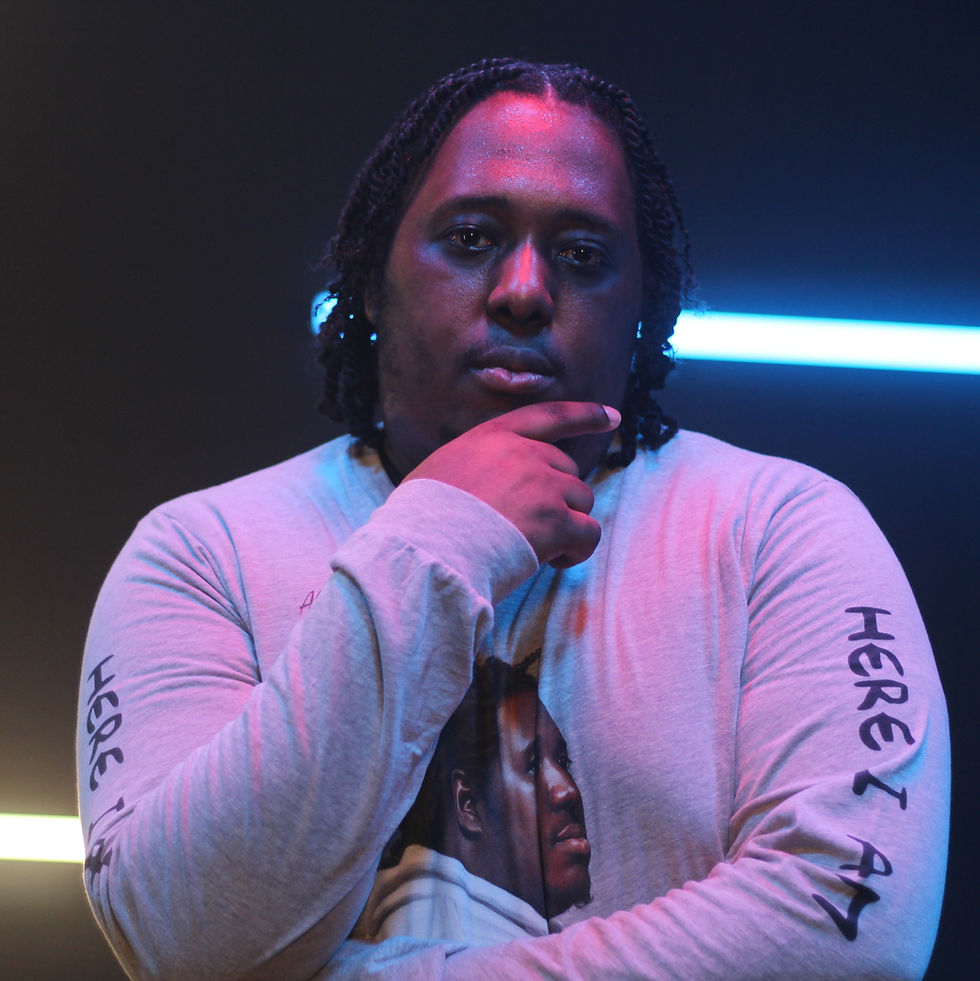
Hip-hop has always been at its strongest when artists use it as a vehicle for self-discovery, and AC Lightnin embraces that tradition on his debut mixtape, They Call Me AC. Blending alternative hip-hop, spoken word poetry, soulful production, and Christian influences, the New York emcee delivers a deeply personal project that documents not only where he's been, but who he's still becoming.
Built from experiences spanning the last decade, They Call Me AC examines identity, ambition, grief, faith, and belonging through thoughtful lyricism and compelling storytelling. Rather than chasing mainstream trends, AC Lightnin leans into authenticity, allowing each track to reveal another piece of his journey. His spoken word background shines throughout the project, giving his verses a conversational cadence that makes every story feel intentional rather than performative.
Sonically, the mixtape balances classic boom bap influences with soulful melodies, mellow piano arrangements, and modern alternative hip-hop production. The result is a sound that feels rooted in hip-hop's golden era while remaining contemporary enough to avoid becoming nostalgic for nostalgia's sake. Every beat serves the narrative, allowing the emotion behind each song to take center stage.
Several tracks stand out for their emotional depth. "Ghetto Gospel" paints a vivid portrait of growing up between Brooklyn and Manhattan, pairing personal reflection with social commentary. "5:55 (Dad's Memorial)" is arguably the project's emotional centerpiece, offering a heartfelt tribute that captures the lingering weight of loss without ever feeling forced. Meanwhile, songs like "Green Lights" and "Gettin' Around" showcase AC Lightnin's ambition and determination, highlighting an artist committed to pursuing purpose without sacrificing vulnerability.
What ultimately makes They Call Me AC resonate is its sincerity. This isn't an artist presenting himself as someone who has all the answers. Instead, AC Lightnin invites listeners into the ongoing process of discovering who he is, guided by faith, creativity, and an unwavering love for hip-hop.
For a debut mixtape, They Call Me AC establishes a clear artistic identity while leaving plenty of room for growth. It's an introspective, thoughtfully crafted body of work that proves some of the most compelling stories in hip-hop come from artists willing to be completely honest about the journey they're still on.
Your mixtape explores identity, faith, ambition, grief, and belonging through deeply personal stories. Looking back now that “They Call Me AC” is complete, what did creating this project teach you about yourself that you didn’t know before? Creating this project taught me that some of the stories I’ve brought to life can be relatable to what a lot of people go through in their own lives. Pursuing your dreams, dealing with heartbreak, and how your upbringing shapes who you are- we can all relate to those things in some way. In creating some of those stories, it also allowed me to experiment and to admire how far I’ve come both as an artist and as a person. Another thing creating the project taught me was seeing how some of my situations weren’t as bad as I made them out to be in my mind. It’s different when you’re going through hardships in those very moments that you can magnify your own problems. But I’ve gotten to a point where I can look back at those situations, and it has given me a different outlook on them. After “Child of the City” was written and recorded, it gave me an appreciation for my childhood. Even though I didn’t have a lot, my parents made sure I had everything I wanted and that I came from a loving household. As both a spoken word poet and hip-hop artist, how do you decide when a story should be delivered through poetry versus rap, and how have those two disciplines influenced one another throughout your career?
Ever since I started as a creative in 2016, I’ve tried to find an answer to this question: in which format should I tell this story I want to put out, either through a poem or a rap song. When I first started, I thought it depended on the topics themselves because, bringing certain stories to life, I felt like they fit better in certain mediums. For example, if you wanted to talk about activism, I felt like that was more fitting for spoken word versus talking about partying, which, in my mind, would be more fitting for a song. It’s more open than ever today because you can do an a capalla and call that a rap song if you want, and you have poets who have added music to their poetry and have turned them into albums. Hip-hop and Spoken Word have been interwoven in my artistry to where you’ll get to see different sides of who I am. It makes it easy getting booked for shows because I can switch it up between music or poetry depending on what the event is asking for. Sometimes, I’ll even do both in my set. Hip-hop and spoken word have kept me in balance, where I’ve incorporated my rap-style flow into my poetry and likewise with spoken word into my music. One of the first songs I released in 2020, called “Welcome to Rehabilitation (Intro),” was originally a spoken word piece before being turned into a one-verse song. The beginning of my 3rd verse on “Gettin’ Around” was an alliteration short poem I added to the song to make the verse stand out. And the opening track, “Who I Be?” is a spoken word piece I wrote to have the project start off different while also showcasing spoken word poetry on my end.
Tracks like “Ghetto Gospel” and “5:55 (Dad’s Memorial)” reveal some of your most vulnerable moments. Was there a song on the mixtape that was particularly difficult to write or share, and what made it so personal? “5:55 (Dad’s Memorial)” is easily the first song that comes to mind as the one that was difficult to write and share. My dad was the rock in my family, and I saw him as a leader, my father and my friend in ways that he has shaped me today. So when he passed away in late 2019, it felt like my world was at a standstill. I’ve made mention of his passing and what that did to me in some of my previous songs. But what makes 5:55 different from those other songs is that I was at a place in my life in 2022 to express how his passing had me go through a different range of emotions. And then being able to get to a place where I can move forward and be okay with not being okay on some days. “Over You” is probably another song that was challenging to write because I wrote like 5 different versions of that song. Between being a man, a black man at that, and my experience from the dating pool, it was hard to express my feelings without being free from criticism. And without using explicit language. Because I’m an artist who believes you can get your point across without cussing, but I was going to make “Over You” an exception to the rule since 2 out of those 5 versions had cusses in them. Oddly enough, when I broke up with my ex in 2019, it made this song even more challenging, and that’s why I listed it before “5:55” to keep the continuity since those instances were 3 months apart. But be thankful for the version of “Over You” you hear now because getting to that point was a long process.
You blend alternative hip-hop, boom bap, soulful production, and Christian themes without fitting into one lane. How important is it for you to challenge people’s expectations of what faith-based hip-hop can sound and feel like? A beautiful question to ask! One of the core things that makes Hip-Hop such a powerful vehicle is its ability to bring stories to life on a beat. It’s always been important for me to challenge people’s expectations when it comes to showcasing my faith in my music because, after a while, for me it got tiring hearing the same ole themes in these Hip-Hop songs today. I grew up on a lot of 90s and 00s hip-hop where there was more care for the art form, and my goal has been to show people that I can be a Christian and still give you these bars in ways that’ll get you thinking or show you that Hip-Hop songs can be wholesome without compromising or being corny. It’s why I wrote songs like “Incredible Geek,” a song about celebrating geek culture, pushing wholesome Christian values while departing from the themes found in today’s mainstream Hip-Hop. Geeks have always had a bad rep from people, but I don’t let people’s negative thoughts of me stop me from being great. Or another song of mine, “Here I Am,” where it’s about my testimony in how I came to God in hopes to bridge dialogue about faith and religion both in art spaces or in normal day-to-day interactions. Getting to Yeshua isn’t always a linear path, but he’ll direct the path to him if you allow him to. Both songs were released as singles to show that my faith doesn’t have to be in one lane.
With “They Call Me AC” introducing listeners to your artistic identity and your upcoming New York solo show on the horizon, where do you see this project taking you creatively, and what do you hope people will understand about AC Lightnin after experiencing you live? I’m hoping for this project to take me into places along the East Coast and the United States and internationally. Interact more with people who’ve been looked at as a weirdo or just normal everyday people. And of course to music festivals, shows, and rooms where these types of conversations can be had. I want people to understand with this project that I’m a work in progress and this is the growth of who I’ve become in the last decade. I hope when people hear my music or see me live at my shows like the one I'm having at The Delancey on October 3rd, that they see my energy and my heart is authentic and want to inspire folks to be different and to shine my light.


