%20WHITE.png)

James Artissen Looks Beneath the Surface on “Blank Face”

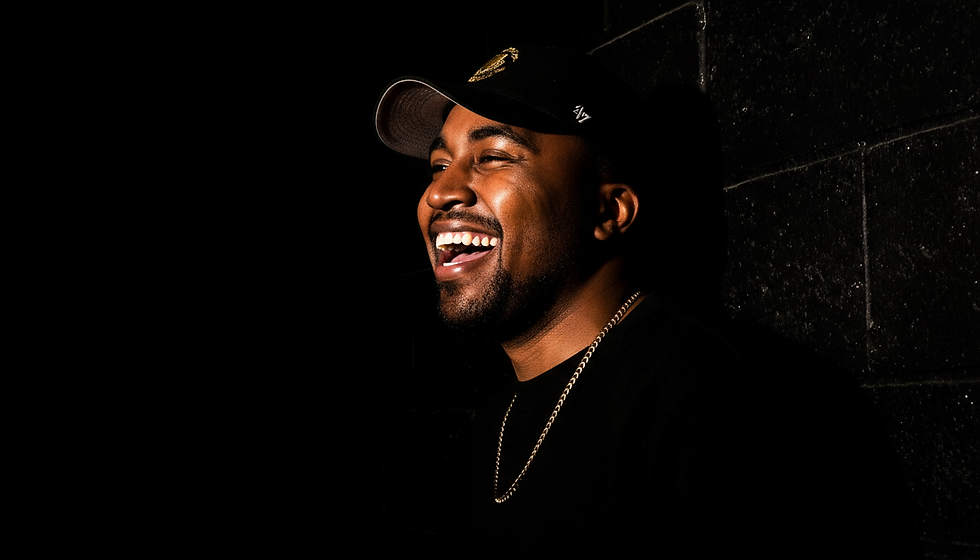
GRAMMY-nominated songwriter, producer, recording artist, and music executive James Artissen is stepping further into the spotlight with “Blank Face,” a moody new release that finds the multi-hyphenate exploring the emotions people learn to hide. Moving through alternative R&B, soul, pop, and darker atmospheric territory, the single arrives as James Artissen prepares for an increasingly active chapter of his own recording career.
James Artissen has spent years building an extensive résumé behind the scenes, working with artists including 112, Meek Mill, Fetty Wap, Lil Jon, Robin Thicke, Goodie Mob, J. Holiday, and Brian McKnight. He is also the founder and CEO of Humble Sound Records and a Voting Member of the Recording Academy.
With “Blank Face,” however, the focus turns inward. The song examines emotional distance, deception, attraction, and the private battles that can exist underneath an unreadable exterior. Atmospheric production and haunting melodies establish a late-night setting, while James Artissen approaches the subject with vulnerability rather than melodrama.
Produced by James Artissen alongside Ronell Sessoms and recorded at Humble Sound Studios, “Blank Face” also features mixing and mastering contributions from James Artissen and Tory G. The result feels cinematic without losing the intimacy needed to make its subject matter land.
More importantly, “Blank Face” signals where James Artissen may be heading next. His debut album, Nevermind What U Said, is currently slated for early 2027, while a James Artissen documentary is also in development. He recently expanded his catalog with “Whole Room Lit,” a collaboration with Khujo Goodie.
For an artist accustomed to helping shape other people’s records, “Blank Face” makes a compelling case for keeping the attention firmly on his own.
“Blank Face” explores the emotions people hide behind an unreadable exterior. What experiences made you want to examine that disconnect between what someone shows and what they are actually feeling?
I’ve always been fascinated by the difference between what people show you and what they’re actually carrying inside. A lot of times, we become very good at presenting an image of being okay, being strong, or being unaffected, even when there’s a completely different story happening underneath. I’ve experienced that disconnect personally, and I’ve also seen it in people around me. “Blank Face” came from that observation: the idea that sometimes the hardest emotions to read are the ones that are sitting right in front of you. The face can be calm, but the mind and heart can be somewhere completely different.
You’ve spent years producing, writing, and working behind the scenes with other artists. How does your creative process change when the record is telling your own story?
When I’m working with another artist, I’m thinking about how to bring their vision to life. When the record is mine, there’s nowhere to hide. Every lyric, melody, production choice, and emotion has to represent something that I genuinely feel or believe. That makes the process more vulnerable, but it also makes it more rewarding. I’m still approaching music as a producer and songwriter, but now I’m also allowing the audience to see more of the person behind those roles. With my own records, I’m not just creating a song; I’m documenting pieces of my perspective and my journey.
There’s a cinematic, late-night quality to “Blank Face.” How intentional was that atmosphere, and what did you and Ronell Sessoms want the production to communicate before listeners even focused on the lyrics?
That atmosphere was very intentional. Ronell and I wanted the production to feel like a late-night conversation with yourself, something introspective, mysterious, and emotional without giving everything away. Before the listener even processes the lyrics, I wanted the music to create a feeling. There’s a certain loneliness and tension in the record, but there’s also beauty in it. We wanted the production to leave enough space for the listener to put their own experiences into the song. It’s almost like a scene from a film where you understand what the character is feeling before they ever say a word.
Your debut album, Nevermind What U Said, is slated for early 2027. What does “Blank Face” reveal about the sound, perspective, or creative direction you’re building toward with the album?
“Blank Face” gives people a glimpse into the more personal and introspective side of Nevermind What U Said. The album is about perspective, experiences, relationships, growth, and the things that shape you when nobody else is watching. Sonically, I’m allowing myself to move between different spaces while still keeping the core of who I am intact. I’ve spent so many years helping shape other artists and other records, and this album is an opportunity to put my own voice and perspective at the center. “Blank Face” represents that transition; it's honest, atmospheric, and personal, but it still leaves room for interpretation.
Between your own music, Humble Sound Records, and the James Artissen documentary, you’re telling your story through several different formats. What do you want people to understand about James Artissen that they may not have seen from your work behind the scenes?
I want people to understand that there has always been an artist behind the producer, songwriter, engineer, and executive. Working behind the scenes has allowed me to contribute to a lot of other people's stories, but sometimes that can make people overlook the person who's been creating alongside them. My own music and the documentary give people an opportunity to see the bigger picture, the experiences, the sacrifices, the lessons, the creativity, and the person behind the work. I’m not trying to rewrite my history; I’m opening the door and letting people see more of it. James Artissen has always been there. Now I’m making sure people get to hear his voice, too.


