%20WHITE.png)

Jody Glenham Isn’t Chasing Closure on "Still Here," She’s Sitting in It

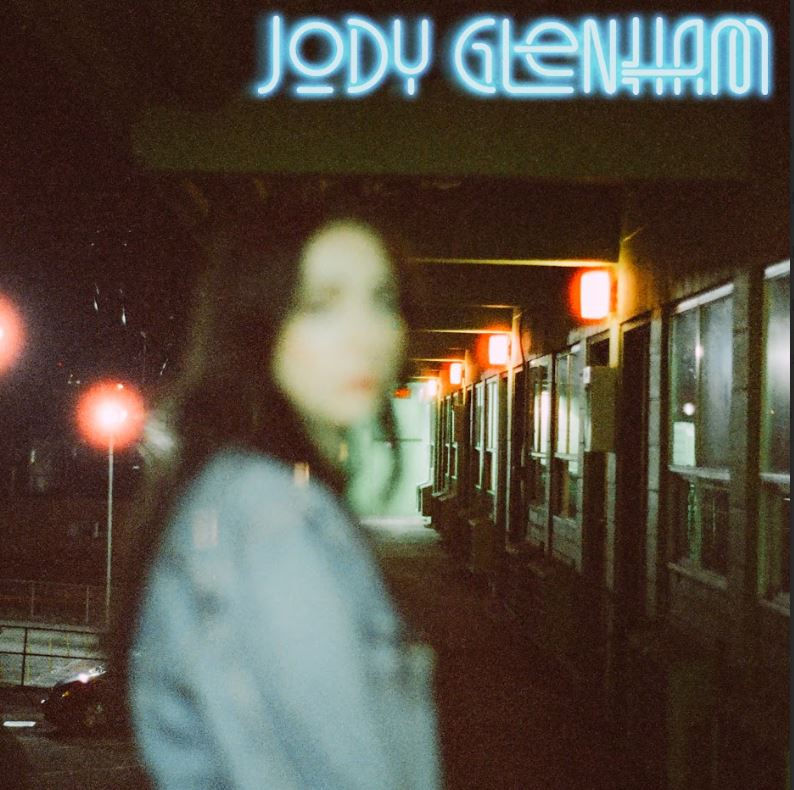
Most breakup records still follow the same tired arc. Pain, reflection, empowerment, done. Wrapped up neatly so the listener doesn’t have to sit in anything uncomfortable for too long.
Jody Glenham doesn’t play that game on Still Here. Instead of chasing resolution, this EP leans into something way more real: emotional endurance. Not the dramatic, life-is-over kind. The quiet kind. The kind where you wake up, go through your day, and slowly piece yourself back together without announcing it to the world.
That shift alone makes Still Here hit different. The project feels intentional without trying too hard. Hazy guitars drift in and out of focus, door-chime synths add this subtle, almost disorienting texture, and Glenham’s vocals sit right in the middle of it all, never overpowering, never hiding. It’s restrained in a way that feels mature, like she knows exactly what the songs need and refuses to over-explain them.
“Love Deficiency Syndrome” is the clearest entry point into that world. On paper, it’s a post-breakup track. In reality, it’s about that weird in-between stage where you’re not fully broken, but you’re definitely not okay either. The production keeps things light, almost deceptively so, while the writing leans into that feeling of “grinning through the pain,” where you’re rebuilding your identity in real time. It’s bittersweet without being heavy, which is harder to pull off than it sounds.
Across tracks like “Overtime” and “Good Fruit,” there’s a noticeable pull toward patience over urgency. Nothing feels rushed. Nothing feels like it’s trying to prove a point. Instead, Glenham lets moments breathe, which is rare in a landscape where artists are constantly trying to hold attention instead of earning it.
By the time you reach “China Shop,” the emotional tone has shifted without forcing a clean resolution. There’s growth here, but it’s subtle. You don’t get a big “I’m healed now” moment. You get something more believable.
After nearly two decades in the game, Glenham isn’t trying to reinvent herself for the sake of relevance. If anything, Still Here feels like the result of someone letting go of that pressure altogether. The cinematic indie rock elements are still there, but they’re more focused now, less about atmosphere for the sake of it and more about supporting the emotional weight of the songs. That’s where the EP really lands. Not as a comeback or a reinvention, but as a reminder that you don’t need to be at your peak to make something meaningful. You just need to be present enough to tell the truth.
Still Here feels less about “moving on” and more about learning how to exist in the aftermath. At what point did you realize the EP wasn’t about closure, but about endurance?
I don’t think there was a single moment; it was something I noticed in hindsight. When I put the songs together, older ones like “The Local” and “China Shop” felt just as present as the newer ones. Life doesn't really resolve (hah until it really does, it just… continues.
We have this idea of becoming who we’re meant to be, or arriving somewhere, but for me, this record felt more like staying the course. I went through a period during the pandemic where I’d been promoting Mood Rock for almost two years, shows weren’t coming back, and trying to hold it together as a bandleader and a person was crushing me.
This EP came out of finding a way to keep going anyway. “Still Here” isn’t about closure; it is about endurance and choosing to believe there’s something ahead, even if you can’t fully see it yet. I also think there's a message in there that is truly "It's going to be okay". Eat, sleep, rave, repeat.
You self-produced this project. How did having full control change the emotional honesty of the songs compared to your earlier work?
It’s the closest my music has sounded to me. Not because anyone was pushing me in a different direction before, but because I think I was still figuring out my voice, and sometimes the production leaned toward the style of other artists instead of fully landing somewhere that felt like "me" in the songs.
Self-producing gave me the space to trust my instincts more. I wasn’t trying to shape things for anyone else in the room. I could let songs breathe, hold tension longer, or stay simple when they needed to.
There are moments from earlier records I still love, like “Try” on my first record, or “Between You and Me” from the Dreamer EP, but this feels more cohesive. The production on Still Here is really in conversation with the songs, instead of sitting on top of them.
“Love Deficiency Syndrome” balances light, almost playful production with heavier themes. How intentional was that contrast, and what were you trying to make the listener feel in that tension?
It was really intentional, but it took a while to get there. I originally wrote it with my friend, the musical artist, Georgette, as a ballad, and it felt very Death Cab / Postal Service-coded. And then over time, it started picking up energy when I played it live.
The turning point was when I had Jay Arner playing bass for a Sled Island set (Calgary festival). She brought this bassline in that just lifted everything. That’s when it clicked that it could be this shiny little pop song.
From there, I leaned into that contrast. The synth hook is meant to sound like one of those long, drawn-out doorbells, like you’re waiting alone for Uber Eats to arrive. So depressing! There are all these small production moments that mirror elements of the lyrics, like the synths and percussion for “the sunlight, in the city.” And on the bridge, there’s a bit of a homage to the song "One" by Harry Nilsson. I read that the opening organ in that track was meant to mimic a telephone busy tone, really emphasizing the loneliness of the singer. So I tucked something similar under the bridge as a subtle nod to that.
After nearly two decades in music, what did you have to let go of creatively to arrive at the restraint and patience this EP carries?
I’m learning that I take a long time to do things. Blame it on my Gemini moon, but it can take me a while to decide between two things… or multiple things. I function well with concrete deadlines, but being my own producer also meant I was the one creating those deadlines, so that was a bit of a learning curve.
But a little bit at a time feels right for me. I’m usually working on a lot of things at once, and I’ve had to learn to trust that they’ll get finished in their own time. I think part of what I let go of was the pressure to rush that process, or to force things into being done before they’re ready. This record came from allowing things to unfold more slowly and being okay with that.
There’s a cinematic quality to your sound, but this EP feels more grounded and intimate. Were you consciously pulling back, or did that shift happen naturally as you were making it?
Thank you so much for saying that. It was a conscious effort. I think what was missing from some of my earlier recordings was intimacy. I had these big cinematic arrangements, but they didn't always let the listener get close enough.
With Still Here, I wanted to pull things back just enough so the songs could speak more directly. Not stripping them down completely, but being more intentional about what needed to be there.
I’m definitely someone who loves adding layers. I’m a synth player; it’s hard not to, but this felt like well-applied restraint. I’ve always loved how artists reinterpret their own work too, like St. Vincent's Masseduction or Angel Olsen's All Mirrors, and that’s something I’d love to explore more of in the future.