%20WHITE.png)

Åsa Orbison Captures the Quiet Pain of Letting Go on "Hand I Used to Hold"

Updated: Aug 6
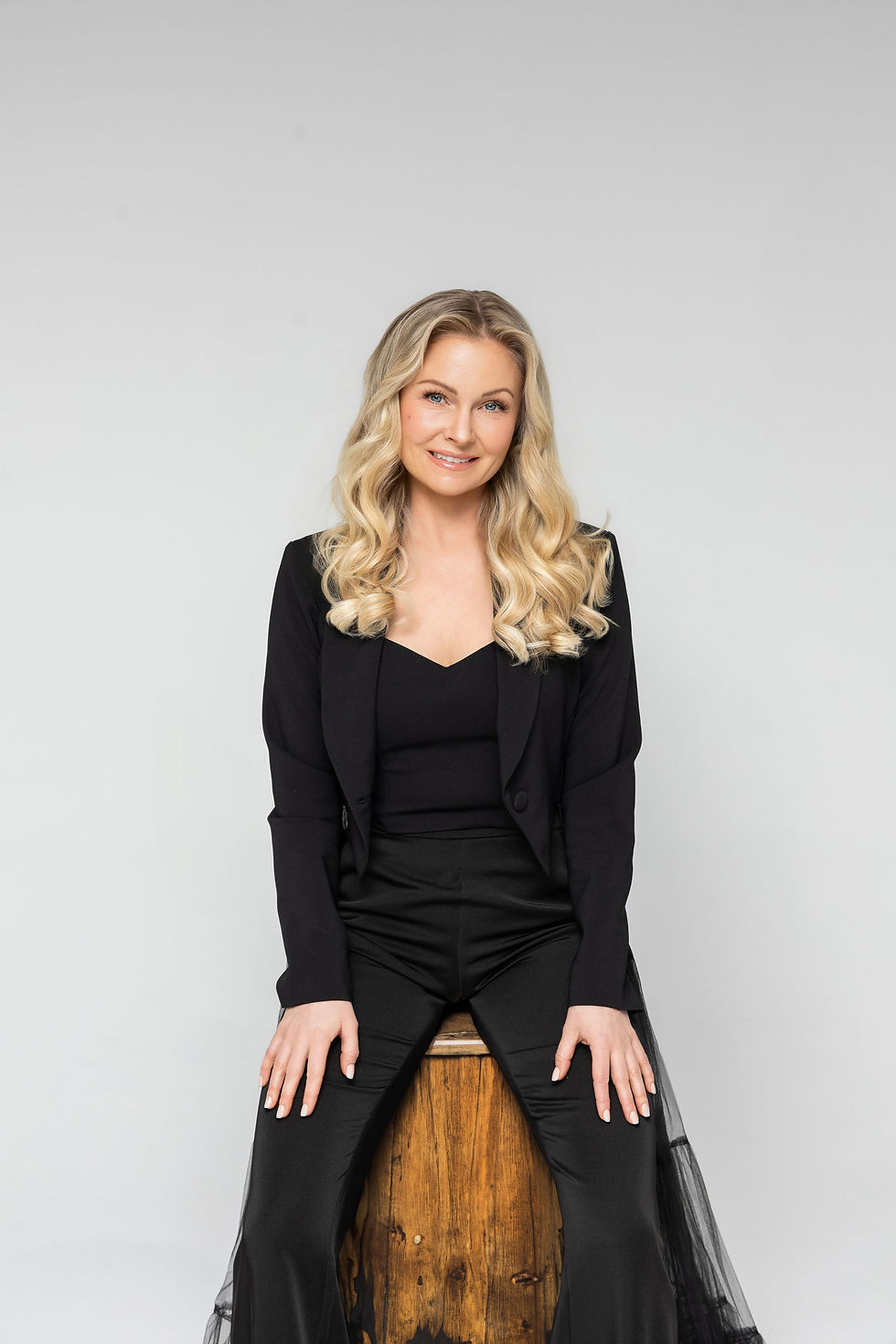
Swedish-American jazz vocalist Åsa Orbison delivers a deeply intimate performance on "Hand I Used to Hold," a beautifully restrained ballad that explores one of heartbreak's most difficult moments: not the end of a relationship, but the slow realization that someone you still love is already slipping away. Rooted in timeless jazz traditions while embracing a modern emotional vulnerability, the single showcases Orbison's gift for understated storytelling.
Rather than relying on grand declarations, "Hand I Used to Hold" finds its strength in subtlety. The song lives in the fragile space between hope and acceptance, capturing the quiet grief of trying to hold onto someone whose heart is already drifting elsewhere. Its central metaphor, someone "slipping through the fingers of the hand I hold," offers a fresh and deeply affecting perspective on emotional loss, transforming a familiar phrase into something uniquely personal.
Vocally, Orbison resists the temptation to oversing. Every line feels conversational, as though the listener has been invited into a private reflection rather than a polished performance. That sense of intimacy gives the lyrics room to resonate, allowing the emotion to unfold naturally without becoming melodramatic.
The song's elegant musical foundation further enhances its impact. Composed by legendary Swedish jazz guitarist Ulf Wakenius and produced by Roy Orbison Jr., the arrangement blends classic jazz sensibilities with a cinematic atmosphere that feels both timeless and contemporary. The production never competes with the story, instead creating space for Orbison's voice and songwriting to remain the emotional centerpiece.
With "Hand I Used to Hold," Åsa Orbison proves that heartbreak doesn't always arrive with dramatic goodbyes. Sometimes it unfolds in silence, through small moments of distance that slowly become impossible to ignore. It's that emotional honesty that makes the single so compelling, offering listeners a graceful reminder that vulnerability often speaks louder than volume.
“Hand I Used to Hold” captures the quiet moment when love begins to slip away rather than the aftermath of heartbreak. What drew you to explore that emotional space instead of focusing on the ending itself?
Most sad love songs begin after everything has already fallen apart, but to me, the most heartbreaking part is when you can still feel the relationship slipping away while you’re desperately trying to hold onto it. Nothing dramatic has happened yet, but you know something has changed and it’s too late to go back. It is a very fragile and painful space to sit in.
The central lyric, “slipping through the fingers of the hand I hold,” reimagines a familiar expression in a deeply personal way. How did that metaphor come to you, and did it become the foundation for the entire song?
It started with that single line. We all know the expression “slipping through your fingers,” and I kept thinking about what it would feel like if the very hand you’re holding is the one you’re slipping away from. It suddenly became very intimate. You’re still connected, physically and emotionally, but you can’t stop the distance growing between you. Once that line appeared, everything else seemed to unfold naturally around it.
You intentionally approached the vocal performance with restraint and intimacy. In an era where many artists lean toward bigger, more dramatic deliveries, why was subtlety so important to telling this story?
This song whispers because it’s close. When someone is quietly breaking your heart, they rarely shout. The emotions are often internal, and I wanted the performance to feel like someone letting you into thoughts they almost weren’t brave enough to say out loud. I wanted listeners to feel as though they were sitting right beside me rather than watching me perform.
This song brings together your lyrics, Ulf Wakenius’ composition, and Roy Orbison Jr.’s production. What was the creative process like between the three of you, and how did each collaboration shape the final recording?
It was very straightforward and easy. Ulf sent me the melody to see if I could come up with something. I had been sitting on this song idea for a long time, waiting for the right melody to appear, and I knew right away what song from my little song book this would develop into when I heard it. It really all came together in an afternoon. Roy then approached the production with incredible restraint. Instead of adding more, he kept asking what could be taken away so that every lyric and every breath had room to matter. We were all chasing the same feeling rather than trying to impress anyone. When everyone is protecting the emotion of the song instead of their own role, the song becomes so much better.
Much of your work explores vulnerability, stillness, and emotional honesty. As both a songwriter and performer, what do you hope listeners discover about themselves when they spend time with music that isn’t afraid to sit with difficult emotions?
I’ve never been the loudest person in the room. I’ve always connected more with the quiet moments, the things we don’t say, the conversations we replay in our heads, or the subtle shifts when we realize something is changing. Those are the moments that stay with me, and naturally they’re the ones I find myself writing about.
I think there’s something powerful about music that doesn’t rush past those emotions or try to explain them away. Sometimes a song doesn’t need to offer answers; it just needs to tell the truth. If a listener hears one of my songs and finds words for something they’ve been carrying but couldn’t quite express, then I’ve done what I set out to do. The most beautiful thing music can do is make us feel less alone.


