%20WHITE.png)

Search this site
13583 results found with an empty search
- International Mack Makes Self-Assurance the Main Attraction on “Confidence”
International Mack is stepping into his next chapter with “Confidence,” a new hip-hop and R&B release that brings East Coast lyricism, West Coast production, and a melodic hook into the same frame. For the Syracuse-born artist, producer, and entrepreneur, the record arrives as another extension of a career built across music, fashion, and visual direction. Now, within a career that has taken him from Syracuse to San Francisco, Las Vegas, and Los Angeles, Mack has developed a catalog that includes collaborations with Dave East, Benny The Butcher, Conway The Machine, Jim Jones, Juelz Santana, Styles P, AZ, Uncle Murda, Statik Selektah, and DJ Flippp. Following his 2024 studio album The Understanding and more than 175,000 collective streams across digital platforms, “Confidence” shifts the focus toward presence and self-belief. The track is built around attraction, but Mack makes confidence the real subject. Instead of approaching romance from a place of pursuit or insecurity, he presents self-assurance as something that starts internally and naturally translates into how someone carries themselves around others. Musically, “Confidence” plays with regional contrasts. The sharper lyrical approach pulls from an East Coast hip-hop tradition, while the production brings a smoother West Coast feel. A melodic R&B hook softens the edges, giving the record a more accessible, crossover-ready character without abandoning Mack’s foundation as a rapper. That balance makes “Confidence” feel less like a motivational record in the traditional sense and more like a soundtrack for already believing the message. With additional singles, projects, and instrumentals in development, International Mack is clearly thinking beyond one release. On “Confidence,” however, the objective is refreshingly uncomplicated: know your worth, carry yourself accordingly, and let everything else follow. “Confidence” blends East Coast lyricism with a West Coast sound. How did living and creating in different cities shape the way you approach records like this one? Living on both coasts made me appreciate a wider range of music in general, but creatively it definitely allowed me to become more versatile with my sound. The song presents confidence as something internal before it becomes physical or romantic. What experiences helped you develop that perspective? Growing up in New York during the 90’s isn’t for the feint of heart. The more people started to point out my differences, the quicker I was able to embrace my underdog mentality. That became the fuel to my vehicle of confidence. You’ve worked with artists like Dave East, Benny The Butcher, Conway The Machine, and Jim Jones. What have those collaborations taught you about developing your own identity as an artist? Just like athletes admire the great athletes that paved the way before them, these artists have all inspired me during my career. Their skill set and work ethic definitely pushed me to take my craft to the next level. As they say, steel sharpens steel. You’ve built careers across music, fashion, directing, and entrepreneurship. How do those different creative worlds influence the way you present International Mack as an artist? All of my creative endeavors represent different aspects of my artistry. It’s a blessing to be able to create in multiple mediums. I love being a creative and I could never be content with being a one dimensional artist, no disrespect. You’ve mentioned wanting to expand into TV, film, and commercial placements while ultimately reaching the Billboard charts. What does the next stage of International Mack’s career look like, and what are you building toward right now? I would love to pursue the Billboard charts if I had the backing of a label or a big marketing budget. However, it’s not easy to achieve that as an indie artist, which is why I’ve been working on production for the last year. Since sync licensing placements are much more profitable, I will continue to focus on being International Mack, the producer.
- Brandon Sandefur Finds a New Hometown Anthem With “Pensacola Rollin’”
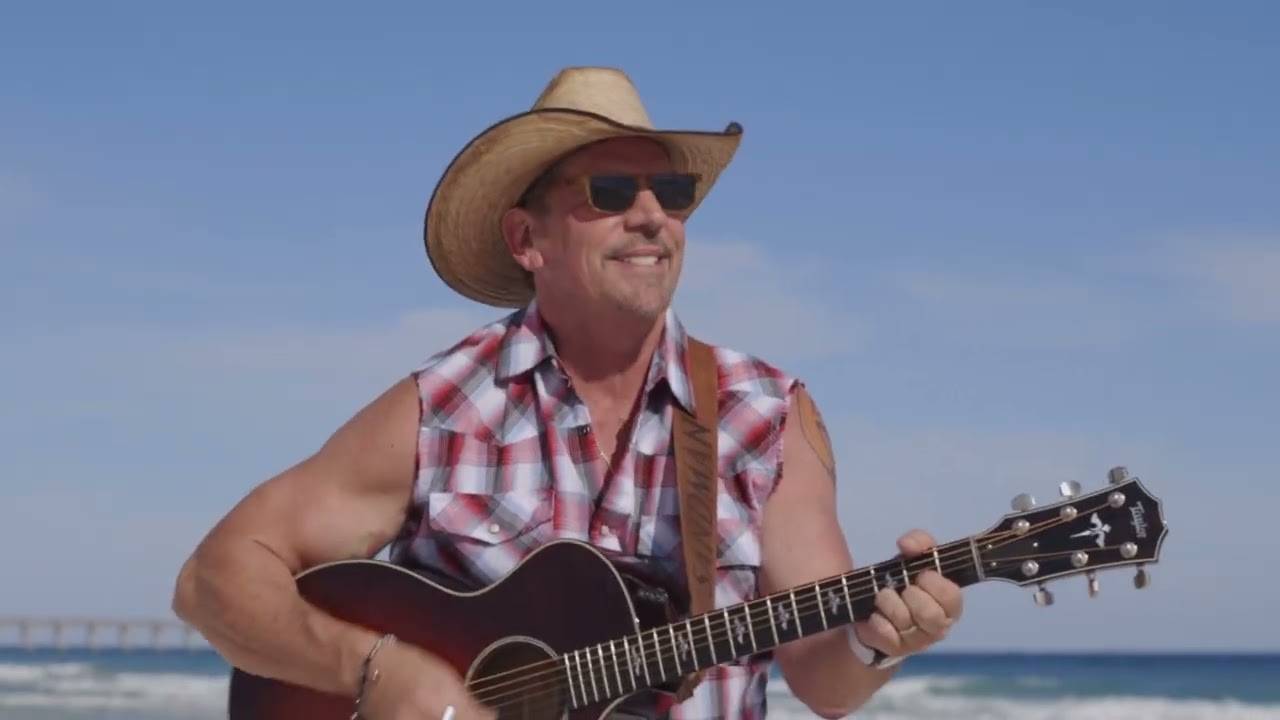
After more than two decades in Nashville, country artist Brandon Sandefur is trading Music Row for Florida’s Gulf Coast on “Pensacola Rollin’,” a breezy country-rock release inspired by the city he now calls home. Rather than looking backward at his career, Sandefur sounds firmly planted in the present, turning Pensacola’s landmarks, local institutions, and coastal lifestyle into the foundation for his latest chapter. Co-produced by Sandefur and James Adkins, “Pensacola Rollin’” has the easygoing confidence of an artist who no longer needs to chase the next destination. Its country-rock framework is upbeat and unfussy, giving Sandefur room to guide listeners through a highly specific portrait of his surroundings. The Sandshaker, Hub Stacy’s, Three Mile Bridge, the beach, and the Blue Angels all make appearances, grounding the track in Pensacola rather than relying on broad Southern imagery. That specificity is ultimately what gives the song personality. Hometown anthems can quickly become postcards, but “Pensacola Rollin’” feels more personal because Sandefur is documenting the routines and places that have become part of his actual life. After years spent navigating Nashville and opening for country legends including Waylon Jennings, George Jones, and Merle Haggard, there is something satisfying about hearing him celebrate where he landed rather than where he has been. The accompanying video doubles down on that perspective. Beachside performance footage, sunny coastal scenery, scenes from the Sandshaker, and the Blue Angels overhead turn Sandefur’s lyrics into a visual tour without overcomplicating the concept. With more material being recorded toward a full EP, “Pensacola Rollin’” feels like an introduction to Sandefur’s current era. It is relaxed, proudly regional, and driven by a simple realization: sometimes finding your next chapter means finally enjoying where you are. After spending twenty-five years in Nashville, what was it about Pensacola that eventually made it feel like home rather than simply somewhere new to live? The vibe of the town and the people we now call friends. It was "easy" to "fall in" here in Pensacola, and my wife and I were at a place in life where "easy" was very appealing to us. “Pensacola Rollin’” is packed with real landmarks and local spots. How did you decide which pieces of the city needed to make it into the song? When we wrote the song, it really wasn't hard to come up with the landmarks because they are staples of the city. Most of the folks we know, including ourselves, frequent those establishments and are familiar with the references simply because they are top of mind when you think about Pensacola. Your career includes Texas dance halls, Nashville, international success, and shows with country legends. How has that history changed the kind of songwriter you are today? With age comes maturity, and the themes have evolved. The songs I've written over the years typically speak to a specific time in my life and the experiences associated with it. The cool part is, history has a tendency to repeat itself, and many of those "old, dated" ideas have come full circle, giving them new life and making them relevant again. There’s a sense of contentment behind “Pensacola Rollin’” that feels different from the ambition often associated with Nashville. Did leaving that environment change how you approach making music? YES! Very much so! There's zero pressure to be perfect, and oftentimes in Nashville, there was a constant feeling that there was absolutely no room for error. I believe it stifled my creativity at times, and these days I'm just having fun...which comes out in the music I am making. You’re currently recording toward a new EP. Does “Pensacola Rollin’” represent the sound and perspective listeners can expect from this next body of work? I wouldn't say it's 100% representative of the sound the listeners can expect, simply because Pensacola Rollin' is a step in a different direction for me. I have always leaned into the more traditional side of country music, and this was a pivot in a direction I was a little unsure of. However, fast forward to now, and it obviously worked. That said, I am working on another track with a beach theme, and we'll see how it turns out, but I will always have my boots rooted on the traditional side of the fence.
- George Voukanos Takes Listeners Beyond Earth With TERRA OLYMPIA
Greek composer and producer George Voukanos brings the history and spirit of Ancient Olympia into a strikingly futuristic space with TERRA OLYMPIA. Blending cinematic orchestration, electronic textures, and ambient sound design, the instrumental project feels less like a conventional album and more like the score to an imagined world. Rather than recreating the sounds of Ancient Greece, Voukanos uses Olympia as a starting point to explore movement, endurance, memory, and humanity’s instinct to push beyond its limits. At times cosmic and otherworldly, TERRA OLYMPIA bridges ancient inspiration with contemporary production, inviting listeners to create their own imagery along the way. We spoke with Voukanos about the vision behind TERRA OLYMPIA, its connection to the Olympic ideal, and how he turns history into cinematic sound. You’ve been exploring the Olympic ideal through music for more than two decades. What can TERRA OLYMPIA express about Olympia today that your earlier projects could not? TERRA OLYMPIA represents a different stage of my relationship with the Olympic ideal. My earlier works approached Olympia primarily through a symphonic language, with the orchestra carrying much of the historical, human, and ceremonial dimension. With TERRA OLYMPIA, I wanted to look at the same source from the perspective of today — and perhaps even tomorrow. The ancient values remain there: human effort, transcendence, memory, peace, the relationship between the individual and something greater than oneself. But the musical language has changed. Electronic textures, cinematic sound design and orchestral elements coexist much more freely. For me, this reflects the idea that Olympia is not simply an archaeological memory. Its spirit can continue traveling through different cultures, generations, and artistic languages. The album is rooted in Ancient Olympia, yet parts of it feel almost cosmic and futuristic. How intentional was that contrast between ancient history and a sound that seems to travel somewhere beyond our own world? It was very intentional. I have never seen Ancient Olympia only as a place belonging to the past. There is something almost timeless about it. When you stand there, you are surrounded by history, but the ideas born there — human excellence, peaceful competition, the desire to surpass our limitations — can also feel strangely futuristic. So I allowed the music to move beyond a strictly historical sound. Sometimes it becomes atmospheric, electronic, or almost cosmic because I wanted to imagine those ideas traveling forward rather than remaining inside a museum. In that sense, the contrast between ancient and futuristic is really a dialogue. The past becomes a point of departure. Because TERRA OLYMPIA is entirely instrumental, listeners are free to create their own images and narratives. When you compose, do you personally see specific scenes in your mind, or do the visuals emerge after the music? Very often I see images while I am composing. Not necessarily a complete narrative, but light, movement, landscapes, human figures, sometimes even the rhythm of an imaginary camera. I think this is one reason my writing has increasingly moved toward a cinematic language. At the same time, I deliberately avoid explaining every image to the listener. Instrumental music has a beautiful freedom: the same piece can create completely different inner films for different people. My own visual world may be the starting point, but once the music is released, I want the listener to become part of the creative process. Each piece functions almost like a short film score. If you could see TERRA OLYMPIA transformed into a complete cinematic or audiovisual project without any creative limitations, what would that world look like? I would imagine it as a journey rather than a conventional film — a large-scale cinematic experience connecting Ancient Olympia with contemporary humanity and an imagined future. There would be real landscapes and archaeological spaces, but also abstract visual environments, movement, digital art, light, and human stories. I would want the audience to travel from earth and stone toward increasingly expansive visual worlds, while the music gradually connects the ancient landscape with the present and the future. It could exist somewhere between cinema, visual album, immersive installation, and live performance. What interests me most is not illustrating the music literally, but allowing image and sound to create a third experience together. With the creative baton now moving symbolically from Ancient Olympia toward Los Angeles and LA28, where do you see this more electronic and cinematic chapter taking your work next? For me, Los Angeles represents a symbolic next horizon. The journey from Ancient Olympia toward Los Angeles and 2028 creates a fascinating bridge between the birthplace of the Olympic idea and one of the world’s great centers of cinema, technology, and contemporary audiovisual culture. This connection is an independent artistic idea rather than an official LA28 affiliation, but creatively it opens many possibilities for me. I want to continue developing the dialogue between orchestra, electronics and cinematic sound design, and to explore projects where music can live equally well in concert, film and multimedia environments. TERRA OLYMPIA is therefore not an ending. I see it as the beginning of a new creative chapter — one in which my symphonic background remains present, but becomes part of a much wider cinematic language.
- Stephen White Finds the Hardest Kind of “Hope” in Knowing When You Don’t Belong
Mexico City-based alternative rock artist Stephen White returns with “Hope,” a deeply conflicted release about holding onto someone even after recognizing that your place in their life may already be gone. Closing out his five-part A Novel Hope: Live Sessions series, the single arrives as White steps back into live performance following time away from the stage. Blending cinematic alternative rock with a songwriter’s attention to small, revealing details, White avoids turning “Hope” into a sweeping declaration of devotion. Instead, the song lives inside unanswered questions. Its narrator shows up at someone’s door without knowing whether his presence is noticed, wanted, or even acknowledged. What he offers is equally restrained: a lullaby, something intimate and almost painfully modest in exchange for remaining connected. The most compelling tension comes from White allowing his narrator to understand exactly what he is doing. There is no illusion that persistence will necessarily lead somewhere better. When he admits a willingness to “fall and suffer” only to return again, hope begins to look less like optimism and more like a conscious inability to let go. For White, that uncomfortable emotional honesty is precisely the point. “Hope” is not interested in romanticizing staying. It captures the far messier reality of knowing you should leave and hoping anyway. “Hope” presents its narrator as someone who understands the relationship may be over but continues returning anyway. Why was it important for him to have that level of self-awareness? There's a contrast I wanted in there. On one side there's the guy whose relationship ended and can't quite let go. But the real story is a little rawer than that; it's someone who was never actually with her, who chased someone who never felt the same way back. That's where "I need to fall and suffer" comes from. He already knows he doesn't belong there, but he'd rather she keep throwing him some thread of hope, because he needs to believe that someday, somehow, she'll feel it too, and I believe at some point, we've all been there. The song leaves several questions unanswered. What interested you about letting uncertainty drive the narrative instead of giving the listener resolution? I try not to get too specific in my lyrics, because I want people to make it their. Someone could read this as a queer relationship, or as something that isn't even about romance at all. I'd rather leave it open enough that people bring their own story into it and make it theirs. The word “interlope” dramatically reframes the narrator’s place in the story. How did that word become part of the song, and what does it represent to you? I actually looked that word up at some point, and it ended up representing exactly what the whole song is saying. Funny enough, the song was originally going to be called "Interlope." But "Hope" made more sense in the end — the whole time, the narrator is really just asking this person to give him hope of being something he's probably never going to be, like...ever. Your background spans both film and music. How does thinking visually influence the way you build a song like “Hope,” particularly when the lyrics already contain such specific scenes? I like creating a contrast between what you hear and what's actually being said — sometimes atmosphere matters more than the literal lyrics. I can drop in certain Easter eggs that guide what ends up on screen, but I don't need to literally show a guy chasing someone he can't have — that's too obvious, and I'd rather make something interesting than something obvious. Like the Foo Fighters' "Everlong" video — it looks like a completely unrelated dream sequence, but the song is about something else entirely. That's the kind of disconnect I'm aiming for with the "Hope" video, which is still in development. “Hope” closes A Novel Hope: Live Sessions as you also return to performing in Mexico City. Does this release feel like the ending of one creative chapter or the beginning of the next? Like it or not, an artist today has to become a content creator — it's one of the few real ways people find you now. I've seen Grammy winners who are frustrated today because nobody's paying attention anymore, while other artists who seem to have less to offer just understand how to connect with audiences right now. After more than a year of almost no activity, I put together a live session with new members of the band — a kind of return, playing my most notable songs according to my own Spotify data, and obviously including "Hope." So I'd call this the start of a new chapter, not the end of one. Honestly, the inactivity is what hurt this project the most, so this is me making sure that doesn't happen again.
- Captains of Entropy Launch Into the Unknown With “Rosetta”
West Los Angeles trio Captains of Entropy are expanding their world with “Rosetta,” an instrumental standout from their new digital EP, Beatrice Comes Home, accompanied by a music video that turns the track’s restless energy into a handmade journey through space. Made up of Mike Kanon on keys, Reilly Wareham on bass, and Jason Young on drums, Captains of Entropy formed during the pandemic through weekly jam sessions built around improvisation. That foundation remains central to “Rosetta.” Rather than following an obvious verse-chorus structure, the track moves with the natural momentum of three musicians reacting to one another in real time. “Rosetta” carries a warm, distinctly retro character, balancing laid-back grooves with a sense of constant movement. Kanon’s keys bring color and atmosphere to the arrangement, while Wareham and Young build a rhythmic foundation that feels loose without ever losing control. There are traces of '70s experimentation throughout, but the trio avoids simply recreating the era. Instead, they use that influence as a jumping-off point for something more exploratory and cinematic. Named after the Rosetta space mission, the track finds its perfect counterpart in the accompanying visual. Directed in part by Matthew Mourgides, the video begins inside Young’s house before launching the band into a deliberately DIY universe filled with cardboard artwork, homemade costumes, practical sets, and a spaceship built inside a friend’s garage. The contrast works. The polished Earth sequences represent routine, while the handcrafted space scenes feel increasingly imaginative and unrestricted. With no lyrics guiding the narrative, the music becomes its own language, carrying three musicians from everyday repetition toward something stranger, bigger, and entirely their own. With “Rosetta,” Captains of Entropy prove that sometimes the most interesting destination is the one you never planned on reaching.
- Coffeeshop Captures the Feeling of an Endless Summer in “Salt Air”
Italian producer and artist Coffeeshop brings summer escapism into focus with his latest single, “Salt Air,” a bright pop-electronic release accompanied by an animated visual created by Eli Lev of Lev Studio. Following “California Summer Dream,” the new track continues Coffeeshop’s exploration of youth, friendship, and those fleeting days that somehow become permanent memories. “Salt Air” begins with a familiar feeling: getting out of the city. The pressure and noise disappear as the coastline gets closer, replaced by packed cars, bare feet, backseat laughter, boardwalk stops, low gas, and absolutely no urgency to be anywhere else. Coffeeshop keeps the production melodic and accessible, allowing the song’s nostalgic atmosphere to take the lead. There is no dramatic storyline driving the track. Instead, “Salt Air” recognizes that some of the best memories are built from ordinary days with the right people. The destination becomes almost irrelevant when the drive itself is the experience. The animated music video takes that feeling even further. Lev Studio creates a colorful coastal world filled with friends, beach scenes, open roads, and constant movement. Its animation gives “Salt Air” a dreamy quality, almost like watching an old summer memory reconstructed years later. Rather than distracting from the song with an overly complicated narrative, the visual understands exactly what makes the track work: freedom, friendship, and being completely present. It is also a natural companion to “California Summer Dream.” While that release captures the anticipation of escaping somewhere better, “Salt Air” feels like finally arriving. With “Salt Air,” Coffeeshop has created the kind of uncomplicated summer anthem that feels designed to return with the first genuinely warm day every year.
- STARR Steps Into Room 11 With Seductive New Single “Bunny Baby”
Dark-pop artist STARR introduces another character-driven chapter of her evolving “Vampire Hotel” universe with “Bunny Baby,” a seductive alternative-pop release blending electronic and cinematic elements with themes of femininity, self-possession, and emotional resilience. “Bunny Baby” began as a personal freewrite about the woman STARR was becoming: sharper, wittier, and increasingly confident in herself. Those initial words evolved into an aesthetic, then a character, and ultimately a complete song built around the idea that softness and power do not have to exist on opposite ends of the spectrum. The bunny at the center of the track represents a femininity that is playful, sensual, clever, and completely aware of its influence. STARR explores the difference between being desired and becoming passive, creating a character who can embrace mystery and seduction without surrendering control. That duality gives “Bunny Baby” more depth than its flirtatious exterior initially suggests. Beneath the glamour is an argument for remaining emotionally open after experiencing hurt. Tenderness is not treated as naïveté, and continuing to love does not mean abandoning boundaries. Instead, STARR positions vulnerability as something that can coexist with confidence. The concept also expands her larger “Vampire Hotel” world, where individual songs occupy different rooms representing distinct emotional and psychological spaces. “Bunny Baby” checks into Room 11, where innocence meets intention and sweetness exists alongside danger. It is an intriguing framework for STARR’s dark, cinematic approach to pop. Rather than simply writing about an emotion, she creates a character capable of embodying it. “STARR by day. Bunny Baby by night” might be the release’s defining phrase, but the transformation is ultimately less about becoming someone else than embracing a side of yourself you no longer feel the need to hide.
- Giselle Breaks From the Pack on “HEARTBEAT”
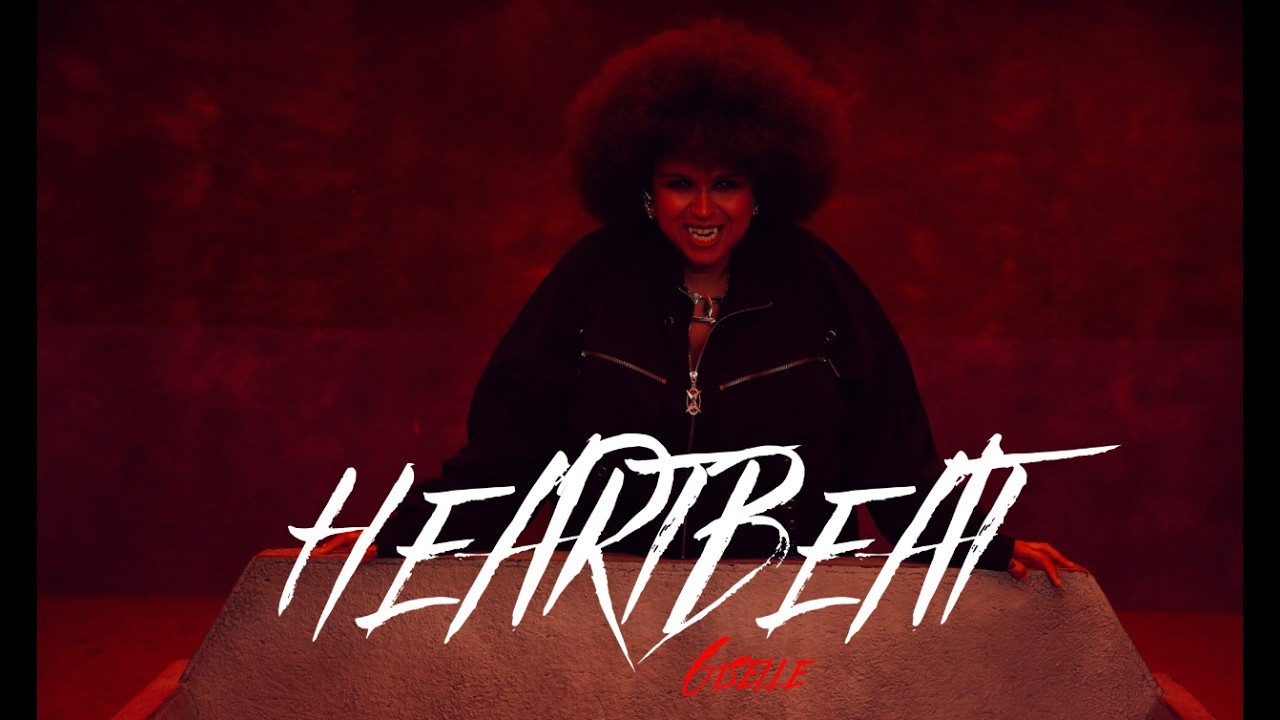
Giselle returns with “HEARTBEAT,” a cinematic new release that expands beyond the traditional single format, pairing her emotionally charged sound with an underground short film rooted in witchcraft, transformation, and breaking free. Through the accompanying visual, Giselle steps into the world of a druid-like witch confronting a wolfpack that no longer serves her. At its core, “HEARTBEAT” explores instinct. Giselle taps into the internal signals that tell us when something has shifted, even before we are prepared to acknowledge it. That concept takes on a darker dimension through the music video, where belonging and independence collide. Rather than delivering a conventional performance visual, Giselle uses the cinematic film to build an entire mythology around the track. Moving through an underground world of ritualistic imagery and supernatural symbolism, she embodies a character forced to recognize that remaining loyal to her pack may mean sacrificing parts of herself. The wolfpack becomes a compelling representation of relationships, communities, or identities we can eventually outgrow. Breaking away is not framed as an effortless act of empowerment, either. There is something unsettling about leaving the familiar, even when you know it is no longer right for you. That tension complements “HEARTBEAT” particularly well. Giselle’s vocal performance carries a sense of control against the song’s underlying emotional urgency, while its atmospheric production gives the visual narrative room to feel larger and more immersive. With “HEARTBEAT,” Giselle creates more than another entry in her catalog. The song and its underground short film operate as two sides of the same story, transforming the release into a dark, cinematic exploration of instinct, identity, and the courage required to walk away from a world you have outgrown.
- Tory Lanez Is Going on “Tour” From Behind Bars
Tory Lanez is taking the phrase “going on tour” into completely new territory. Despite currently serving a 10-year prison sentence in California, the Canadian rapper and singer has announced the NOT ON “TOR” TOUR, a multi-city run of listening experiences that will bring his music to fans across the United States while Lanez himself remains behind bars. Yes, you read that correctly. Tory Lanez has a tour schedule without actually leaving prison. The unconventional run is scheduled to kick off on September 25 at HK Hall in New York before making its way through several major U.S. markets. The currently announced stops include Los Angeles, Washington, D.C., New Orleans and Pittsburgh, with the final listed event taking place November 13 at Avalon Social in Pittsburgh. Rather than traditional Tory Lanez concerts, the events are being promoted as “listening experiences.” Lanez will not physically appear or perform at the venues. Instead, the concept is built around his catalog, DJs, special guests, and a room full of fans experiencing the music together. It is essentially a tour where the artist stays put, and the party travels without him. What Exactly Is the NOT ON “TOR” TOUR? The name itself gives away the concept. Instead of pretending these are conventional live shows, the NOT ON “TOR” TOUR is leaning directly into Lanez’s absence. Promotional material describes the events as listening experiences featuring “Tory Lanez and friends,” although the additional guests have yet to be fully revealed. The announcement also teased official merchandise connected to the run, including apparel featuring artwork from Lanez’s latest album, MADE YOU THINK I WAS GONE… BUT. The concept turns what could have been a standard album listening party into something much bigger. Rather than hosting one release event in a single city, Lanez’s team is essentially sending the experience itself on tour. For an artist who cannot physically enter a venue, it is a surprisingly literal workaround. Tory Lanez Has Continued Releasing Music From Prison The announcement is another example of how Lanez has attempted to keep his music career active during his incarceration. In July 2026, he released the double album MADE YOU THINK I WAS GONE… BUT, continuing a steady stream of material released while behind bars. His output has made his incarceration an unusual chapter in the relationship between artists, fans and the traditional music release cycle. Now, the NOT ON “TOR” TOUR takes that experiment into the live-events space. There is an important distinction, though: these aren't Tory Lanez concerts in the traditional sense. Fans buying tickets should not expect Lanez to suddenly appear onstage, perform remotely, or be released from prison for the dates. The announced format is centered around listening to his music alongside DJs and guests. Lanez Remains Incarcerated in California Lanez, whose legal name is Daystar Peterson, is currently serving a 10-year prison sentence after being convicted in December 2022 of three felony charges stemming from the 2020 shooting of Megan Thee Stallion. He was sentenced in August 2023. Lanez is currently housed at California Men’s Colony in San Luis Obispo. He was transferred there following a serious prison attack in May 2025 that left him hospitalized with multiple stab wounds and collapsed lungs. His new tour announcement does not signal a release from custody. Instead, it shows how an artist's career can increasingly operate without the artist physically being in the room. Can You Really Tour Without Going on Tour? That might be the most interesting part of the entire rollout. Listening parties aren't new. Album-release events aren't new. DJs throwing parties centered around one artist's catalog aren't new either. Packaging those ideas into an official multi-city “tour” while the artist is incarcerated is a much stranger proposition. The NOT ON “TOR” TOUR effectively separates the artist from the physical touring experience. Lanez's music, branding, merchandise, and fan community can move from New York to Los Angeles and beyond even if Lanez himself cannot. Whether fans ultimately treat the events like concerts, listening parties, or something entirely different will become clearer once the first event takes place. But one thing is certain: Tory Lanez has found a way to put his name back on a tour poster without stepping onto a tour bus. The NOT ON “TOR” TOUR begins September 25 in New York, with additional dates scheduled through November 13.
- Want to Play a Festival in 2027? Here Are 15 Accepting Artist Submissions Right Now
Festival season might feel far away, but for independent artists hoping to get onstage in 2027, the application process has already started. Festivals across the United States, Canada, the UK, and Europe are currently accepting submissions from independent and emerging artists. Some are major industry showcases built around music discovery, while others offer opportunities to perform in front of new regional audiences. The important part? Don't wait until 2027 to start looking. Here are 15 festival opportunities independent artists can have on their radar right now. Application information below is current as of September 15, 2026. Artists should confirm deadlines and eligibility directly with each festival before applying. SXSW Music Festival Location: Austin, Texas Submission Deadline: November 20, 2026 SXSW remains one of the biggest international showcase opportunities for artists looking to perform in front of fans, media, labels, booking professionals, and other members of the global music industry. Official 2027 showcase applications are currently open to artists across genres. NXNE Location: Toronto, Ontario Submission Deadline: December 31, 2026 North by Northeast takes over venues throughout Toronto with a lineup heavily focused on emerging and independent music. Applications for the 2027 festival are free, making NXNE one of the more accessible opportunities for artists looking to break into the Canadian festival circuit. The Great Escape Location: Brighton, England Submission Deadline: February 15, 2027 The Great Escape has built its reputation around discovering what's next. Hundreds of emerging artists perform across Brighton each year in front of music fans and international industry professionals. Artists from around the world and across genres can submit for consideration. Treefort Music Fest Location: Boise, Idaho Festival Dates: March 31–April 4, 2027 Submissions: Open now Treefort has become a destination for music discovery, bringing established names together with independent and emerging talent across venues throughout Boise. Artist submissions for its 2027 edition are currently open. Tallinn Music Week Location: Tallinn, Estonia Submission Deadline: October 26, 2026 Independent artists looking beyond North America should know Tallinn Music Week. The international showcase welcomes applications from artists across countries and genres, bringing performers together with a large audience of music-industry professionals, media, and fans. The New Colossus Festival Location: New York City, New York Submission Deadline: December 1, 2026 Taking place across Manhattan's Lower East Side, The New Colossus Festival puts emerging independent artists at the center of its programming. The festival is particularly relevant for indie, alternative, rock, and adjacent artists looking for a showcase opportunity in New York City. Musikfest Location: Bethlehem, Pennsylvania Submission Deadline: January 31, 2027 Musikfest is a massive multi-day music event produced by ArtsQuest in Bethlehem. Artists can submit their music for consideration by the festival's programming department and music committee, and there is currently no application fee. Ignite the Arts Festival Location: Penticton, British Columbia Submission Deadline: November 30, 2026 Ignite the Arts combines live music with visual art and multidisciplinary performances, making it an interesting option for artists whose work crosses creative boundaries. Applications are open for its March 26–28, 2027 edition. Will McLean Music Festival Location: Brooksville, Florida Submission Deadline: September 30, 2026 Artists working in folk, acoustic, Americana, roots, and singer-songwriter spaces can look toward Florida's Will McLean Music Festival. The festival accepts applications from performers and workshop presenters, with a particular connection to Florida's songwriting and folk communities. Mostly Jazz Funk & Soul Festival Location: Birmingham, England Festival Dates: July 9–11, 2027 Submissions: Open now Birmingham's Mostly Jazz Funk & Soul Festival brings together major performers and emerging talent across jazz, funk, soul, and related genres. Its artist application process gives up-and-coming musicians an opportunity to be considered for the festival lineup. Decimate Metalfest Location: Millet, Alberta Submission Deadline: October 15, 2026 Heavy artists, this one's for you. Decimate Metalfest focuses primarily on metal while also considering punk, hard rock, and other high-energy genres. Bands, solo performers, and DJs can currently submit for the 2027 festival. ValhallaFest Location: Terrace, British Columbia Festival Dates: June 25–27, 2027 Submissions: Open now ValhallaFest offers opportunities for both live musicians and electronic artists, with separate application routes available for performers. That broader programming makes it worth checking out for independent acts that don't necessarily fit neatly into traditional festival categories. 615 Indie Live Festival Location: Nashville, Tennessee Submissions: Open now Deadline: No deadline currently listed 615 Indie Live puts Nashville's independent music ecosystem front and center, connecting local artists with independent venues throughout the city. The event is built around supporting the city's independent scene, with a significant portion of its event budget dedicated to compensating participating artists, performers, and musicians. Strawberry Music Festival Location: Grass Valley, California Festival Dates: May 27–31, 2027 Submissions: Open now Northern California's long-running Strawberry Music Festival focuses on roots-driven sounds spanning Americana, folk, bluegrass, and acoustic music. Artists interested in being considered for the 2027 lineup can currently send their music and supporting materials directly to the festival's booking department. Don't Wait Until Festival Season to Start Applying One of the easiest mistakes independent artists can make is assuming festival booking happens a few months before the actual event. In reality, applications and programming decisions can begin many months in advance. Before submitting, artists should have the basics ready: strong live footage, updated press photos, a concise artist bio, streaming links, recent music, social profiles, and an EPK that doesn't require a booking team to dig through ten pages to figure out who you are. And don't shotgun the same application to every festival you find. Look at the existing lineup. Understand the genres being programmed. Check geographic and eligibility requirements. Find out whether performances are compensated and whether travel or accommodations are included. If an application carries a fee, decide whether the opportunity genuinely makes sense for where you are in your career. Getting onto a festival lineup isn't just about having good music. It's about finding the right stage for it. With 2027 submissions already underway, now is the time to start looking.