%20WHITE.png)

Divergent Floors It With “Rev It Up” and Refuses To Age Out of Rock ‘n’ Roll

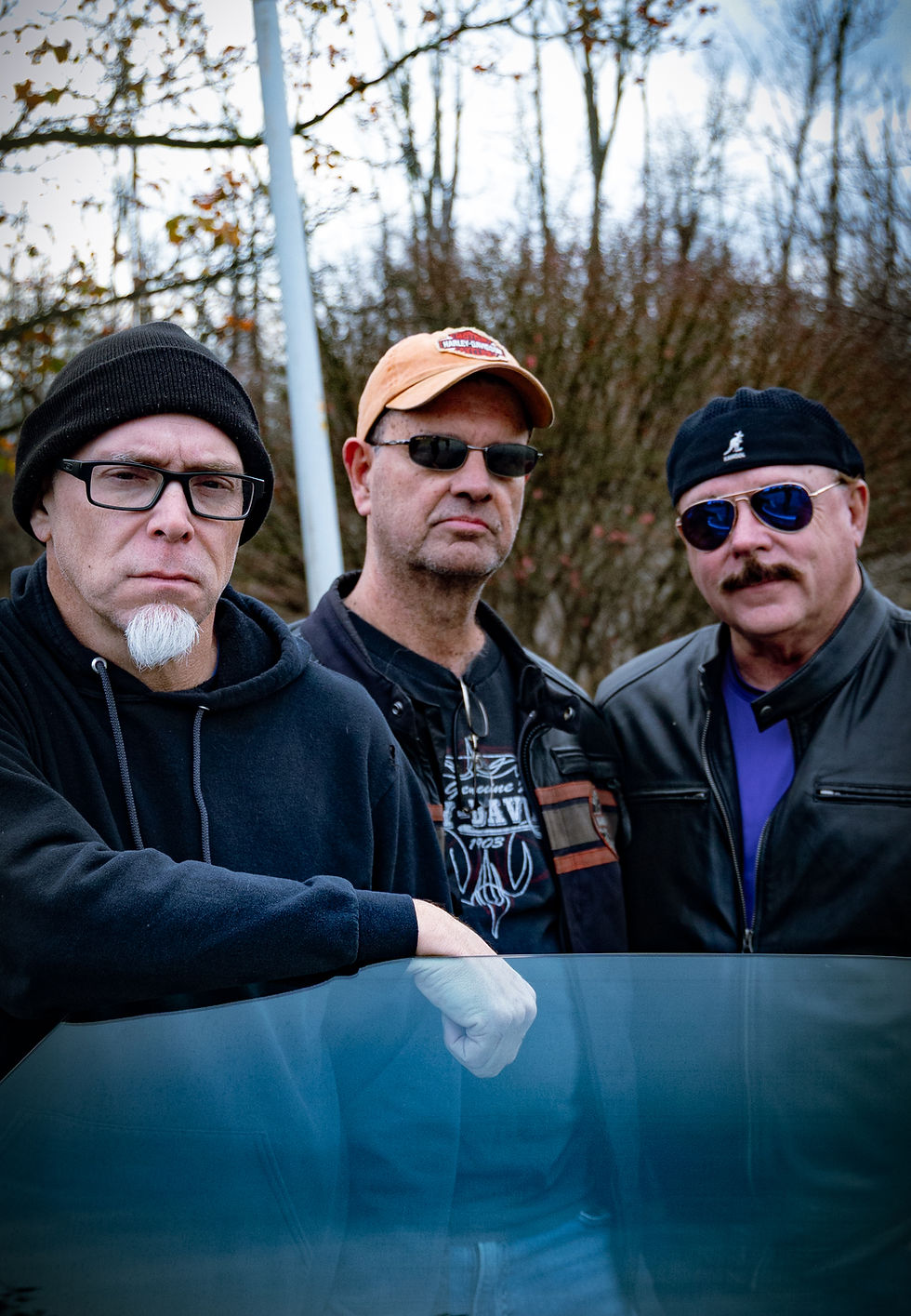
Rock nostalgia is easy. Actually embodying it without sounding like a tribute act? That’s harder. Divergent pulls it off on “Rev It Up” by leaning all the way in instead of playing it safe.
The three-piece, led by brothers James and Paul Richards alongside bassist Mike McAlister, isn’t chasing trends. They’re chasing a 40-year-old dream that never really died. That context matters because “Rev It Up” doesn’t feel like a gimmick. It feels earned. When James talks about living fast and never slowing down, it doesn’t sound like cosplay rebellion. It sounds like someone who knows what it feels like to almost miss their shot.
Musically, this is unapologetic golden-era rock energy. Wailing guitars cut through with clarity, drums hit with arena-sized authority, and the vocals sit right in that gritty sweet spot between polished and raw. You can hear echoes of Boston and Kansas in the structure, especially in the stacked harmonies and soaring leads, but it never tips into imitation. The chorus is built for fists in the air and highway speeds, a three-word refrain that hums like an engine turning over.
The racing metaphor is obvious, sure. Rock and speed have always been linked. But Divergent makes it feel personal rather than cliché. The riffs never stall. The solos blaze without overindulging. There’s forward motion in every section, like the song refuses to idle. That sense of momentum mirrors their story. After shelving the dream once, they’re not easing back in. They’re flooring it.
The video doubles down on that ethos. Real bikes. Real cars. Real road. Instead of studio shots or abstract symbolism, they put the lifestyle front and center. It feels less like fantasy and more like documentation. These aren’t musicians pretending to be rockers. They are rockers who happen to film it.
“Rev It Up” isn’t reinventing rock. It’s reminding you why it worked in the first place. Big riffs. Big hooks. Zero hesitation. And honestly? In an era obsessed with irony, that level of sincerity hits harder than people expect.
“Rev It Up” feels like a second wind after decades of holding onto the dream. What finally pushed you to stop waiting and fully commit to Divergent?
James: Writing and performing original music has always been in my DNA ever since I wrote my first song at age 14. It’s always been a dream of mine to put my music out there to see if it resonates with anyone. However, the time never seemed right until later in my life. When I was younger, I was just too scared and didn’t have the confidence to put myself and my music front and center. Looking back, I regret doing that. Now that I’m older and have lived a few lifetimes, I don’t have the luxury of just sitting back and waiting for the perfect time. It’s now or never for my music. I’m so fortunate to have my brother, Paul Richards, and my hometown friend and long-time collaborator, Mike McAlister, to share this journey with me. We have been having a great time!
Mike: The evolution from our cover band persona in Chautauqua Road Band to Divergent was probably inevitable, in my opinion. We played a few originals in CRB, and they were always well received. James has a large catalog of originals he has put together over the years, and when he proposed the idea of recording originals, we knew that there were amazing songs we would be able to develop further as a group. When we took the leap of faith to record and professionally produce James’ originals, we found we were definitely in a good place to make it all work once we heard the rough cut of the first song we recorded, ‘Runnin’ Free’. The successful production and distribution of the first album gave us a lot of confidence to move on to the ‘Rev It Up’ album and beyond.
Paul: When we started playing the first tunes that James had written, it was instantaneous, and we knew we had to get this music out.
The track leans into classic rock energy without sounding like a tribute act. How do you honor your influences while still carving out your own identity?
James: That’s a great question. The “Rev It Up” track really rocks and that’s what I totally intended. I love loud rock and roll that reaches out and grabs you and makes you feel alive. I also like a lot of rhythm in my music because it just makes it more fun and exhilarating. Tommy Johnston of the Doobie Brothers was a huge influence on my rhythm playing when I was growing up. When it comes to rock, my style is definitely big and bold. I’m normally a fairly reserved person, but when I strap on my Les Paul and turn up the volume, I turn into a rock and roll beast! I can’t help it. I just love it. I also love that adrenaline rush of moving air with my guitar amp. So, I think over the years I’ve developed my own style of more aggressive and rhythmic rock that comes through in my writing, particularly on the harder rocking tracks like “Rev It Up.”
Mike: The classic rock energy comes very naturally. James and I started our musical journey playing classic rock in the 70’s, before it was classic. A lot of the hooks and choruses that James creates in his originals come from a place that is influenced by so many great songs in the ’70s and ’80s. We grew up in a time of big guitars and bigger amplifiers; the louder the better. James has a knack for getting that classic tone out of his gear, and with Paul’s powerful drum work, creating the bass line was fairly straightforward for me. From the perspective of a bass player, I stand on the shoulders of so many great players from that time period: Roger Glover of Deep Purple, Tiran Porter of the Doobies, and even Paul McCartney to some extent. I like to think I will ‘channel’ the right groove to support the song in the best way possible.
Paul: We honor our influences by incorporating harmonies and great riffs, but they are OUR harmonies and riffs. We give a nod to classic rock and put a modern spin on it.
There’s a strong theme of momentum and refusing to slow down. Is that mindset tied to personal regrets, or more about proving something to yourselves now?
James: For me, I think it is more tied to my personality as a person. I like to stay active both physically and mentally. For example, a lot of the time, I have to force myself to go to bed. I’ve been that way my whole life, even as a kid. I have so many thoughts in my head and things I want to do, it’s just hard to shut them down at night. I love to stay up late when it’s quiet because there are no interruptions, and I can let my creativity run free. So, overall, I don’t like taking it slow with my life, and I think that gets reflected to a certain extent in my music. I’m also a pretty competitive person, and proving myself as a songwriter is definitely a strong motivator for me.
Mike: That’s a fair question. From my perspective, we have never talked about having any regrets. I suppose James and I had the opportunity to pursue a career in music back in the late 70’s, but we made choices to build careers and raise families instead. I don’t regret the life I’ve been able to create for my family and me. Music is a part of my being, regardless of what I’m doing. Taking the small step to reunite the cover band from the 70’s felt like the right thing to do for various reasons, and it served a purpose that thankfully led to the creation of Divergent and making great music together. James and I had somewhat similar dreams back in the day, but we are so grateful now to have the opportunity to do what we are doing.
Paul: If you don’t create momentum and something that people can remember, then you’re done. We’re committed, no doubt. There are no regrets, because we’re actually making it happen.
The racing and open-road imagery feels authentic, not staged. How much of your real-life lifestyle shaped the songwriting versus the visual concept?
James: Well, I credit that to my dad, who exposed me to a love for cars and auto racing when I was a young boy. I distinctly remember when he took me to the Indianapolis Motor Speedway for the first time when I was eight years old. It was early spring before the track was officially open, and some of the drivers were there running laps for tire testing. We sat right behind the wall in turn one. I watched a car come out of turn four and all the way down the 5/8 mile front straightaway and scream by only a few feet from me through turn one. I was immediately hooked and became an Indy 500 fan at that very moment. Needless to say, I’ve attended many, many Indy 500 races during my lifetime. It is something that just gets in your blood. Just like loud rock and roll!
Mike: I believe James will have to answer the question of inspiration. I personally have followed NASCAR racing, and I’ve owned a motorcycle for about 15 years; one of them I ride in the video. Growing up in Iowa, we were exposed to all kinds of motorsports and there is space to drive or ride and enjoy the feeling of freedom one gets from doing something fun. That’s what I think “Rev It Up” is all about.
Paul: I’m an auto racing fan, and I love all kinds of cars too. The Indianapolis 500 is a staple in our family. Rock 'n' roll and fast cars go hand in hand.
In a music landscape that constantly shifts trends, what gives you the confidence to double down on arena-style rock instead of adapting to what’s current?
James: Well, it’s just what I know and, most importantly, love. I’m more comfortable playing to larger crowds at larger venues where I can play and sing at louder volumes. I love hearing my vocals and my guitar reverberating across a larger venue with a nice natural slapback delay. It makes everything sound bigger and stronger, almost bigger than life itself. To me, that’s what great rock music is all about. It’s creating that experience of feeling invincible and larger than life!
Mike: Five decades of making and absorbing music have taught me that nothing in this art form ever truly disappears. Genres ebb and flow, but they always return in some reinvented shape. Rappers use samples from the ’60s and ’70s because those grooves still carry weight. Walk This Way was part of my junior high soundtrack, and RunD.M.C.’s 1986 version cracked open a whole new musical world. Divergent was created to be in that same creative current—genre-bending, boundary pushing, and unafraid of arena-sized rock moments. It’s not doubling down; it’s simply Divergent being Divergent, and that honesty is the only trend we care to follow.
Paul: We’re certainly not going to put something out that’s not us. There’s still a place for arena-style rock. People still love to pump their fists in the air and rock out. We’re simply giving them a reason to do so.


